

Modern medicine has a breathing problem, but it doesn’t know it has. The textbooks still say normal resting ventilation is 6 liters per minute. But the textbooks were written about people who no longer exist. Dozens of studies across multiple countries, spanning decades, have measured actual “normal subjects”—healthy by modern standards, no diagnosed respiratory disease—and found them breathing 12 liters per minute at rest. That is not a small deviation. That is double. That is a population breathing twice as much air as the human body was designed to handle, and nobody in a white coat seems particularly alarmed about it.
They should be because overbreathing does not just move more air. It causes blood CO₂ to crash, and crashing blood CO₂ crashes oxygen delivery to every tissue in the body. This is not speculation. This is the Bohr effect—a basic principle of respiratory physiology that every first-year medical student memorizes and then apparently forgets the moment they enter clinical practice. Hemoglobin holds onto oxygen more tightly when CO₂ is low. You can have perfectly normal oxygen saturation on the pulse oximeter—98%, 99%, the number everyone wants to see—and your tissues can still be starving for oxygen because the hemoglobin won’t let go of it. The oxygen is there. It just isn’t being delivered. The delivery man is standing at the door with the package and refusing to knock, and the door is CO₂.
What Double Ventilation Actually Does
When you breathe 12 liters per minute instead of 6, your arterial CO₂ drops from roughly 40 mmHg toward 30 mmHg or lower. This is called chronic hyperventilation, and it is so common now that researchers have given up calling it abnormal. But the physiology doesn’t care what you call it.
The textbooks still describe normal resting minute ventilation as roughly 5–6 liters per minute, but modern life rarely leaves people in true physiological rest. In real-world sedentary conditions—sitting in cars, commuting, office work, and low-level daily activity—published estimates often use values near 12 liters per minute. That is not vigorous exercise. It is an ordinary modern existence. And it means that many people may be ventilating at nearly double the classic resting value while appearing perfectly “normal” to the medical system.
At 30 mmHg CO₂, hemoglobin’s affinity for oxygen increases dramatically. The oxygen-hemoglobin dissociation curve shifts left. Oxygen binds more tightly. It releases less readily at the tissue level. The result is tissue hypoxia—cellular oxygen starvation—despite perfectly normal blood oxygen saturation. The pulse oximeter reads 98%. The cell is gasping.
This is not a subtle effect. A drop of 10 mmHg in CO₂ can reduce tissue oxygen delivery by 30% or more through the Bohr effect alone. And that’s before you account for the vasoconstriction. CO₂ is a potent vasodilator, particularly in the brain. When CO₂ drops, blood vessels constrict. Cerebral blood flow can decrease by 40% or more during hyperventilation. The brain, which consumes 20% of the body’s oxygen, suddenly finds itself on a starvation diet—not because there isn’t enough oxygen in the blood, but because the blood isn’t flowing and the oxygen isn’t being released.
And then there’s the smooth muscle. CO₂ relaxes smooth muscle throughout the body—in airways, in blood vessels, in the gut. When CO₂ crashes, smooth muscle constricts. Airways narrow. Blood pressure rises. Digestion suffers. The entire autonomic nervous system shifts toward sympathetic dominance. You are now breathing twice as much air as you need, your tissues are suffocating, your blood vessels are clamped down, your airways are tight, and your body is in a chronic low-grade stress state.
All because nobody thought to measure whether “normal” breathing was actually normal anymore.
How We Became a Species of Overbreathers
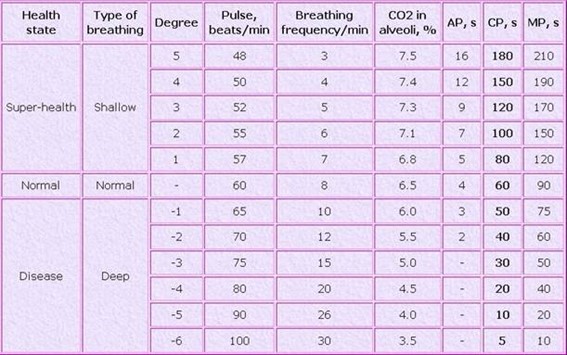
The question is why. Why are modern humans breathing double the physiological norm? Part of it is chronic stress. The sympathetic nervous system drives respiration. A population that is perpetually activated—by screens, by notifications, by financial anxiety, by sleep deprivation, by a culture that never stops—is a population that breathes faster and shallower. Mouth breathing sometimes replaces nasal breathing. The diaphragm goes unused. The accessory muscles of respiration in the neck and shoulders take over. The breathing pattern becomes thoracic, rapid, and inefficient.
Part of it is diet. Processed foods that require almost no chewing. Soft foods that never exercise the jaw or the airway. Chronic low-grade metabolic acidosis from refined carbohydrates and seed oils, which the body attempts to compensate for by blowing off CO₂ through increased ventilation. The respiratory center in the brainstem becomes recalibrated to a lower CO₂ set point. Overbreathing becomes not a temporary response but a permanent state.
Part of it is lifestyle. Sitting for hours in positions that compress the diaphragm. Chronic nasal congestion from environmental allergens and pollutants that forces mouth breathing. Lack of physical exertion that would naturally raise CO₂ and retrain the respiratory chemoreceptors. The body adapts to what it does most of the time, and most modern bodies do: sit, slump, and shallow-breathe.
The result is a population-wide shift in respiratory physiology that almost no one is measuring or treating, because the pulse oximeter says 98% and the doctor says you’re fine.
What This Explains
Once you understand that chronic hyperventilation produces tissue hypoxia, vasoconstriction, smooth muscle spasm, and sympathetic overdrive, a remarkable number of “mysterious” modern diseases suddenly make sense.
Anxiety and panic disorder? Hyperventilation directly triggers the sympathetic nervous system and reduces cerebral oxygenation. Panic attacks are often preceded by a drop in CO₂ levels due to overbreathing. The person feels like they can’t breathe, so they breathe more, which drops CO₂ further, which makes them feel worse. The standard advice—”take deep breaths”—is exactly wrong. They need less air, not more.
Asthma? CO₂ is a bronchodilator. Low CO₂ causes bronchoconstriction. Overbreathing narrows the airways. The asthmatic who is taught to breathe less, to tolerate the urge to breathe, to let CO₂ rise—that person often finds their airways opening without medication. The Buteyko method, which trains reduced breathing, has been shown in multiple randomized trials to reduce asthma symptoms and medication use. It works by restoring CO₂, not by adding anything.
Sleep apnea? Mouth breathing at night reduces CO₂ levels, which reduces respiratory drive, leading to irregular breathing and apneas. The standard treatment is a CPAP machine that delivers air. The alternative is to tape the mouth shut at night, restore nasal breathing, and let CO₂ stabilize. One costs thousands of dollars. The other costs three cents’ worth of tape.
Hypertension? CO₂ is a vasodilator. Chronic hyperventilation means chronic vasoconstriction. Blood pressure rises. The body is not malfunctioning—it is responding rationally to a respiratory pattern that tells it to clamp down.
Chronic fatigue, brain fog, fibromyalgia? All involve tissue hypoxia and impaired cellular energy production. Mitochondria need oxygen to make ATP. If CO₂ is low, mitochondrial output drops, compromising oxygen delivery. Every cell in the body becomes energy-starved. The person feels exhausted. Labs come back normal. The doctor suggests antidepressants.
The list goes on. What modern medicine has done is take a single physiological derangement—chronic hyperventilation with consequent CO₂ depletion—and split it into a dozen different diagnoses, each with its own pharmaceutical treatment, none of which addresses the breathing pattern that underlies them all.
The Measurement They Refuse to Take
Here is the thing that should make any reasonable person furious. Measuring respiratory rate takes one minute. Two at the most; Measuring end-tidal CO₂ requires a capnometer, which costs less than most stethoscopes. These are not expensive tests. They are not invasive. They are not complicated. And they are seldom done.
The standard vital signs are temperature, pulse, blood pressure, respiratory rate, and oxygen saturation. Respiratory rate is often estimated rather than counted. CO₂ is not measured at all. A patient can walk into a doctor’s office breathing 18 breaths per minute with an end-tidal CO₂ of 28 mmHg—severely hyperventilating, tissues starving for oxygen, cerebral blood flow reduced by a third—and the doctor will record “respirations at 18 without comment and move on.
This is not a failure of knowledge. It is a failure of listening. The body is screaming its distress through a breathing pattern that anyone could measure if anyone cared to. But the medical system is organized around events rather than processes. A breathing pattern is a process. It unfolds over years. It does not show up on an X-ray. It cannot be treated with a pill. It requires the physician to teach the patient rather than to prescribe. And so it is ignored.
Restoring the Breath
The good news is that breathing is plastic. The respiratory chemoreceptors can be retrained. The CO₂ set point can be recalibrated upward. The diaphragm can be re-engaged. The nose can be reopened. None of this requires a prescription.
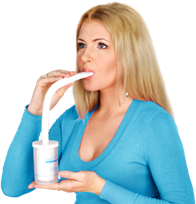
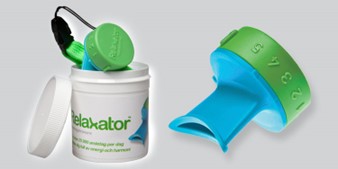
The approach is straightforward: breathe less. Nasal breathing only, day and night. Slow, diaphragmatic breathing with a longer exhale than inhale. Brief breath holds to let CO₂ accumulate and retrain the brain’s tolerance for it. Physical exercise that naturally raises CO₂ production. Mouth taping at night to prevent the unconscious hyperventilation that resets all the day’s progress. The use of various breathing devices, such as the Frolov or Relaxator, can facilitate breathing retraining and make it much easier.
The subjective experience is interesting. At first, breathing less feels like air hunger. The chemoreceptors, accustomed to low CO₂, scream that you need more air. You have to override that signal to teach the brain that a CO₂ of 40 mmHg is not an emergency. Over the course of weeks, the set point shifts. The urge to overbreathe diminishes. Sleep deepens. Anxiety recedes. Blood pressure drops. Energy returns. The tissues finally get the oxygen they have been denied for years.
It costs almost nothing. It requires little to no technology. It is simply the restoration of a physiological norm that modern life has systematically dismantled. And it is absent from medical training because breathing is not a drug, not a procedure, and not a billable code. My favorite breathing devices to make training easy are the Frolov Breathing Device and the Relaxator.
The bridge does not collapse on the first day corrosion begins. The population did not start breathing 12 liters per minute overnight. It happened gradually, over the last few generations, as stress rose, diet deteriorated, mouths fell open, and nobody measured the thing that was changing. Now we have a civilization of overbreathers, their tissues suffocating, their blood vessels constricted, their brains on reduced flow, and a medical system that checks the pulse oximeter and tells them they’re fine.
The poverty of listening. It starts with not hearing the patient. It ends with not hearing the breath. And the breath, after all, is the first thing you do when you arrive in this world and the last thing you do when you leave it. You would think someone would pay attention to everything that happens in between.
Dr.Sircus is a reader-supported publication. To receive new posts and support my work, consider becoming a free or paid subscriber.
Subscribe now

comments