

There has been quite a bit of news about pancreatic cancer, which is one of the most feared diagnoses in modern medicine, not only because of its aggressiveness, but because of how quietly it begins. It does not announce itself clearly. It develops slowly, often invisibly, over years, sometimes decades, until the moment it is finally detected—usually too late. By the time a tumor is seen on a scan, the deeper disease has already been present for a long time, evolving beneath the surface of normal function.
This is the central tragedy of pancreatic cancer: it is not just fast-moving—it is late-recognized. The pancreas itself is not a minor organ. It sits deep in the abdomen, quietly performing two of the most important functions in the body. It produces digestive enzymes necessary to break down food, and it regulates blood sugar through insulin and other hormones. When the pancreas begins to fail, the effects ripple across the entire organism. Digestion becomes compromised. Blood sugar becomes unstable. Metabolic balance begins to collapse.
But even as this process unfolds, the symptoms are often subtle, vague, and easily dismissed, except that diabetes and metabolic Syndrome are on the main screen radar, as is obesity. Modern medicine clearly recognizes diabetes, obesity, and metabolic Syndrome as risk factors for pancreatic cancer—but it has not fully integrated these conditions into a unified causal model of the disease.
Large epidemiological studies consistently show:
- Type 2 Diabetes → ~1.5–2× higher risk of pancreatic cancer
- Obesity → ~20–50% increased risk
- Metabolic Syndrome → elevated risk
In pancreatic cancer, unexplained weight loss may appear first, often attributed to stress or diet changes. Appetite declines. There may be intermittent abdominal discomfort or a dull pain radiating into the back, easily mistaken for musculoskeletal strain. Stool changes occur as fat digestion becomes impaired, yet many people do not report them. Jaundice may develop quietly if bile flow is obstructed, but in its early stages, it can go unnoticed. Perhaps most significantly, new-onset diabetes appears, particularly after midlife, but is typically treated as routine rather than investigated as a signal of pancreatic distress.
Each of these signs is meaningful. But taken separately, they rarely trigger an alarm. This is why pancreatic cancer is so often missed. The pancreas has an extraordinary functional reserve. It can lose the vast majority of its enzyme-producing capacity before obvious symptoms arise. By the time the system shows clear dysfunction, the underlying damage is already extensive. What appears suddenly is, in truth, the endpoint of a long, silent deterioration. To understand pancreatic cancer, we must move beyond the idea of it as a sudden event. It is the result of long-term chronic conditions.
Today, oncologists are excited about a new treatment, and the headlines read, ‘A watershed moment: A pancreatic cancer drug is set to transform treatment.’ An experimental pancreatic cancer drug that’s been shown to double survival in patients with advanced stages of the disease is poised to revolutionize the way the cancer is treated, oncologists say. The drug, called daraxonrasib, has already been fast-tracked for approval by the Food and Drug Administration. What they do not say is that short survival times are only slightly lengthened, meaning a few months more of suffering. Death’s door continues to knock, and there is an increased cost in terms of misery due to the drug’s side effects.
The reported side effects for daraxonrasib are actually pretty substantial—though researchers keep emphasizing that most were “manageable.” The most commonly reported side effects include:
- rash/skin toxicity
- mouth sores (stomatitis)
- nausea
- vomiting
- diarrhea
- fatigue
- constipation
- inflammation
- Liver irritation / elevated liver enzymes
- anemia (low red blood cells)
- kidney-related effects
- scaly or peeling skin
And importantly:
- 96% of patients had treatment-related side effects
- about 30% had severe or potentially life-threatening side effects
One highly publicized patient, former Senator Ben Sasse, described the drug as “nasty,” saying it caused severe skin eruptions and bleeding from multiple body sites. So this is definitely not “a harmless miracle pill.”
Terrain Medicine
In my work, disease is not seen as isolated but as emerging from the terrain—the body’s internal environment. Nowhere is this more relevant than in the pancreas. The pancreas is uniquely sensitive to metabolic stress.
It is affected by:
- blood sugar instability
- chronic inflammation
- toxic exposures
- digestive burden
- and underlying mineral imbalances
Among these, one of the most overlooked factors is bicarbonate. Bicarbonate is the body’s primary buffering system. It maintains pH balance across tissues and fluids, allowing cellular processes to function efficiently. Every cell in the body depends on a stable environment—not overly acidic, not overly alkaline—but balanced. When bicarbonate levels fall, the internal terrain shifts toward acidity. This shift has profound consequences.
Inflammation increases.
Oxidative stress rises.
Mitochondrial function declines.
Immune surveillance weakens.
The pancreas is particularly vulnerable to bicarbonate deficiency because it directly produces bicarbonate-rich fluid to neutralize stomach acid during digestion. When bicarbonate is insufficient, the pancreas becomes overburdened. The ductal system becomes more acidic, inflamed, and obstructed. Over time, this leads to cellular injury, fibrosis, calcification, and eventually malignant transformation.
The Diabetes Connection
One of the clearest early signals of pancreatic dysfunction is the development of diabetes. But this relationship is often misunderstood. Diabetes is typically viewed as a risk factor for pancreatic cancer. But in many cases, especially when it appears later in life, it is not a cause—it is an early manifestation of the disease process itself. As the pancreas becomes compromised, its ability to regulate insulin declines. Blood sugar rises. The diagnosis of Type 2 diabetes is made.
But the deeper issue remains unaddressed. The pancreas is already under strain. This is why new-onset diabetes after age 50 should always be viewed with caution. It may be one of the earliest detectable signs that the terrain of the pancreas is shifting toward cancer.
Acidity, Infection, and Breakdown
As the internal environment becomes more acidic, another layer of complexity emerges: infection. Fungal organisms, particularly Candida species, thrive in acidic, low-oxygen environments. These organisms are not passive. They produce toxins, interfere with cellular function, and contribute to chronic inflammation. The pancreas, already weakened by metabolic and biochemical stress, becomes increasingly vulnerable.
Over time, this creates a feedback loop:
- Acidity promotes fungal growth
- Fungal activity increases inflammation and toxicity
- Inflammation further damages pancreatic tissue
This cycle accelerates the breakdown of the terrain. What appears as cancer is not just a cluster of malignant cells—it is the expression of a deeply disordered internal environment.
Why Conventional Treatment Falls Short
Modern medicine approaches pancreatic cancer with powerful tools: surgery, chemotherapy, and radiation. These interventions can reduce tumor burden, sometimes extending life. But they do not fundamentally address the terrain that allowed the cancer to develop, and that is why this form of cancer is terminal and greatly feared. Modern medicine has no cure for pancreatic cancer, though it tries its best to extend patients’ lives.
Restoring the Conditions of Health

A different approach begins with a different question. Not “How do we destroy the tumor?” But “What conditions allowed this to develop?”
From that perspective, the priorities shift:
- restoring bicarbonate balance
- correcting mineral deficiencies (magnesium, potassium, calcium)
- supporting metabolic function
- reducing toxic burden
- stabilizing blood sugar
- addressing chronic infections
- supporting the emotional and nervous system
When one of many possible biological stresses weighs down on the pancreas, it will, as any other organ, begin to function improperly. When this happens, the first thing we see is a reduction in pancreatic bicarbonate production. Once pancreatic function and pancreatic bicarbonate flow are inhibited, a chain of inflammatory reactions naturally follows throughout the body. Under such conditions, infections and fungi are known to proliferate.
A glass of ½ tsp. Baking soda and water a day can help to keep your
body’s pH levels in check and prevent it from becoming too acidic.
Parhatsathid Napatalung writes, “The pancreas is harmed if the body is metabolically acidic as it tries to maintain bicarbonates. Without sufficient bicarbonates, the pancreas is slowly destroyed, insulin becomes a problem, and diabetes becomes an issue. Without sufficient bicarbonate buffer, the effect of the disease is far-reaching as the body becomes acidic.”
Even small alterations in the pH of bile and pancreatic juice can lead to serious biochemical/biomechanical changes. Pancreatic digestive enzymes require an alkaline milieu for proper function, and lowering the pH impairs their activity. Here we are at the beginning of digestive orders and even of cancer.
Acidification of pancreatic juice reduces its antimicrobial activity, potentially leading to intestinal dysbiosis. Lowering the pH of pancreatic juice can trigger premature protease activation in the pancreas, potentially leading to pancreatitis.
Even in severe cases, the body retains an extraordinary capacity to respond when the terrain is improved. Not always to full reversal—but often to stabilization, to improved function, to extended life with better quality, without the nasty side effects of mainstream cancer treatments. And of course, in earlier stages, when recognized in time, the possibilities are far greater.
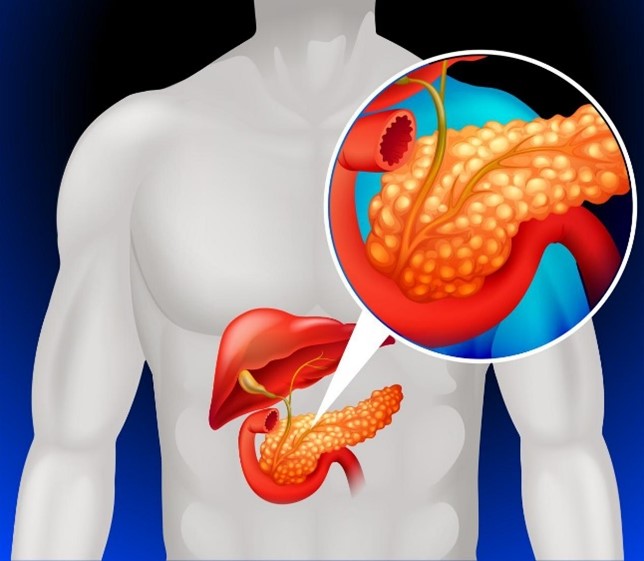
“The pancreas is the first organ to develop inhibited function from varied stresses,” writes Dr. William Philpott and Dr. Dwight K. Kalita in their book Brain Allergies. Recent studies have shown that virtually 100% of all Americans have an enlarged pancreas by the time they’re 40, and the incidence of pancreatic cancer has been rising 1.5 percent each year since 2004, according to the American Cancer Society. It is a notoriously lethal illness, in which less than 5 percent of patients survive 5 years. Meaning about 95% of people with pancreatic cancer die from it.
Stage 4 pancreatic cancer is incurable. The median survival rate is around 3–6 months after diagnosis. So for these patients, the new miracle drug daraxonrasib at best would move the needle to six months to a year, but at a high cost in terms of quality of life. This is the type of cancer that oncologists should admit they are useless in treating and give their blessings to treatments that might give these patients a chance. To administer chemo or radiation therapy to dying patients is inhuman.
Though oncologists are miserable failures when it comes to treating pancreatic cancer, they still want us to trust them and believe that, in the specific context of pancreatic cells on the road to cancer or already in a malignant state, the last thing one wants to do is to raise antioxidant levels.
Amazingly, they ignore the research that concludes higher intakes of the antioxidants selenium, vitamins C and E reduce the risk of pancreatic cancer by 67%. That is according to a study published in July 2012 in Gut, the journal of the British Society of Gastroenterology. Researchers found that people with the highest dietary intake of selenium were half as likely to develop pancreatic cancer as those with the lowest intake.
Biologically, it makes sense that these nutrients could matter:
- Selenium → key for antioxidant enzymes (e.g., glutathione peroxidases)
- Vitamin C → water-soluble antioxidant, redox balance
- Vitamin E → protects cell membranes from lipid peroxidation
Together, they can influence:
- oxidative stress
- inflammation
- DNA damage/repair
- cellular signaling
Magnesium and Pancreatic Cancer
Taking magnesium may reduce the risk of pancreatic cancer, according to a 2015 study. Magnesium is known to reduce the risk of insulin resistance and type 2 diabetes (T2D), which are risk factors for pancreatic cancer. In fact, between 65 and 80 percent of pancreatic cancer patients have some form of glucose intolerance, including prediabetes or T2D.
Until now, it was not known whether magnesium indirectly reduced the risk of pancreatic cancer (by reducing the risk of diabetes) or whether it had a direct impact on cancer formation. Findings from the VITamins and Lifestyle study, published in the British Journal of Cancer, examined more than 66,000 patients in a health database from Washington State. Of those studied, 151 people developed pancreatic cancer.
Researchers found that those who met the recommended dietary allowance (RDA) for magnesium had a lower risk of pancreatic cancer than those who did not meet the RDA. More specifically, there was a 76 percent increase in the incidence of pancreatic cancer in those who took in less than the RDA for magnesium compared to those who met or exceeded the base level recommended. For every 100 mg a day decrease in magnesium intake, there was a 24 percent increase in the incidence of pancreatic cancer.
Pancreatic Cancer and Fungal Infections
On October 3, 2019, The New York Times published an article titled, “In the Pancreas, Common Fungi May Drive Cancer,” reporting on findings of a study published in the prestigious Nature journal. According to this study, fungi migrate from the gut lumen to the pancreas, and this is implicated in the pathogenesis of Pancreatic ductal adenocarcinoma (PDA), which is a malignancy of the exocrine pancreas with the worst prognosis among all solid tumors, and is soon becoming the second leading cause of cancer-related deaths.
PDA tumors in humans and mouse models of this cancer showed a 3,000-fold increase in fungal burden compared to normal pancreatic tissue. Solid tumors excrete acid, and acidic conditions in the surrounding tissues stimulate the spread of cancer cells. Acid is a byproduct of glucose metabolism, which ties in with research showing cancer feeds on and is accelerated by a diet high in sugar.
According to the researchers, PDA tumors contained far higher levels of the common fungal genus Malassezia. Killing off the mycobiome with an antifungal drug was found to be protective, slowing down the progression of the tumor. The team found that treating mice with the potent antifungal drug amphotericin B reduced tumor weight by 20–40%. The treatment also reduced ductal dysplasia, an early stage in the development of pancreatic cancer, by 20–30%. Sodium bicarbonate, for many reasons, is a far superior antifungal than amphotericin B, as it also addresses the conditions that lead to pancreatic distress while killing fungi.
In summary, the fungi trapped in the pancreas appear to drive tumor growth. Fungal infections are now officially one more factor to consider in the alphabet soup of factors affecting cancer proliferation. The fungal population in the pancreas is a biomarker for who’s at risk for developing cancer and gives us a major hint on how to treat pancreatic cancer.

Three factors related to sunlight exposure reduced the risk of pancreatic cancer by as much as 49%, adding to a fairly substantial volume of evidence supporting a role for sun exposure in pancreatic cancer risk, a case-control study showed. Investigators presented at the American Association for Cancer Research Pancreatic Cancer Conference that those born in areas with the most sunlight had a 24% lower risk of pancreatic cancer than individuals who lived in areas with the least amount of sunlight.
The risk of pancreatic cancer spanned the spectrum of skin types. However, participants with the most sun-sensitive skin had almost a 50% lower risk of pancreatic cancer than those with the least sun sensitivity. Sunshine may help protect against pancreatic cancer regardless of whether a person takes vitamin D supplements.
One of the study authors, Dr. Rachel Neale of the Queensland Institute of Medical Research in Brisbane, Australia, said that “Given the findings of studies examining circulating vitamin D, it is possible that if exposure to ultraviolet radiation does decrease the risk of pancreatic cancer, it is acting independently of vitamin D.”
Intravenous ALA/Low-Dose Naltrexone Cancer Protocol
Dr. Burton M. Berkson, who the FDA licensed to study the intravenous use of ALA, described the long-term survival of a patient with pancreatic cancer without any toxic adverse effects. The treatment regimen includes the intravenous lipoic acid and low-dose naltrexone (ALA-N) protocol and a healthy lifestyle program. The patient was told by a reputable university oncology center in October 2002 that there was little hope for his survival. As of January 2006, he was back at work, free from symptoms.
Some, like Dr. Tullio Simoncini in Rome, who recently passed away, go as far as identifying cancer as a fungus. Certainly, cancer cells and fungus cells share some basic characteristics. In the early part of the last century, a Scottish embryologist, Prof Beard, found that the pancreas is a critical organ for protecting against cancer. It secretes active pancreatic enzymes that help remove the glycoprotein coat surrounding cancer cells, which keeps the immune system at bay.
Dr. Berk Aykut says the fungal cells are driving tumor growth. Nearly 57,000 people will be diagnosed with pancreatic cancer in the United States this year. Three-fourths die within a year of diagnosis, and only about 1 in 10 live longer than five years because neither chemotherapy nor surgery nor radiation is of much help. Thus, we find one more reason why sodium bicarbonate, the very best of all antifungal medicines, should be given to all pancreatic patients. In reality, bicarbonate should be given to all cancer patients.

The U.S. Food and Drug Administration has cleared certain device-based therapies for pancreatic cancer, particularly in the category of tumor-treating or tumor-targeting energy systems. The FDA-approved machines are not your typical machines; they are high-powered, expensive devices.
- systems that use electric fields to disrupt cancer cell division
- systems that use focused ultrasound to destroy tumor tissue
Depending on the device type:
- Tumor Treating Fields (TTF)–type approach
- Low-intensity electrical fields are applied to the tumor area
- These fields interfere with how cancer cells divide
- Cancer cells are more vulnerable than normal cells
- Focused Ultrasound
- High-energy sound waves are directed at the tumor
- heat and destroy tumor tissue
- increase sensitivity to chemotherapy
- improve drug delivery

Dr.Sircus is a reader-supported publication. To receive new posts and support my work, consider becoming a free or paid subscriber.
Subscribe now

comments