

Here, we have to divide readers and the public into two large camps. You either bow down and believe the mainstream narratives in medicine, or you don’t. What is the relationship between cancer and vaccines is the big question, especially in the case of COVID-19 vaccines, and what more than a few doctors are calling ‘Turbo Cancer’? There are many professionals, listed below, who assert that the field of cancer has suddenly changed due to the insanity of genetic injections, with most oncoloists want to stay oblivious to.
This question cuts right to the heart of one of the deepest scientific and institutional taboos. It used to be true that most people, and still most doctors, believed that vaccines are totally safe and effective. Still, since so many people know others who have suddenly died after their genetic injections, and seeing so many healthy professional athletes falling over dead in stadiums full of witnesses, many are now doubting mainstream vaccine medicine, and the experts and doctors are crying about it. What we’re dealing with here is a story of two opposite narratives in cancer treatment and how genetic vaccines play into the picture.
- The official claim, which is that vaccines “prevent” cancer by preventing certain chronic infections; and
- The independent, under-acknowledged reality is that some vaccine components and manufacturing processes carry theoretical or demonstrated oncogenic risks that have never been transparently or longitudinally studied.
Until recently, colorectal cancer (CRC) was essentially a disease of older adults—typically presenting after 60 years of age. By 2024, U.S. registry data showed rates of early-onset CRC nearly doubling, beginning around 2021, coinciding with the rollout of mass mRNA genetic vaccination. Alarmingly, in people under 50, colorectal cancer has now surpassed breast and lung cancer as the leading cause of cancer-related death. This epidemiologic pivot demands that we consider the possibility that oncogenic COVID-19 vaccines introduced in 2021 have played a significant role.
No matter what the news media and experts say, we are free to choose our own path, our own beliefs, treatments, and who we will listen to and trust. Civilizations do not usually fail because the truth is unavailable. They fail because the truth is not listened to.
Non-listening is the dominant habit of our age. It is not the absence of voices, but the refusal to hear any voice that disrupts comfort, authority, or established power. Even a single witness—one careful observer, one doctor speaking from experience—can be ignored if what they say threatens the prevailing order.
History makes this painfully clear. When Ignaz Semmelweis told doctors in the 19th century to wash their hands before delivering babies, he was mocked, dismissed, and professionally destroyed. He was right. Women were dying because doctors refused to listen. Truth did not fail—listening did. In medicine, progress has often begun with a single clinician saying, “Something is wrong. This does not behave the way it should.” What determines the future is not whether that voice exists, but whether anyone is willing to hear it.
When a physician reports an unexpected pattern—whether one calls it turbo cancer or something else—the responsible response is not ridicule or silence, but attention. Listening does not require agreement. It requires humility. The refusal to hear, on the other hand, guarantees repetition of the same error that has followed medicine through centuries: the protection of doctrine over the protection of life.
Medicine has never lacked voices.
What it lacks—repeatedly—is the willingness to listen.
History shows that truth in medicine rarely arrives as a chorus. More often, it comes as a single, uncomfortable observation made by one clinician who notices that reality no longer matches the doctrine. The response of institutions is almost always the same: dismissal, ridicule, silence. Non-listening is not the exception in civilization; it is the rule.

Dr. Ryan Cole was among the first physicians to publicly describe what he believed were unusually aggressive, fast-moving cancers—what later came to be labeled “turbo cancer”—the immediate reaction was not curiosity, investigation, or careful listening. It was erasure. For myself, it was enough to listen to Dr. Cole, a pathologist, just months after the introduction of the COVID-19 vaccine, but now many professionals have joined him. Dr. Cole stated that he is observing cancers that appear suddenly and progress very rapidly, as compared to normal cancers, which, in general, develop and progress slowly.
Truth does not require consensus to exist.
It requires listening to begin.
The term “turbo cancer” is not a formal medical diagnosis, nor does it appear in oncology textbooks or disease classification systems. It is a descriptive term used by a growing number of physicians to characterize a pattern they report seeing in clinical practice.
When doctors use the phrase turbo cancer, they are generally referring to cancers that appear to show one or more of the following features:
- Unusually rapid onset, sometimes occurring weeks to months after a period of apparent health.
- Explosive growth rates, with tumors progressing faster than expected for their histological type.
- Early presentation at advanced stages (Stage III or IV at first diagnosis).
- Aggressive clinical behavior, including rapid metastasis.
- Poor response to conventional therapy relative to expectations.
Importantly, physicians using this term are not claiming a new cancer type, but instead attempting to describe an observed acceleration of disease behavior that feels inconsistent with prior clinical experience.
Doctors who use this language commonly state that:
- They are seeing patterns, not isolated cases
- The cancers they describe behave differently from similar cancers seen earlier in their careers
- The pace and aggressiveness challenge established expectations of disease progression
In other words, turbo cancer is a phenomenological label—a name applied to what clinicians say they are witnessing at the bedside or under the microscope. Whether the term proves accurate, misleading, or temporary is a separate question. This section documents who is using the term and how they describe it, not whether the interpretation is correct.
Dr. Charles Hoffe – Family Medicine
Reported observing a marked increase in late-stage cancer diagnoses and unusually aggressive progression in patients, which he has referred to as “turbo cancer.”
Dr. William Makis – Nuclear Medicine
Uses “turbo cancer” to describe rapidly fatal malignancies that, in his view, progress at speeds inconsistent with traditional oncology timelines.
Dr. Paul Marik – Critical Care / Pulmonary Medicine
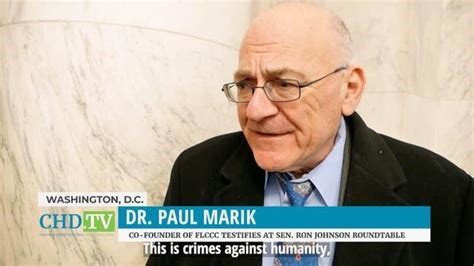
Has discussed “turbo cancer” in interviews and professional forums as a clinical observation of unusually aggressive malignancies, while emphasizing the need for further investigation. Listen to Dr. Marik talk about the relationship between cancers and mRNA vaccines.
Dr. Joseph Varon – Critical Care Medicine
Participated in professional discussions specifically labeled “Turbo Cancer”, referring to rapid cancer progression patterns being reported by clinicians.
Dr. Peter McCullough – Cardiology / Internal Medicine
Has referenced “turbo cancer” in public commentary as a term used by clinicians to describe aggressive post-diagnosis cancer behavior.
Dr. Aseem Malhotra – Cardiology
Has been cited in media reports discussing concerns about rapidly progressing cancers, including the use of the “turbo cancer” label in public discourse.
Dr. Harvey Risch – Epidemiology
Has publicly speculated about the phenomenon referred to as “turbo cancer,” framing it as a question worthy of investigation rather than a settled conclusion.
Dr. Wafik El-Deiry – Oncology / Cancer Biology
Has stated that what some are calling “turbo cancer” may resemble hyperprogressive disease, a known but poorly understood phenomenon in oncology.
Each time oncogenic alarms arise between vaccines and cancer— SV40, adjuvant inflammation, retroviral DNA fragments — agencies invoke one defense: “No evidence of harm.” But “no evidence” means no one funded significant, long-term, multi-variable studies capable of detecting slow, cumulative carcinogenesis. In regulatory terms, the absence of evidence became evidence of absence.
“The mRNA vaccines are all completely contaminated…the Pfizers are all full of SV40,” says Dr. Angus Dalgleish, Oncologist. “SV40 was what, in my day, we put into mice to make them grow tumors…& we’re putting this into humans.” Mainstream cancer biology considers SV40 oncogenic in animals, but unproven as a human carcinogen. AI reports that some mRNA.
Crying For The Dead Turbo Cancer Patients
In May of 2023, it was reported that Pancreatic cancer rates are spiking in women 55 and under. Experts don’t know why. Could it be Covid genetic vaccines? They will not think or say anything about that because they are not allowed to even think about the Covid vaccines as the cause. But when we look carefully, we see noticeable changes in cancer patients. Everyone in the first world knows that most first-world countries are experiencing sharp increases in excess deaths with no explanation from authorities.
Turbo Leukemia
Philadelphia, PA – 16-year-old Kyle Limper died within 24 hours of leukemia diagnosis on April 13, 2023 (click here)
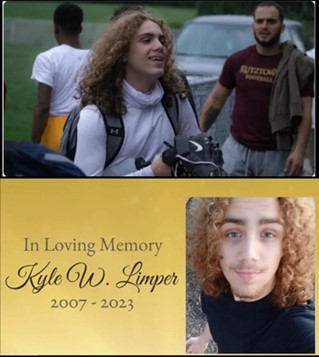
His father, Ken Limper, initially brought his son to urgent care for back pain after Kyle played basketball before taking him to Jefferson Hospital. “They told me in a couple of days, if he doesn’t get better, to bring him back. Well, in a couple of days, he couldn’t even stand up,” the grieving dad said. “He couldn’t even get out of bed, and I had to help him stand him up, then he fell right back down on the bed.”
Limper was eventually rushed to St. Christopher’s Hospital for Children, where doctors said the multi-sport athlete’s organs were shutting down from Leukemia. Within 24 hours after he arrived at the hospital, he died. (click here)
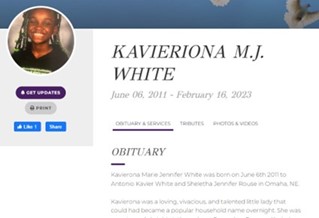
Omaha, NE – Kavieriona White, an 11-year-old girl, died two days after a leukemia diagnosis on February 16, 2023
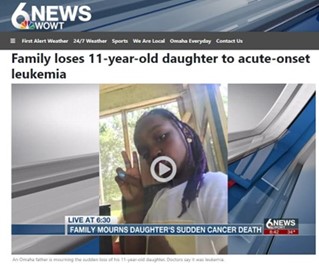
11-year-old Kavieriona died suddenly after being diagnosed with Leukemia just a few days prior (click here). It started when she was sent home from school with a fever. A few days later, she was found unresponsive and rushed to the hospital, where she was diagnosed with Leukemia and died two days later. “The blood disease was Leukemia. The doctor informed me it was treatable and curable, but the main problem was the brain bleeds.”
Augusta, GA – Julia Chavez, a 13-year-old girl, died hours after leukemia diagnosis on February 13, 2023
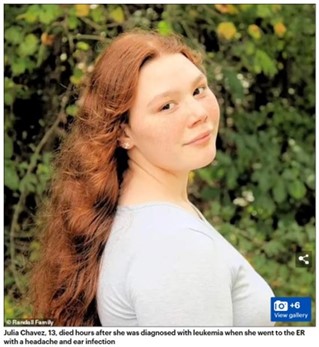
“A 13-year-old girl from Harlem Middle School in Georgia died hours after she was diagnosed with leukemia when she went to the ER with a headache and ear infection.” (click here). “She had bleeding in her brain, lungs, stomach’ and throughout her body. ” ‘We never knew she had it,’ Jenna told the news outlet. ‘She never had more than a sniffle and has never been hospitalized since she was born.’ Vallejo, CA – Evan Fishel, age 21, died four days after leukemia diagnosis on February 10, 2023
Turbo Brain Cancer
Athens, GA – 21-year-old University student Liza Burke had a brain bleed on March 10, 2023, while on vacation in Mexico. She was diagnosed with Glioblastoma in her brainstem and died four weeks later on April 28, 2023 (click here).
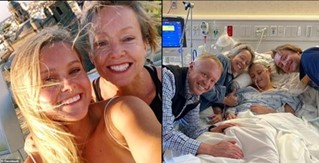
Boston, MA – Boston Celtics VP of Public Relations, Heather Walker, age 52, died from Glioblastoma on April 26, 2023 (she was initially diagnosed in July 2021) (click here)
Hoboken, NJ – 28-year-old doctor Dr.Ahntu Vu (family medicine resident) died two months after being diagnosed with Glioblastoma. He died on April 18, 2023 (click here)
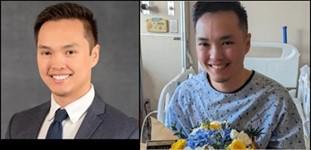
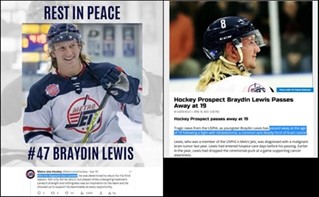
“While awaiting the start of his treatments, Anhtu’s symptoms worsened, and new imaging has shown the rapid progression of the tumor over the last month.” 19-year-old hockey star Braydin Lewis died on April 15, 2023. In March 2022, he had a seizure, was diagnosed with a 2-inch brain cancer (Glioblastoma), and had surgery. He died less than 11 months after diagnosis (click here)
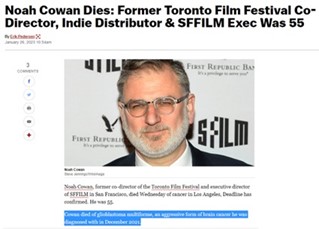
Los Angeles, CA – 55-year-old Toronto Film Festival Co-Director & Film Exec Noah Cowan died on January 25, 2023, one year after diagnosis of Glioblastoma (click here)
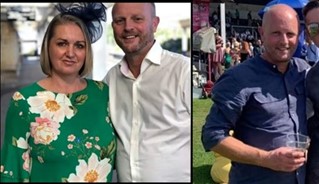
Billingham, UK – 57-year-old Mark Bellergy died three months after being diagnosed with Glioblastoma, on January 4, 2023 (click here)
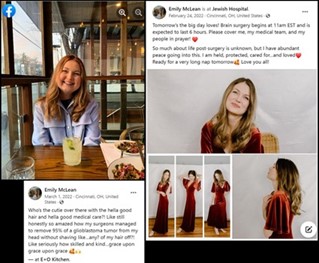
Norwood, OH – 26-year-old Emily McLean died on October 22, 2022, after a 10-month battle with Glioblastoma (click here)
Maryland – 65-year-old news anchor Wendy Rieger died on April 16, 2022, after 11 months of Glioblastoma (click here)
Conclusion
It has been shown that in up to 50% of vaccinees, COVID vaccines can induce a temporary immune suppression or immune dysregulation (lymphocytopenia) that may last for about a week or longer.
When COVID vaccines were first released to the general public, Big Pharma
made grandiose promises to lure people in. “Safe and effective.” “The cure to
stop the spread.” NONE of it came to fruition. Instead, these jabs marked the beginning of medical tyranny in America. Parents got threatened with
child custody loss unless we took our kids to get experimental vaccines.
Robert F. Kennedy Jr.
In addition, COVID mRNA vaccines have been shown to “reprogram” (i.e., influence) adaptive and innate immune responses and, in particular, to downregulate the so-called TLR4 pathway, which is known to play an essential role in the immune response to infections and cancer cells. More bad news for cancer patients, but don’t mention this to your doctor, for they will play stupid and try to sell you on the idea of getting vaccinated. Vaccine-induced immune suppression or immune dysregulation might potentially trigger sudden tumor growth and cancer in the weeks following vaccination. Notably, lymphocytopenia has also been frequently observed in cases of severe Covid.
“My daughter has a close friend who got colon cancer several years ago,
supposedly in remission since then. She got double-vaxxed in April
or May and then had a booster in Sept. In October, her cancer was
back with a vengeance and spreading to other places.
She is currently on chemo but not doing well.”
Cancer is hard enough to treat even under the best circumstances, but it is murderous when genetic injections provoke it. We now have an inconceivable rise in cancer rates caused by COVID vaccines, but the mainstream media, the FDA, and CDC will deny, deny, and deny.
Early in 2022, Senator Ron Johnson hosted a conference in Washington, D.C. called “Second Opinion.” One of the speakers at this 5-hour recorded event last Monday was attorney Thomas Renz, who, in the short time allotted to him, testified that three military medical professionals had become whistleblowers, putting their careers on the line to expose data contained in the Department of Defense Medical Database, under oath and penalty of perjury, regarding the explosion of miscarriages which increased by almost 300% in 2021, a nearly 300% increase in cancer, and over a 1000% increase in neurological injuries. Renz stated: “Our soldiers are being experimented on, injured, and sometimes possibly killed.” (by the COVID-19 vaccines.)
Of course, cancer is not the only concern with genetic injections. A newly published CDC registry study using data from the CDC’s COVID-19 Vaccine Pregnancy Registry (C19VPR) and the Pregnancy Risk Assessment Monitoring System (PRAMS) compared approximately 8,000 vaccinated pregnant women to 8,000 unvaccinated pregnant women and found a 24% higher relative risk of hypertensive disorders of pregnancy (15% vs. 12%) among those who received COVID-19 shots. These disorders — which include gestational hypertension and preeclampsia — are a leading cause of maternal and fetal death worldwide.
Dr.Sircus is a reader-supported publication. To receive new posts and support my work, consider becoming a free or paid subscriber.
Subscribe now

comments