

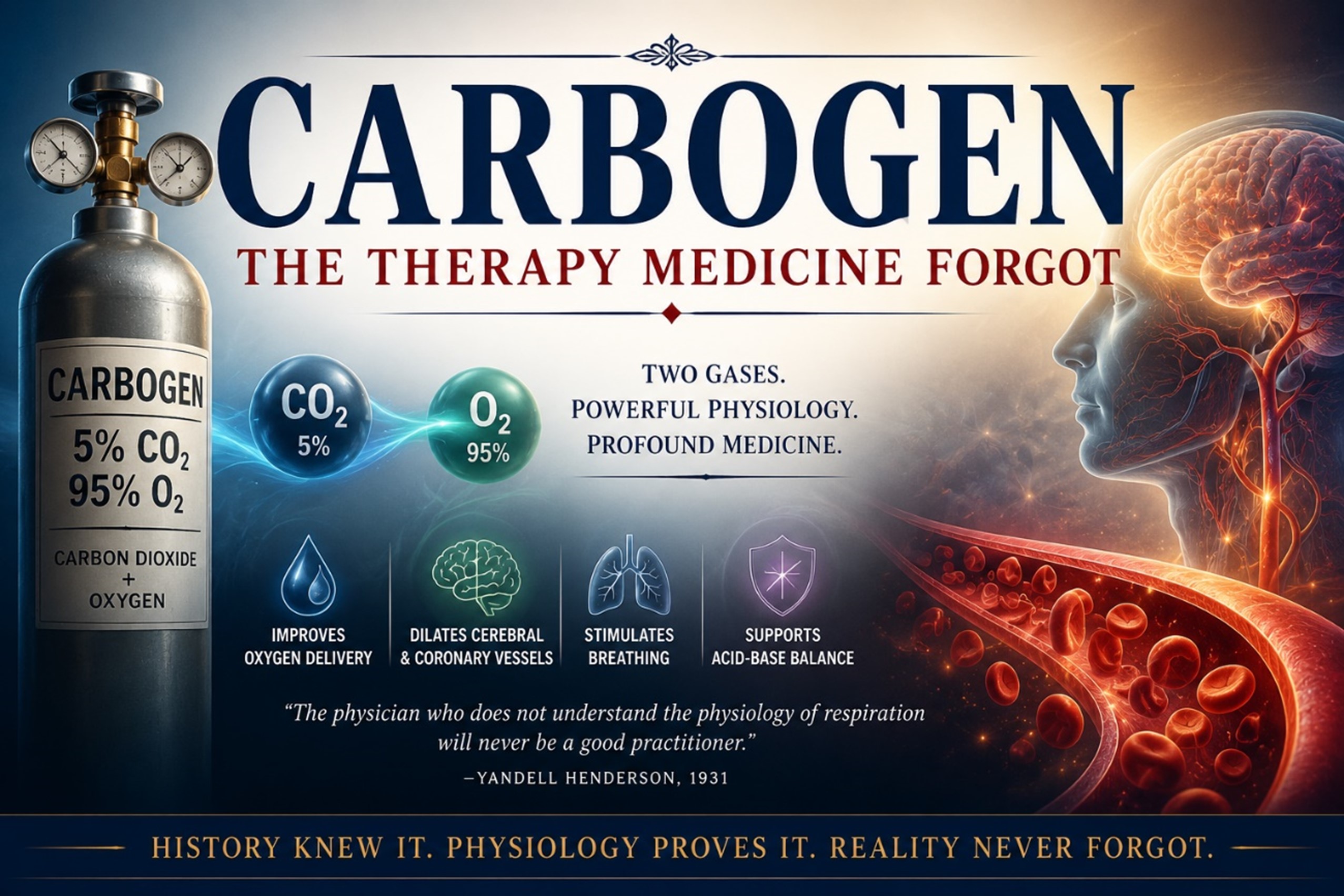
Carbogen is a gas mixture—typically 5% carbon dioxide and 95% oxygen. Sometimes 7% CO₂. The name comes from the combination of carbon dioxide and oxygen. Simple. Two gases the human body depends on, combined in a ratio that exploits physiology instead of fighting it. However, the new wave of home users often use at lower percentages. Traditional Carbongen (5%) was historically used in hospital settings.
By 1900, carbogen was in regular clinical use. It made anesthesia safer. It prevented surgical collapse. It was used for pneumonia, for carbon monoxide poisoning, for asthma, for resuscitation of the newborn, for psychiatric conditions, and for cardiac emergencies. It was not fringe. It was not an alternative. It was standard medical gas therapy, available in hospitals, studied in journals, and taught in medical schools.
Yandell Henderson, a Yale physiologist, was its most prominent advocate. He called CO₂ “the chief hormone of the whole body” and spent decades demonstrating that adding CO₂ to oxygen transformed it from a supportive gas into a therapeutic one. His work was published in the best journals. His results were replicated. Carbogen was medicine.
Then it disappeared. Not gradually. Not because it was replaced by something better. It was simply abandoned. Walk into any hospital today and ask for carbogen. The respiratory therapist will look at you like you asked for leeches. They have oxygen. They have Heliox. They have nitric oxide. They do not have carbogen. They probably don’t know what it is.
The mechanism is not mysterious. It’s the Bohr effect, cerebral vascular regulation, and respiratory drive: Oxygen delivery, not just oxygen saturation. Administering pure oxygen increases arterial pO₂. But if the patient is hyperventilating—which sick, anxious, and pain-stricken patients do—their CO₂ is low. Low CO₂ levels mean hemoglobin binds oxygen more tightly. You can have 100% oxygen saturation and tissues that are suffocating. Adding 5% CO₂ to the oxygen unloads oxygen from tissues by shifting the oxyhemoglobin dissociation curve to the right. The oxygen actually gets where it’s needed.
Cerebral and coronary vasodilation. CO₂ is the most potent cerebral vasodilator the body produces. Drop CO₂ and brain vessels constrict. Raise CO₂, and they open. This is why hyperventilating patients get dizzy—their brain blood flow crashes. Carbogen reverses this. It also dilates coronary arteries, increasing cardiac perfusion at the moment of greatest need.
Respiratory stimulation. CO₂ is the primary driver of the respiratory center in the brainstem. Adding CO₂ to inspired gas stimulates deeper, more effective breathing. For patients with respiratory depression from anesthesia, opioids, or illness, carbogen wakes up the drive to breathe.
pH buffering. CO₂ and bicarbonate form the body’s primary acid-base buffer. Carbogen delivers both respiratory CO₂ and, secondarily, raises bicarbonate through renal compensation over time.
This is not speculation. It’s textbook respiratory physiology. The same textbooks that explain the Bohr effect, the Haldane effect, and cerebrovascular CO₂ reactivity somehow never mention that these mechanisms can be deliberately exploited for therapy. The knowledge is there. The application is not.
Why Did It Disappear?
Carbogen was not outcompeted. It was outmaneuvered. The reasons are instructive because they reveal how medical progress actually works:
It couldn’t be patented. You cannot own 5% CO₂ and 95% oxygen. You cannot charge monopoly prices for a gas mixture. Any hospital could mix its own. Any manufacturer could produce it. There was no intellectual property to defend, no exclusive revenue stream to capture, no sales force to deploy. In a medical economy built on proprietary molecules, an unpatentable gas mixture is an orphan.
It had no corporate champion. A drug without a patent is a drug without a marketing budget. No one took carbogen through the FDA approval process because there was no return on that investment. No one funded the large trials because they would cost millions, while the product would earn pennies. Carbogen didn’t fail a clinical trial. It never got one, because no one stood to profit from proving it worked.
The mechanical ventilation revolution displaced it. As positive-pressure ventilators became standard in ICUs, the focus shifted to machine-controlled breathing. Ventilators delivered oxygen and managed CO₂ by adjusting rate and tidal volume. The idea of adding CO₂ to the inspired gas became conceptually alien—ventilators were designed to remove CO₂, not deliver it. The machine defined the therapy, and the therapy defined the thinking.
CO₂ was pathologized. Over the 20th century, CO₂ shifted in the clinical imagination from a vital regulatory molecule to a waste product to be eliminated. Capnography measures end-tidal CO₂ as a marker of ventilation adequacy, not a therapeutic target. High CO₂ meant hypoventilation—a problem to fix. The idea that raising CO₂ could be therapeutic became physiologically unintelligible within the framework that dominated training.
The evidence froze in time. By the 1950s, there was substantial literature on carbogen. But evidence-based medicine, as it developed in the 1980s and 1990s, privileged recent randomized trials over older clinical experience. Carbogen’s evidence base, being pre-RCT, was retroactively classified as “anecdotal” and “low quality.” The fact that no one had funded modern trials was treated as evidence of ineffectiveness rather than evidence of a broken funding model.
The Institutional Blind Spot
Carbogen’s disappearance is a case study in how medicine loses knowledge. A conspiracy didn’t suppress it. It was abandoned by a system that only values interventions that can be owned, marketed, and billed.
The same physiology that made carbogen work in 1900 still works in 2026. CO₂ still unloads oxygen from hemoglobin. It still dilates cerebral vessels. It still stimulates respiratory drive. The Bohr effect didn’t expire. The Haldane effect wasn’t repealed. The body is still the same body.
Deoxygenated blood carries more CO₂; oxygenated blood carries less CO₂.
|
Bohr Effect |
Haldane Effect |
|
CO₂ affects oxygen transport |
Oxygen affects CO₂ transport. |
|
High CO₂ promotes oxygen release. |
High oxygen promotes CO₂ release. |
|
Helps unload oxygen in tissues |
Helps unload CO₂ in lungs |
What changed was not the science. What changed was the institutional framework that decides which science gets applied. Carbogen is a therapy grounded in basic physiology, supported by historical clinical experience, and abandoned not because it failed but because it couldn’t be profitably exploited. It sits in the same graveyard as Buteyko breathing, magnesium therapy, bicarbonate medicine, and the therapeutic use of fever—interventions that work with the body’s own regulatory systems, that cost nothing, and that therefore have no place in a pharmaceutical medical economy.
Researchers such as John Scott Haldane and later physiologists recognized that CO₂ is not merely a waste gas.
The Haldane effect shows that:
- CO₂ transport is tightly integrated with oxygen transport.
- Changes in breathing can significantly alter blood chemistry.
- Excessive breathing (hyperventilation) can lower CO₂ and affect oxygen delivery to tissues.
This is one reason the Haldane effect is frequently discussed by advocates of CO₂-focused physiology, including those influenced by Ray Peat and respiratory therapies such as the Buteyko Method.
The Revival
Carbogen is making a quiet comeback in niches. Some hyperbaric oxygen practitioners use it. Some researchers are investigating CO₂ in cancer therapy. Tumor microenvironments are acidic and hypoxic, and altering CO₂ status may influence tumor biology. Some neurologists are exploring CO₂ for cerebral vasospasm and stroke. The physiology never went away. The applications are being rediscovered by people willing to read the old literature and think from first principles.
Yandell Henderson wrote in 1931 that “the physician who does not understand the physiology of respiration will never be a good practitioner.” He was right then. He would be horrified now.
Conclusion
Medicine increasingly became a science of intervention rather than a science of physiology. It became obsessed with what could be added, blocked, suppressed, stimulated, patented, or sold. Lost in the process was reverence for the body’s own regulatory intelligence. Carbogen represented a different medical philosophy. It did not force the body in a new direction. It restored conditions under which the body could regulate itself. That distinction may explain both its effectiveness and its disappearance.
The tragedy is not that carbogen was forgotten. The tragedy is that modern medicine has forgotten how to think like carbogen’s pioneers. Henderson and his contemporaries began with physiology and asked what would help the organism function better. Today, medicine often begins with a product and asks what market it can serve. Until that reversal is corrected, therapies like carbogen will continue to vanish—not because they fail, but because they succeed in ways that cannot be owned.
No matter how sophisticated medicine becomes, hemoglobin still responds to carbon dioxide. Blood vessels still dilate in response to CO₂. The Bohr effect still operates. Reality never forgot carbogen. Only medicine did.
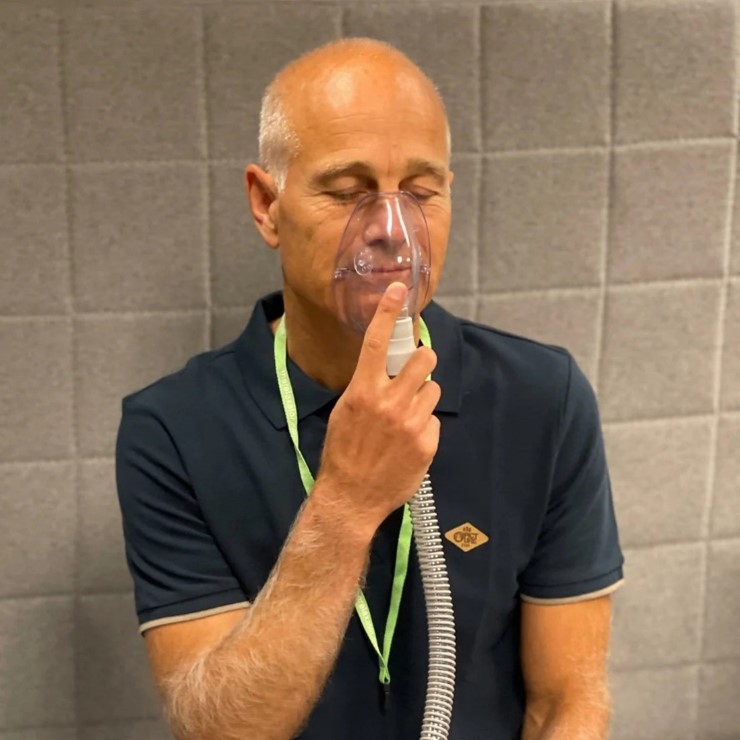
It is only the last two years where people have had access to Carbon Dioxide Inhalation Carbogen therapy. It is called the Cardihaler and it costs 900 dollars and this one is the best available. You can see it on my Hydrogen Equipment site on the bottom right.
Dr.Sircus is a reader-supported publication. To receive new posts and support my work, consider becoming a free or paid subscriber.
Subscribe now

comments