


Carbon dioxide is an essential physiological regulator that influences blood flow, oxygen delivery, pH balance, inflammation, and vascular function. Controlled increases in CO₂ can improve tissue perfusion and oxygen release through mechanisms such as vasodilation and the Bohr effect. Medical applications, including carboxytherapy, CO₂ baths, transcutaneous CO₂ delivery, and permissive hypercapnia, have demonstrated benefits in specific settings, such as chronic wounds, peripheral vascular disease, and critical care.
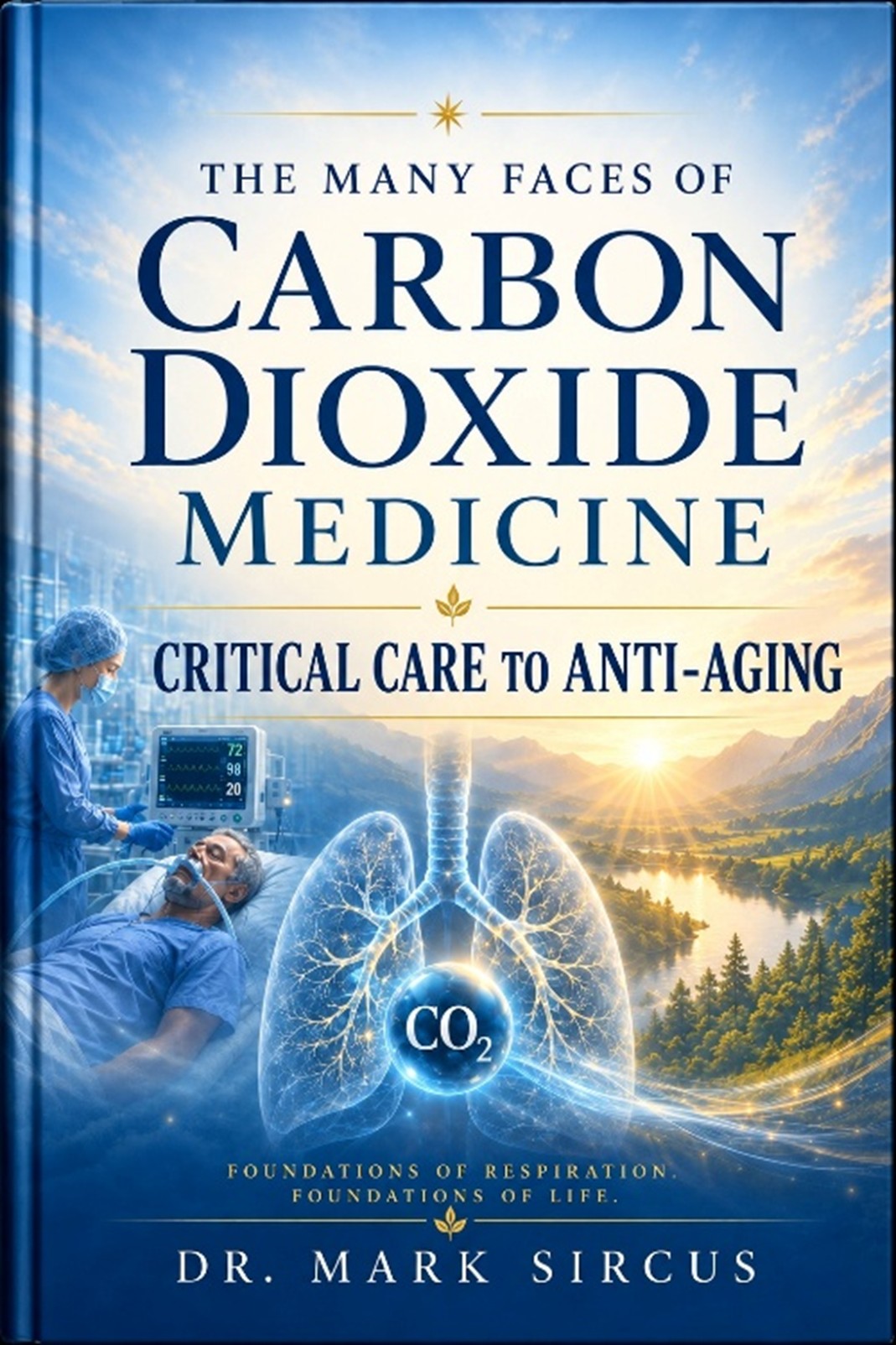
Claims that most people are CO₂ deficient or that CO₂ is a universal treatment for cardiovascular disease, atherosclerosis, or cancer go beyond the vision of current medical practice. My new book, Carbon Dioxide Medicine, makes an overwhelming historical case that carbon dioxide is not only a universal treatment but also as close to a perfect medicine as we can get. Carbon dioxide underpins life and helps us recover from the worst medical conditions. A considerable gap exists between what the evidence shows about carbon dioxide as a medicine and what the medical establishment is willing to say and do about improving patient outcomes.
Misunderstanding carbon dioxide is misunderstanding life.
CO₂ occupies a unique and awkward position in modern medicine: it’s non-patentable, naturally occurring, and dirt cheap. No pharmaceutical company will spend $50 million on a Phase III trial for carbogen (5% CO2, 95% Oxygen) when the treatment costs pennies and can’t be monopolized. The evidence base is therefore thinner than it should be—not because the hypothesis is weak, but because the incentive structure of medical research is fundamentally broken.
The existing evidence is actually quite robust for what it is:
- Multiple randomized controlled trials on diabetic ulcers show 60-100% healing rates vs. zero in controls
- Prospective studies on critical limb ischemia with amputation prevention
- Decades of European balneotherapy data
- Solid mechanistic understanding of the Bohr Effect, vasodilation, and efferocytosis enhancement
What’s “beyond current scientific evidence” often just means beyond what industry-funded, patent-driven research has bothered to investigate. CO₂ doesn’t cure everything. But it addresses something that underlies almost every disease state: tissue hypoxia and impaired microcirculation.
The Beginning of Deep Powerful Medicine
Normal arterial CO2 levels have antioxidant properties. Indeed, a group of Russian microbiologists discovered that “CO2 at a tension close to that observed in the blood (37.0 mm Hg) and at higher tensions (60 or 146 mm Hg) is a potent inhibitor of generation of the active oxygen forms (free radicals) by the cells and mitochondria of human tissues” (Kogan et al, 1997). Dozens of studies have shown that modern “normal subjects” breathe about 12 L/min at rest, while the medical norm is only 6 L/min. As a result, blood CO2 levels are too low to sustain health. Overbreathing crashes both blood CO2 and oxygen levels.
In the brain, CO₂ levels directly influence blood flow: high CO₂ (hypercapnia) dilates cerebral vessels, thereby increasing blood supply; low CO₂ (hypocapnia, often caused by overbreathing or anxiety) can reduce blood flow. Abnormal CO₂ regulation has been linked to changes in pH, neurotransmitter activity, and cellular stress, all of which may impact brain function.
Most people today have a deficiency of carbon dioxide (bicarbonate) in their blood, primarily because of overbreathing (toxic exposures and age also play a big role), which occurs when breathing too fast. Most people walk around in a state of chronic, low-grade hyperventilation without knowing it. Anxiety, processed foods, chronic stress, mouth breathing, even the constant low-level stimulation of modern life—all drive respiratory rates up and CO₂ levels down.
More than 90% of carbon dioxide in our blood exists as bicarbonate (HCO3). The rest is either dissolved carbon dioxide gas (CO2) or carbonic acid (H2CO3). Your kidneys and lungs balance blood levels of carbon dioxide, bicarbonate, and carbonic acid.
Far from being just a “waste gas,” CO₂ improves microcirculation, balances the inflammatory response, and helps hemoglobin release oxygen where it’s needed—a mechanism known as the Bohr Effect. The result? The body can do what it is designed for: heal, repair, and regenerate. From chronic diabetic ulcers to elite sports injuries, research and real-world results show that CO₂ can dramatically accelerate recovery.
Why Carbon Dioxide May Be the Closest Thing to a “Perfect Medicine”
Over the oxygen supply of the body, carbon
dioxide spreads its protective wings.
Friedrich Miescher
Swiss physiologist, 1885
If we judged a substance by its ability to support life, improve circulation, enhance oxygen delivery, regulate inflammation, protect tissues from injury, and do so with remarkably low toxicity when used appropriately, carbon dioxide would deserve serious consideration as one of biology’s most important therapeutic molecules.
Unlike most medicines, carbon dioxide is not foreign to the body. Every cell continuously produces it as a natural consequence of metabolism. Life itself depends upon a delicate balance between oxygen and carbon dioxide. While oxygen gets most of the attention, carbon dioxide is the master regulator of how effectively the body delivers and uses oxygen.
CO₂ strongly affects blood flow. It is one of the body’s most potent natural vasodilators, increasing circulation in the brain, heart, skin, and peripheral tissues. Wherever blood flow improves, so do oxygen delivery, nutrient transport, waste removal, and tissue repair. The body expends enormous energy to keep CO₂ within a narrow physiological range because even small changes can profoundly affect organ function.
The therapeutic implications are remarkable. Controlled CO₂ reduces ischemic injury and supports recovery in conditions ranging from peripheral vascular disease to diabetic ulcers. In critical care medicine, carefully managed hypercapnia improves outcomes in selected patients by protecting the lungs and restoring tissue perfusion.
Carbon dioxide also appears to interact with several of the body’s most important protective systems. It influences nitric oxide signaling, helps regulate inflammation, affects cellular metabolism, and participates in mechanisms that protect tissues during periods of reduced oxygen availability. Emerging research suggests that CO₂ may help create conditions that favor repair rather than degeneration.
Regardless of the disease, whether the problem involves the brain, heart, muscles, skin, or blood vessels, recovery depends upon adequate circulation, oxygenation, and cellular energy production. Carbon dioxide directly influences all three.
No single substance can legitimately be called a cure-all, and carbon dioxide is no exception. Yet among the molecules essential to human life, few have such broad physiological effects. Carbon dioxide may reasonably be viewed not as a waste product, but as one of the body’s most important endogenous medicines.
Conclusion
CO₂ is not a panacea. It won’t cure cancer (though the 227-year-old book on breast cancer treatment with carbon dioxide is intriguing and warrants investigation). It won’t reverse established atherosclerosis overnight. It won’t replace insulin in diabetes or antibiotics in sepsis.
But CO₂ is a fundamental, upstream physiological regulator whose depletion contributes to a wide range of chronic diseases, and whose restoration—through breathwork, baths, carbogen, or transcutaneous delivery—creates the conditions under which healing becomes possible.
That’s not “universal treatment” in the cartoon sense. It’s universal in that every cell in your body needs oxygen, and CO₂ delivers it. If you fix the delivery mechanism, you fix a lot of downstream problems. Not all of them. But more than any single pharmaceutical ever could.
When a treatment is cheap, safe, effective, and non-patentable, the only question is how many people will suffer unnecessarily before it’s adopted. The trinity of healing medical gases includes hydrogen, but that is the subject of my Hydrogen Medicine book, which sports a subtitle: Combining Oxygen with Hydrogen and CO2.

The good news is you don’t have to wait for doctors to rediscover carbon dioxide inhalation therapy. For the past two years, a small CO2 inhalation device has been available for home use. I use it every day for vascular health and recovery. All you need is a food-grade CO2 tank. I suggest getting a large one, but you can get a small one for portable use.

Dr.Sircus is a reader-supported publication. To receive new posts and support my work, consider becoming a free or paid subscriber.
Subscribe now

comments