

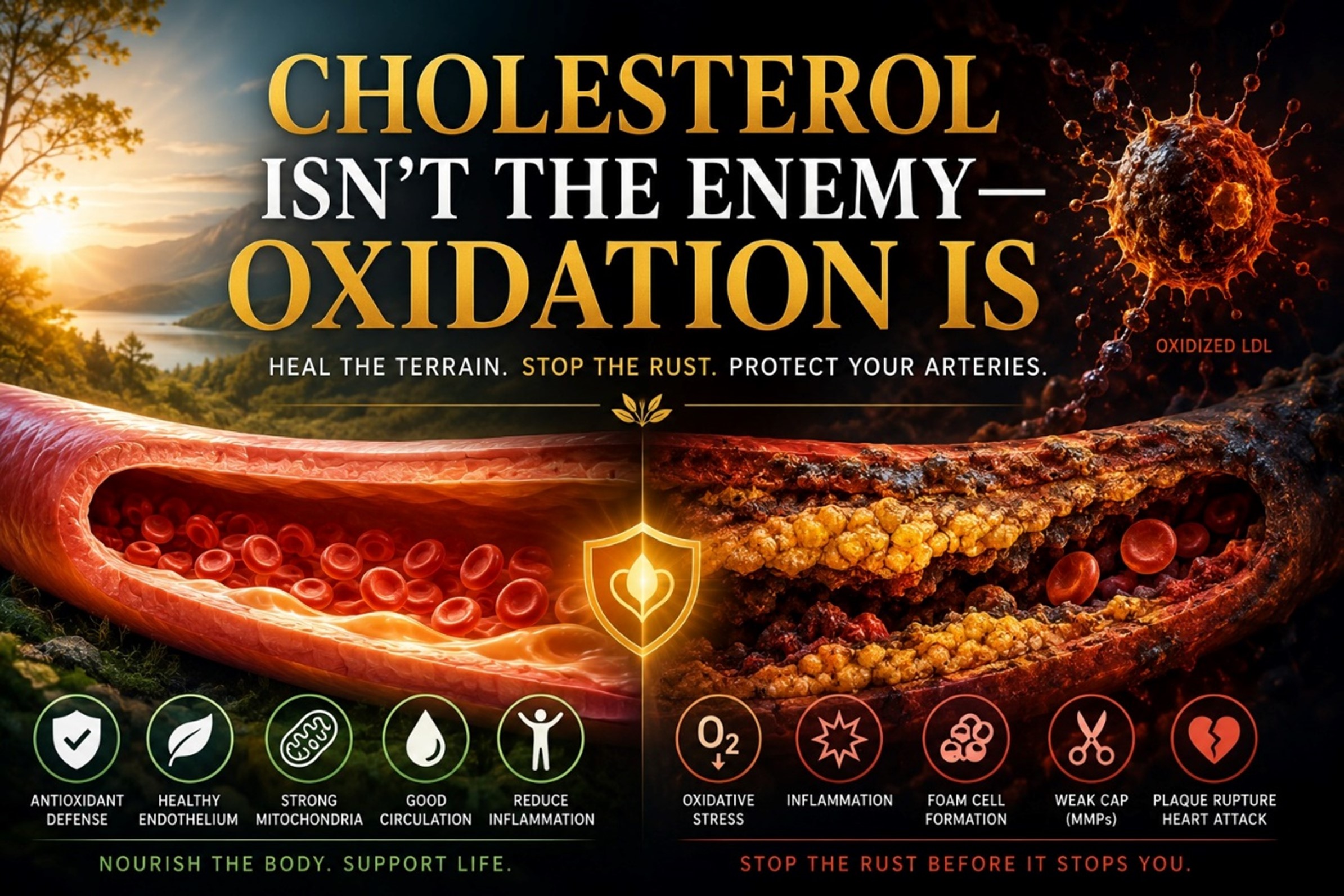
“If your doctor says your cholesterol is ‘perfect’ but your artery plaque is still growing, you might be missing the Rust Factor.” For decades, we have been taught that cholesterol is the villain behind heart disease. Millions of people have had their cholesterol lowered with drugs, yet heart attacks, strokes, and progressive arterial disease continue to occur in people whose cholesterol numbers are considered “perfect.” The reason is simple: the standard cholesterol story is incomplete. Cholesterol itself is not the primary problem. The real danger begins when cholesterol becomes damaged through oxidation.
LDL cholesterol is not inherently toxic. In fact, it performs essential functions throughout the body, transporting cholesterol needed for cell membranes, hormone production, and tissue repair. Trouble begins when LDL particles become oxidized by chronic inflammation, oxidative stress, poor mitochondrial function, smoking, high blood sugar, environmental toxins, high blood pressure and nutritional deficiencies. Once oxidized, LDL is no longer recognized as normal by the immune system. Macrophages engulf these damaged particles until they become swollen “foam cells,” eventually dying and contributing to the unstable core of an atherosclerotic plaque. This process—not simply elevated cholesterol—is one of the fundamental drivers of arterial disease.
Equally important is what happens to the artery wall itself. Healthy arteries are lined by a thin layer of endothelial cells that regulate blood flow, prevent abnormal clotting, and control inflammation. When this endothelial lining becomes injured, oxidized LDL gains easier access to the vessel wall, inflammatory cells are recruited, and plaque formation accelerates. As the disease progresses, enzymes known as matrix metalloproteinases (MMPs) can weaken the fibrous cap covering the plaque, increasing the risk of rupture—the event that most often triggers a heart attack or stroke. The amount of cholesterol in the blood tells us very little about whether these destructive processes are occurring.
One of the body’s natural defenses against oxidation is an enzyme called paraoxonase-1 (PON1), carried on HDL particles. PON1 helps break down oxidized lipids before they can cause damage. However, its activity declines with aging, chronic inflammation, diabetes, smoking, and oxidative stress. HDL is often referred to as “good cholesterol,” but its protective capacity depends not simply on the amount of HDL in the blood but on whether it remains functional. Protecting PON1 activity may be far more important than simply raising HDL cholesterol.
Among natural compounds studied for their effects on oxidation, pomegranate deserves attention. Research led by Michael Aviram demonstrated that daily consumption of pomegranate over several years was associated with reduced carotid artery thickness, lower blood pressure, and reduced LDL oxidation. These findings are impressive because they suggest that improving the oxidative environment within the artery may influence the progression of atherosclerosis itself. However, the story is more nuanced than many headlines suggest. The highest concentrations of the fruit’s unique polyphenols, called punicalagins, are found in the peel and white pith—parts most people discard. Commercial pomegranate juices often contain much less of these compounds while delivering a substantial fructose load that may undermine many of the fruit’s potential benefits.
Another fascinating discovery concerns Urolithin A, a compound produced not by the pomegranate itself but by certain gut bacteria that metabolize its ellagitannins. Urolithin A has attracted considerable interest because it stimulates mitophagy—the process by which cells remove damaged mitochondria and replace them with healthier ones. Since mitochondrial dysfunction is increasingly recognized as a central feature of aging and cardiovascular disease, this may represent one mechanism through which pomegranate supports vascular health. However, not everyone possesses the intestinal bacteria required to produce Urolithin A, meaning individual responses can vary considerably.
What is often missing from discussions of heart disease is the broader physiological terrain. Oxidized LDL does not arise in isolation. It is promoted by magnesium deficiency, chronic inflammation, mitochondrial dysfunction, impaired microcirculation, poor oxygen delivery, excessive oxidative stress, and metabolic disturbances. These are the true foundations upon which cardiovascular disease develops. Lowering cholesterol addresses only one laboratory number while leaving many of these deeper disturbances untouched. Meaning cardiologists are doing a piss poor job with their patients.
This is why the future of cardiovascular medicine must move beyond cholesterol alone. We should be asking not merely how much cholesterol is present, but why it is becoming oxidized in the first place. We should be measuring oxidative stress, endothelial function, mitochondrial health, inflammation, and metabolic resilience. These are the physiological processes that determine whether cholesterol remains a useful transport molecule or becomes the raw material for arterial plaque.
Ultimately, the goal is not to wage war against cholesterol but to restore the conditions under which cholesterol can perform its normal biological functions without becoming damaged. That means supporting antioxidant defenses, preserving mitochondrial function, correcting nutritional deficiencies such as magnesium, improving oxygen utilization and circulation, reducing chronic inflammation, and maintaining the integrity of the vascular endothelium. Pomegranate may be one valuable tool in this broader strategy, but it should be understood as part of a comprehensive physiological approach rather than as a stand-alone solution. The real battle is not against cholesterol. It is against the oxidative and metabolic environment that transforms a vital molecule into a contributor to disease. Carbon dioxide inhalation therapy is very useful in this regard.
Polyenylphosphatidylcholine (PPC)
One of the most overlooked consequences of oxidative stress is not simply the oxidation of LDL cholesterol but the oxidation of the very membranes that make life possible. A phospholipid membrane encloses every cell in the body, and every mitochondrion—the cell’s energy-producing powerhouse—depends on exquisitely organized membrane structures to generate ATP. Free radicals attack these delicate phospholipids, causing them to become rigid, dysfunctional, and leaky. Once membrane integrity is compromised, receptors malfunction, ion transport becomes disturbed, mitochondrial respiration declines, and cells lose their ability to communicate, repair, and produce energy efficiently. In many respects, aging itself can be viewed as the progressive oxidation and deterioration of cellular membranes.
This is where Polyenylphosphatidylcholine (PPC) occupies a unique place in restorative medicine. Unlike conventional antioxidants, which attempt to neutralize free radicals after oxidative damage has already occurred, PPC provides the very phospholipid building blocks needed to repair damaged membranes. Extensive research over several decades has demonstrated PPC’s remarkable ability to integrate into injured cell membranes, restore membrane fluidity, improve mitochondrial function, and protect tissues from further oxidative injury. The liver has been the best-studied organ, but the same membrane-restoring principles apply throughout the cardiovascular system, nervous system, kidneys, and virtually every tissue in the body.
Viewed from the perspective of Natural Allopathic Medicine, membrane restoration is one of the fundamental goals of therapy. Cholesterol does not function in isolation; it resides within phospholipid membranes whose health determines the performance of every cell. Protecting these membranes requires more than lowering cholesterol. It requires reducing oxidative stress, restoring mitochondrial function, ensuring adequate magnesium, optimizing carbon dioxide physiology, and providing the phospholipids necessary for repair. PPC is therefore not simply another supplement—it is one of the body’s most important tools for rebuilding the structural foundation upon which cellular health depends.
Nitric Oxide and Carbon Dioxide
Nitric oxide (NO) and carbon dioxide (CO₂) are probably the two most important gaseous signaling molecules in cardiovascular physiology. Traditionally, nitric oxide has received almost all the attention, while carbon dioxide has been relegated to the role of a metabolic waste product. That view is increasingly difficult to defend. The emerging science suggests that NO and CO₂ are not competitors but complementary regulators of circulation, oxygen delivery, and tissue metabolism.
Nitric oxide is produced primarily by the endothelium through nitric oxide synthase (eNOS). Its best-known function is vasodilation: relaxing vascular smooth muscle to increase blood flow. Beyond this, NO inhibits platelet aggregation, reduces leukocyte adhesion, suppresses smooth muscle proliferation, and helps maintain the health of the vascular endothelium. A decline in nitric oxide bioavailability is considered one of the earliest hallmarks of endothelial dysfunction and atherosclerosis.
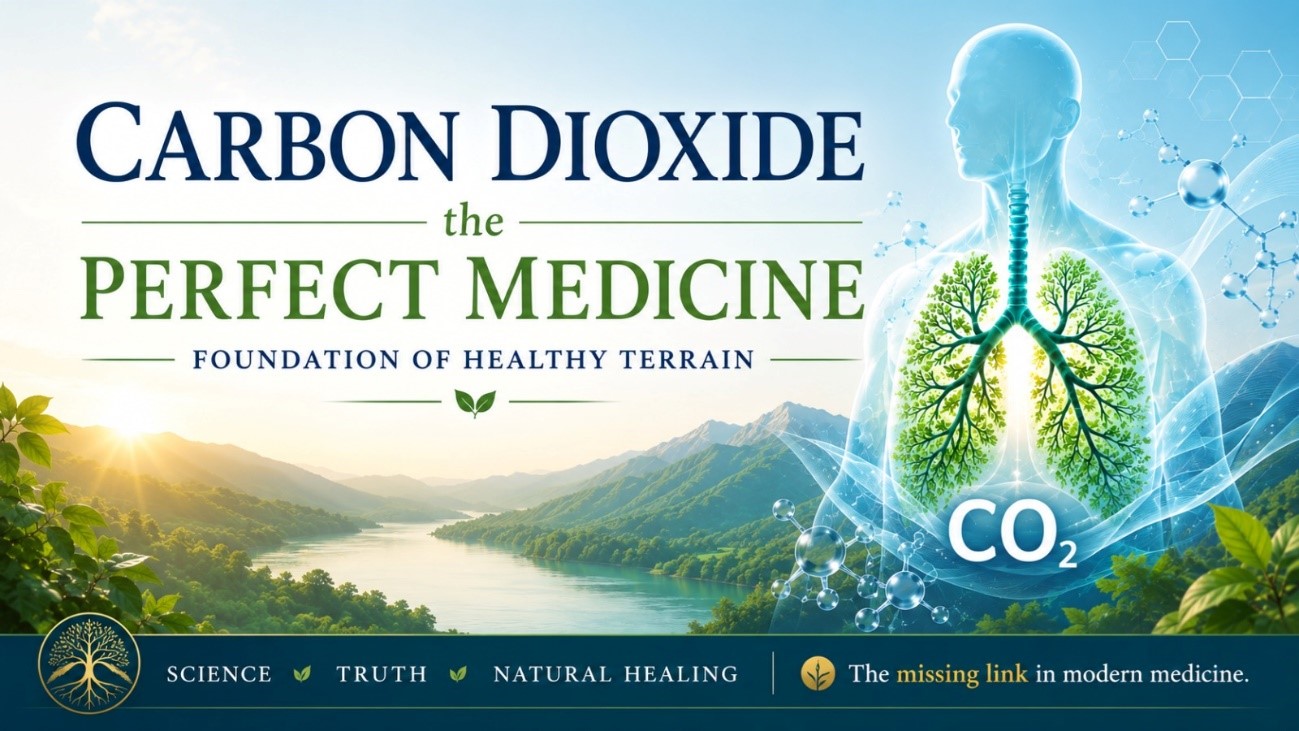
Carbon dioxide achieves many of the same physiological goals but through different mechanisms. CO₂ is itself a potent vasodilator, particularly in the cerebral circulation, where it is one of the dominant regulators of blood flow. Unlike nitric oxide, CO₂ also enhances oxygen unloading from hemoglobin through the Bohr effect, ensuring that increased blood flow is accompanied by improved oxygen delivery to the tissues. Recent research further suggests that CO₂ influences mitochondrial signaling, modulates inflammation, supports microcirculation, and may even stimulate glymphatic clearance in the brain. (I am almost finished with my book CO2 Medicine.)
The relationship between these two gases is more cooperative than competitive. Healthy endothelial function depends on adequate nitric oxide production, while healthy tissue metabolism continuously generates carbon dioxide. During exercise, both gases increase: muscles produce more CO₂ while blood flow stimulates nitric oxide release. Together they coordinate perfusion and oxygen delivery to meet metabolic demand. Rather than acting independently, they form part of an integrated physiological network regulating vascular homeostasis.
One intriguing area of investigation is whether CO₂ may also help preserve nitric oxide function. Oxidative stress rapidly inactivates NO by reacting with it to form peroxynitrite, reducing its vasodilatory capacity while increasing oxidative injury. If CO₂ reduces excessive mitochondrial production of reactive oxygen species—as some recent research suggests—it could indirectly preserve nitric oxide bioavailability by preventing its destruction. This remains an active area of investigation, but it offers a plausible explanation for why therapies that improve CO₂ physiology often produce benefits that resemble those traditionally attributed to nitric oxide.
From the perspective of Natural Allopathic Medicine, the future of vascular medicine is unlikely to be built around a single molecule. Nitric oxide, carbon dioxide, magnesium, and mitochondrial function represent different aspects of the same physiological system. Nitric oxide relaxes the vessels. Carbon dioxide optimizes blood flow and oxygen delivery. Magnesium stabilizes vascular smooth muscle and supports ATP-dependent processes. Healthy mitochondria generate the energy required for every aspect of vascular function. When these systems work together, the circulation becomes efficient, adaptable, and resilient. When they fail together, endothelial dysfunction, oxidative stress, inflammation, and atherosclerosis inevitably follow.

Perhaps the greatest misconception has been to celebrate nitric oxide while dismissing carbon dioxide as merely something to exhale. The evidence accumulating over the past decade suggests a different conclusion: nitric oxide and carbon dioxide are complementary messengers of life, each indispensable to maintaining the integrity of the cardiovascular system.
Dr.Sircus is a reader-supported publication. To receive new posts and support my work, consider becoming a free or paid subscriber.
Subscribe now

comments