

It is time for the medical world to reverse its position on the use of chlorine dioxide to treat disease. Even though still illegal to treat disease in all countries except one, we can use it legally to prevent cancer and other diseases that start in the mouth. Oral health is an important subject — and one that often gets overlooked in broader cancer discussions.
Oral hygiene isn’t just about avoiding cavities; the condition of the mouth is an early warning system for systemic inflammation and metabolic disorders. In fact, chronic oral infections create a biochemical environment that supports the very processes underlying cancer formation. Oral inflammation, gingivitis, and periodontitis are an invisible highway to cancer.
The underlying causes of periodontal disease are infectious agents such as viruses, bacteria, spirochetes, amoebas, and fungi. Periodontitis reflects the macroclimate of the entire body. In periodontal disease, the pathogens form a sticky, colorless plaque (Biofilm) that constantly forms on our teeth; however, other factors can cause periodontal (gum) disease or influence its progression.
Harvard Medical School researchers studied longevity and found that one of the most critical factors in preventing periodontal disease and gingivitis is daily flossing, as it removes bacteria from the teeth and gums. Chlorine dioxide also will do an excellent job, even when used just once a day for sublingual absorption, and will quickly remove viruses, bacteria, and fungi from the mouth.
Oral candidiasis, a fungal infection of the mouth, is more common among people with diabetes and those who wear dentures. If you smoke, have high blood glucose levels, or take antibiotics often, you are more likely to have a problem with oral fungal infections. Oral candidiasis is also more common amongst immunocompromised people, such as those who have HIV or AIDS, are pregnant, or are undergoing chemotherapy or radiation therapy.
In a landmark 2007 study led by Dr. Dominique Michaud, published in the Journal of the National Cancer Institute, was a prospective cohort analysis of 51,529 U.S. male health professionals found the first strong evidence that periodontal disease increases the risk of pancreatic cancer,” Men with a history of periodontal disease had a 64% increased risk of pancreatic cancer than men with no such history.
Periodontal pathogens (e.g., Porphyromonas gingivalis) or inflammatory mediators enter the bloodstream, contributing to systemic inflammation that may promote carcinogenesis in distant organs, such as the pancreas. Later studies (including Dr. Michaud’s 2018 work) confirmed broader links between severe periodontitis and overall cancer risk (24% increase) and specific cancers, with pancreatic cancer again showing consistent associations.
One study found that after rinsing with the mouthwash containing ClO2 for 7 days, morning bad breath decreased and reduced the concentrations of H2S, CH3SH, and (CH3)2S. Moreover, ClO2 mouthwash used over 7 days appeared effective in reducing plaque, tongue coating accumulation, and the counts of Fusobacterium nucleatum in saliva.
Another study reported a marked reduction of periodontopathic oral bacteria and an increased feeling of freshness after the treatment period with chlorine dioxide. Results suggest that CLO2 is an appropriate mouth rinse for patients with periodontitis. Chlorine dioxide reduces plaque and gingival indices, as well as bacterial counts, in the oral cavity.
Human health begins in the mouth. Every day, roughly thirty thousand bacteria from the oral cavity enter the bloodstream through chewing, brushing, or tiny gum abrasions. A healthy immune system clears them effortlessly; an inflamed mouth, however, becomes a constant leak of toxins, pathogens, and inflammatory molecules that spread far beyond the teeth. People with periodontal disease have elevated levels of inflammatory markers, such as C-reactive protein (CRP), in their blood. These markers are part of an early immune response to persistent inflammation, a central aspect of cancer and its development.
The Mouth as a Mirror of the Body
Gums are living tissue rich in blood vessels and immune cells. When they are chronically irritated—by dental plaque, highly refined food, smoking, hormonal imbalance, or mineral deficiency—they begin to separate from the teeth, forming “pockets” that harbor anaerobic bacteria. These organisms metabolize in oxygen-poor conditions and produce acids, sulfur compounds, and endotoxins. Those very chemicals—acidity, hypoxia, chronic inflammation—represent, in miniature, the same metabolic terrain that favors cancer at any site.
Research now shows direct correlations between periodontal disease and cancers of the mouth, pancreas, stomach, and esophagus. The shared link is systemic inflammation: bacterial lipopolysaccharides from gum disease raise C-reactive protein and stimulate cytokines such as IL‑6 and TNF-α. These circulate through the bloodstream, quietly eroding insulin sensitivity, promoting oxidative stress, and providing growth signals that cancers exploit.
The mouth is also a source of nitrosamines—carcinogenic compounds formed when decay bacteria convert dietary nitrates. A chronically infected oral cavity becomes a low-grade factory for these mutagens, delivering them straight into the digestive and respiratory tracts.
In a balanced mouth, beneficial bacteria keep pathogens in check, maintain a mild alkalinity, and protect the gums. Sugar, processed foods, acidic drinks, and overuse of antiseptic mouthwash can disrupt that balance. Pathogenic species take over, thrive in acidity, and emit lactic acid—yes, the same lactic environment found inside tumors. The line between oral dysbiosis and systemic cancer metabolism is thin.
A published study in the Journal of Periodontology confirms recent findings that people with periodontal disease, in general, are at a greater risk of systemic diseases, and periodontal disease is also at risk for heart disease and stroke. Men with periodontitis had a 72% greater risk of developing coronary disease. Gingivitis was associated with a 42% increased risk for men. A 1996 study involving over 1,100 individuals found that the incidence of coronary heart disease, fatal coronary disease, and strokes was all significantly related to their baseline periodontal status.
Oral Cancer
The same bacterium cultured from the crud or plaque is found in the arteries. According to an article published in the Archives of Otolaryngology—Head and Neck Surgery, chronic periodontitis is associated with an increased risk of tongue cancer among men. Researchers at the University at Buffalo and Roswell Park Cancer Institute have found the same thing.
The incidence of oral cancer is on the rise. Current estimates have the rate of increase at around 11%, with approximately 34,000 people in the U.S. being diagnosed with oral cancers each year. Of those 34,000 newly diagnosed individuals, only half will be alive in five years. Oral cancer can mimic common mouth sores, meaning most patients do not experience noticeable symptoms in the early stage of the disease process, and that is dangerous.
Maintaining oral health is therefore a form of cancer prevention, as cancers rarely appear in isolation. They root in chronic inflammation that might begin years earlier in an overlooked system—the gums, a root canal, a chronically infected tooth. By restoring oral ecology, we remove one of cancer’s most potent metabolic allies: chronic low-grade infection in an acidic, oxygen-starved microenvironment.
Clean blood requires a clean mouth. When the mouth’s terrain is balanced—alkaline saliva, strong teeth, mineral-rich gums—it sends a systemic message of stability. Every cell downstream receives that message. In this way, oral hygiene is not cosmetic; it is molecular housekeeping—the first, simplest, and often most neglected step of proper cancer prevention.
Using Chlorine Dioxide Directly On Cancer
Chlorine dioxide targets cancer cells because of the lactic acid at the cancer site. Once chlorine dioxide comes into contact with lactic acid, it releases oxygen directly where it is most needed. Cancer cells produce excessive amounts of lactic acid because their mitochondria are dysfunctional, preventing their use of the citric acid [Krebs] cycle. Consequently, pyruvic acid, the product of glycolysis, which generally would enter the mitochondria for its total combustion into energy, is converted to lactic acid. It is reported that cancer cells can produce 40 times more lactic acid than normal cells.
The next chapter will speak of injecting chlorine dioxide directly into tumors. Here, we discuss chlorine dioxide as an oxidative cancer therapy. Chlorine dioxide possesses anticancer and antiviral activities, probably due to its ability to induce ROS production. Chlorine dioxide exhibited significant cytotoxicity against two breast cancer cell lines (MCF-7, MDA-MB-231) and three colorectal cancer cell lines (LoVo, HCT-116, SW-480). This cytotoxicity appeared to be associated with chlorine dioxide’s capacity to induce the production of reactive oxygen species (ROS).[i]
In the simplest terms, chlorine dioxide allows one to clean one’s inner house. Our bodies need to be cleaned regularly for the best performance and longevity. The first thing chlorine dioxide will do as it surges into the blood is rejuvenate red blood cells. Almost instantly, more oxygen will flow through the blood, helping separate clumped red blood cells. MMS is a more chemical form of chlorine dioxide (I prefer the CDS form, which is chlorine dioxide gas dissolved in water); both have a positive impact on blood chemistry.
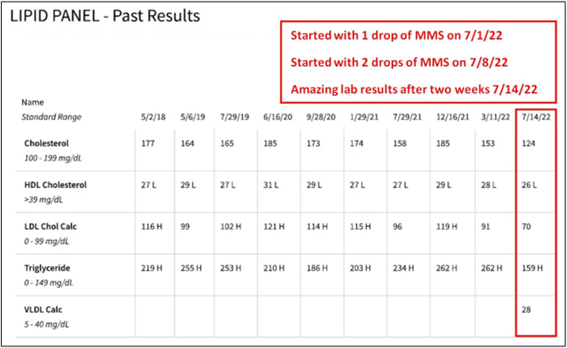
A clean house better circulates fresh oxygen to cells, making them happier and enabling them to continue singing the song of life with greater endurance. Fresh, healthy blood is essential for health.
CDS is an atomic bomb in the hands of ordinary citizens; with it you can
control your health responsibly and independently of the control of doctors,
who intern are all under the control of those who cause us diseases.” We
have patients that have been cancer free for 3-5 years. All their scans are clear.
They get that booster, and now they have stage 4 disease again. It is happening.
Dietrich Klinghardt, MD, PhD
Chlorine Dioxide – Superior Mitochondrial Stimulator?
Fruits are living biological entities that perform many metabolic functions. Senescence is the period when chemical synthesizing pathways give way to degradative processes, leading to the aging and spoiling of fruits. In experiments, chlorine dioxide was closely associated with a delay in fruit senescence during storage.
ClO2 can restore ATP and the redox balance, reducing and delaying fruit senescence. Higher concentrations of ClO2 (10 and 25 mg/L) were more effective than the lower concentration (5 mg/L) in altering the redox balance and increasing energy production. It seems that what chlorine dioxide can do for plant mitochondria, it can do for human mitochondria, too. That is why chlorine dioxide goes well with magnesium and PPC. All three together stimulate and heal the cells’ energy factories.
Oxygen is A Great Part of Chlorine Dioxide’s Secret
Oxygen is the final electron acceptor in the electron transport chain. Without oxygen, the electron transport chain becomes jammed with electrons. Thus, the Krebs cycle is heavily dependent on oxygen, deeming it an aerobic process. If we ram enough oxygen into the cells, we can force mitochondria to become active again and use the Krebs Cycle for energy in cancerous cells if they are not too far gone.
There are many ways to ram oxygen down our mitochondria’s throats. One of the best and least expensive ways is with chlorine dioxide. Chlorine dioxide is a substance that provides oxygen to tissues and all body fluids, thereby activating cells’ mitochondria. The medical field (particularly those practicing integrative medicine) has become increasingly open to the idea that mitochondrial dysfunction is the root cause of many illnesses. That, along with insulin resistance, is associated with severe magnesium deficiency.
Curious Outlier, Producer of The Universal Antidote Documentary, puts it this way: “In a simple explanation that makes it easy to understand, that process of ramming oxygen to the mitochondria would be this. Imagine what happens when you jump-start a car with jumper cables. You are ramming electricity (electrons) into the car and turning the ignition switch on. The ignition switch of your body is always on until you’re dead. So now you need to push the oxygen in, and the mitochondria will do the rest.”
As you age, your mitochondrial function typically
decreases, and this is a hallmark of both the
aging process itself, as well as most chronic diseases.
This is important for cancer patients, but everyone will enjoy the mitochondrial stimulation that chlorine dioxide provides as we age. Mitochondria burn oxygen and provide energy for the body. Scientists from the Max Planck Institute for Biology of Ageing have now shown that mitochondria are reprogrammed under depleted oxygen and nutrients, specifically magnesium, and are forced to switch from oxygen to glucose. Cells lacking oxygen must quickly switch to an alternative energy source to survive. It’s called fermentation, which creates a lot of lactic acid, which chlorine dioxide is excellent at neutralizing. Acid attracts the attack of chlorine dioxide.
Robert Naviaux and the Cell Danger Response (CDR)
The Cell Danger Response (CDR) is an evolutionarily ancient, conserved metabolic defense program that cells enter when they perceive threat—whether from infection, toxins, physical injury, oxidative stress, hypoxia, or psychological stress. In the Cell Danger Response (CDR), as described by Robert Naviaux, mitochondria deliberately downregulate oxidative phosphorylation, pushing the cell toward glycolysis and fermentation.
This metabolic shift reduces oxygen use because there is less oxygen available (hypoxia), limits ROS signaling, stiffens membranes, and increases resistance to injury, at the cost of normal cellular function. Fermentation is therefore not a defect, but an ancient survival metabolism designed to preserve the cell under threat. Unfortunately, when cells do not return to normal and keep fermenting, we call that cancer. Some doctors feel that the most effective treatments for spike protein injuries are to restore the body’s zeta potential or to treat the cell danger response.
Chlorine Dioxide and Zeta Potential
Zeta potential refers to the electrical charge at the surface of particles suspended in a fluid, such as cells, proteins, platelets, lipoproteins, or microbes in blood and interstitial fluids. It is a key determinant of whether particles repel each other or aggregate. In biological systems, reduced zeta potential is associated with:
- red blood cell aggregation (rouleaux formation)
- increased blood viscosity
- impaired microcirculation
- higher clotting tendency
- inflammatory and oxidative states
From a terrain perspective, zeta potential reflects the electrical and ionic health of the internal environment. Chlorine dioxide (ClO₂) is a strong oxidizing agent with well-known industrial and water-treatment applications. In scientific discussions, its relevance to zeta potential arises indirectly, not because it “adds charge,” but because oxidative chemistry can influence surface charge dynamics.
Oxidative reactions can alter protein conformation, membrane lipids, and surface ions. These changes can modify electrostatic interactions at cell and particle surfaces. In some non-biological systems, oxidation shifts surface charge and increases dispersion.
However, zeta potential is not a single-agent phenomenon. No compound acts on zeta potential in isolation.
It is governed by:
- mineral balance (especially magnesium, calcium, potassium)
- pH
- hydration status
- ionic strength
- membrane integrity
- oxidative vs reductive balance.
From a systems-biology viewpoint, zeta potential collapse is not a disease—it is a biophysical signature of terrain failure.
Low zeta potential commonly accompanies:
- insulin resistance
- chronic inflammation
- oxidative stress
- mineral depletion
- endothelial dysfunction
- impaired oxygen delivery
This is why zeta potential becomes relevant in discussions of:
- vascular disease
- microclotting
- cancer terrain
- metabolic syndrome
- circulatory stagnation
Any agent—chemical, nutritional, or environmental—that significantly alters oxidative balance or ionic structure will, in theory, influence zeta potential. Zeta potential reflects the electrical coherence of the internal terrain. When that coherence collapses, aggregation, stagnation, and disease follow.
The Midwestern Doctor and Zeta Potential
The Midwestern Doctor (a pseudonymous physician-writer) has repeatedly emphasized zeta potential as a neglected but foundational concept in understanding blood flow, inflammation, clotting, and systemic disease. Cancer can be described as an inflammation.
Remembering that the Zeta potential is the electrical surface charge that helps keep particles (including red blood cells) from sticking together, we can see one reason chlorine dioxide has been effective in treating COVID infections and why it might also help those whose cancer has been provoked by the COVID vaccine, since both share the toxicology of spike proteins.
We know that COVID infection is linked to RBC aggregation/microvascular problems. Some lab studies report that spike proteins can induce hemagglutination in vitro. It is more than probable that COVID vaccines lower zeta potential.
Zeta potential is a terrain marker (dispersion vs aggregation). COVID illness clearly disrupts blood rheology and microcirculation. The core point remains: aggressive cancer correlates with inflammation, hypoxia, metabolic instability, immune dysregulation, and deficiency—terrain failure—reduced zeta potential. It is gross medical ignorance to assume the mRNA vaccines do not provoke the conditions that could lead to the rapid onset of aggressive cancers.
Cancer and Zeta Potential
Cancer is not only a genetic or metabolic disease — it is an electrochemical disease. A collapse in zeta potential (the electrostatic charge that keeps cells, proteins, and blood components apart) creates the physical conditions that allow cell aggregation, metabolic isolation, immune evasion, and malignant growth. Cancer thrives where charge collapses, cells clump, oxygen falls, and fermentation becomes mandatory.
Blood viscosity, which chlorine dioxide consistently improves, consistently correlates with cancer severity because it reflects a collapse in biological flow, charge, and oxygen delivery. As viscosity rises—driven by reduced zeta potential, red blood cell aggregation, fibrin buildup, and inflammatory proteins—microcirculation slows, tissue oxygenation declines, and localized hypoxia intensifies. This stagnant, low-oxygen environment forces cells toward glycolysis and fermentation, stabilizing malignant metabolism while impairing immune surveillance and drug penetration. Tumor burden both worsens and is worsened by this viscous state, creating a self-reinforcing loop in which poor flow sustains fermentation, fermentation increases acidity and aggregation, and aggregation further thickens the blood. Cancer progression tracks not only molecular changes, but the physical failure of blood to move, separate, and deliver life.
Chlorine dioxide reduces blood viscosity by lowering abnormal red blood cell aggregation, modifying charged plasma proteins, and improving microcirculatory flow—effects consistent with an increase in effective zeta potential. As viscosity falls, oxygen delivery improves, tissue hypoxia lessens, and the metabolic pressure toward fermentation is reduced, while immune access and perfusion are enhanced.
Conclusion
Rising blood viscosity and clot formation represent a failure of flow and oxygen delivery at the most fundamental level of physiology. When blood thickens and microclots obstruct capillaries, tissues are not abruptly deprived of oxygen—they are slowly suffocated. This reality was captured early on with stark clarity by Dr. Cameron Kyle-Sidell, who observed during the COVID crisis that it was “as if tens of thousands of my fellow New Yorkers are stuck on a plane at 30,000 feet, and the cabin pressure is slowly being let out… these patients are slowly being starved of oxygen.”
Such conditions mirror the biological consequences of collapsed zeta potential: red blood cell aggregation, impaired microcirculation, rising viscosity, and progressive hypoxia. Under these circumstances, cells are forced into fermentative metabolism, immune access is compromised, and survival pathways dominate. Disease severity tracks not only viral load or inflammation, but the physical inability of blood to remain separate, fluid, and capable of delivering oxygen. Thus, it is not a far fetched to say that COVID was a blood clot epidemic – the kill mechanism of COVID injections and infections.
Blood clots have emerged as a common factor underlying many COVID-19 symptoms. Researchers in Germany demonstrated that COVID infection alters the physical properties of blood cells themselves, increasing the size and stiffness of both red and white blood cells. These changes impair cells’ ability to deform as they pass through capillaries, increasing blood viscosity, disrupting microcirculation, and reducing oxygen delivery at the tissue level.
Stiffer red blood cells stack and aggregate more easily, while altered white blood cells contribute to inflammation and vascular obstruction, creating conditions of progressive hypoxia rather than sudden respiratory failure. This mechanical injury to the blood helps explain why patients experienced profound oxygen starvation despite relatively preserved lung compliance, and why clotting, fatigue, and organ dysfunction persisted long after acute infection. Disease severity was driven not only by viral presence, but by a breakdown in the blood’s physical capacity to flow, separate, and carry oxygen.
Special Note: I do not want to mention names, but there are prominent physicians selling spike protein products, and I am sorry to say they are expensive, with no mention of chlorine dioxide being made. I would agree that Natokinase at high doses should be on the list.
[i] Journal of Applied Biological Chemistry. Volume 59 Issue 1 / Pages.31-36 / 2016 / 1976-0442(pISSN) / 2234-7941(eISSN)
Dr.Sircus is a reader-supported publication. To receive new posts and support my work, consider becoming a free or paid subscriber.
Subscribe now

comments