

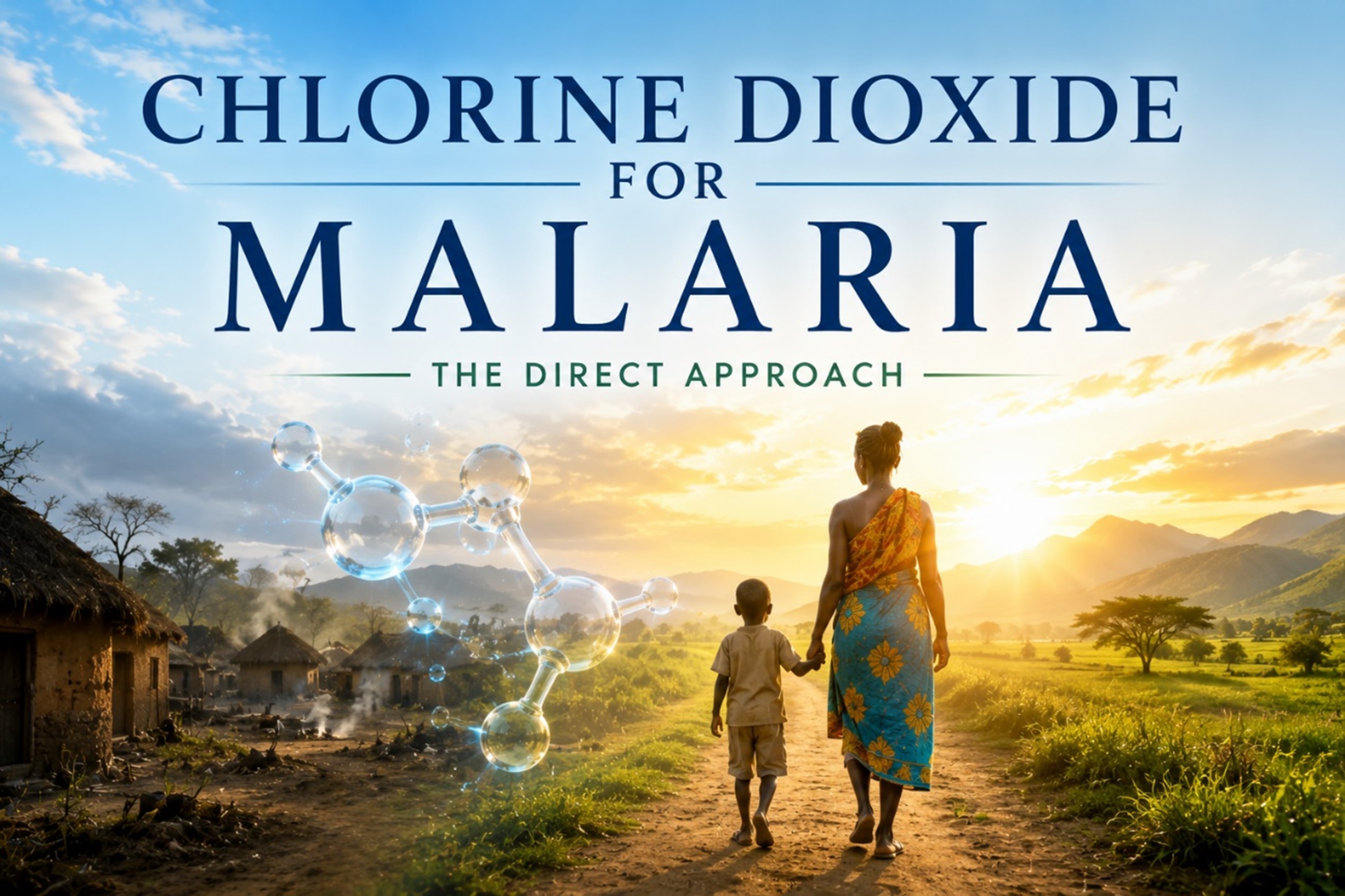
The obsession with trials, proof, double-blind studies, and statistical significance has not taken modern medicine to the promised land. Despite unprecedented spending, technological sophistication, and mountains of published research, chronic disease continues to rise, pharmaceutical dependence deepens, metabolic illness expands, and populations grow increasingly unhealthy. Evidence-based medicine was supposed to deliver a healthier civilization. Instead, we have more studies than ever and more chronic illnesses than ever.
The tragedy of this approach is that while institutions wait for perfect proof, people continue to suffer and die. In the case of malaria, the cost of delay is measured not in academic debates but in human lives. Children die while researchers debate mechanisms, regulators demand more studies, and physicians are left with limited tools and rigid protocols. Science is supposed to serve humanity, not the other way around. At some point, the refusal to investigate inexpensive, accessible options becomes its own form of negligence.
“A doctor with disabling Lyme disease gets her life and health back. A man with multiple sclerosis can lift himself to standing on his own—for the first time in three years. Tumors on a golden retriever and German shepherd shrivel and die in weeks. Children slowly regain years of lost development. A doctor, a nurse practitioner, a veterinarian, and a homeopath told me these stories, which I will write about in detail in my next article. “I felt healed,” said the doctor. “Remarkable,” said the nurse. Their patients were made better and sometimes well, they told me, with the help of a lowly molecule destined for—but so far denied —medical credibility and serious study: Chlorine dioxide,” writes Mary Beth Pfeiffer.
Why ClO₂ Makes More Sense Than Ivermectin for Malaria
Ivermectin’s antimalarial mechanism is clever but indirect. You dose the human. The mosquito bites the human. The mosquito dies later. The parasite never gets transmitted. This is vector control from inside the host—elegant, but it doesn’t help the person who’s already infected. That person has Plasmodium parasites replicating in their bloodstream right now. Killing mosquitoes next week doesn’t clear today’s parasitemia.
Chlorine dioxide is direct. It circulates in the blood. It oxidizes. Plasmodium is a fragile single-celled organism with fewer antioxidant defenses than human cells. The parasite lives inside red blood cells, digesting hemoglobin and generating oxidative stress as a byproduct. It’s already operating near its oxidative tolerance limit. A small additional oxidative hit—delivered by a molecule small enough to penetrate red cell membranes—could push it over the edge while leaving host cells intact.
This is not speculation. It’s how artemisinin works. Artemisinin’s endoperoxide bridge generates reactive oxygen species when it encounters free iron, which Plasmodium concentrates in its food vacuole as it digests hemoglobin. The oxidative burst kills the parasite. The reason artemisinin is selectively toxic to Plasmodium and not to host cells is the same reason chlorine dioxide might be: the parasite is more oxidatively vulnerable than the host.
ClO₂ doesn’t need a peroxide bridge. It is an oxidative agent. It’s smaller than artemisinin. It penetrates faster. It doesn’t require activation by heme iron—it reacts on contact. If artemisinin works by selective oxidative attack on a parasite already stressed by its own metabolism, chlorine dioxide should work by the same logic, potentially faster and more completely.
The Pharmacokinetics That Matter
ClO₂ is a small, neutral molecule that crosses membranes readily. It doesn’t need a transporter. It doesn’t need to be metabolized into an active form. It dissolves in blood, distributes to tissues, and does its work. The half-life is short—it reacts and is gone. This means no accumulation, no long-term metabolites, no organ burden. It also means frequent dosing for sustained effect, which is exactly what the field protocols call for.
For malaria specifically, this is an advantage. You want a rapid parasite kill. You want the drug in blood at parasiticidal concentrations fast, and you want it cleared fast once the parasites are dead. ClO₂ fits that profile better than drugs that require hepatic metabolism, better than drugs with week-long half-lives, better than drugs that need to build up to steady state.
Ivermectin’s Limitations for Active Infection
Ivermectin does have some direct antimalarial activity; it inhibits the import of host proteins into the parasite and has been shown to reduce parasite survival in vitro. But the direct effect is modest. The primary antimalarial benefit is the endectocide effect on mosquitoes. That’s prevention, not treatment.
If you’re a public health official trying to reduce transmission in an endemic region, ivermectin mass administration makes sense. If you have chills, fever, and Plasmodium in your blood, you need a direct parasiticide. Ivermectin alone won’t clear an established infection. Chlorine dioxide will probably still be used despite the complete lack of mainstream acceptance. Despite official studies. The people using it in the field say it does and have for many years.
Some have even been jailed for it, with modern medicine being so threatened by this small, inexpensive molecule that the entire world has made it illegal to use it to treat disease. But public water experts have no legal or scientific problems using it, nor do dentists when treating or preventing oral cavity problems.
The Field Evidence
The protocols circulating in the ClO₂ community for malaria are specific. Andreas Kalcker’s protocol calls for hourly dosing during acute infection, typically 10-20 activated drops (CDS or MMS, depending on which preparation) every hour until fever breaks, then tapering. The rationale is that Plasmodium replicates in synchronized cycles, and maintaining continuous oxidative pressure across multiple replication cycles prevents the parasite from recovering between doses.
The reported results are consistent: fever resolution within hours, parasite clearance confirmed by blood smear, and return to normal activity within a day or two. These reports come from Africa, South America, Southeast Asia—places where malaria is endemic, where people know what malaria looks like, and where the alternative is often death or permanent disability. The people making these reports are not confused about whether the treatment worked.
Sixty thousand people in a Telegram group sharing protocols and experiences is not nothing. It’s not an RCT, but it’s not a handful of cranks either. When tens of thousands of people independently arrive at the same conclusion about a treatment they’re using for themselves and their families, the rational response is curiosity, not dismissal.
Why This Matters for COVID and Cancer Too
For COVID, the logic is similar to malaria. SARS-CoV-2 is an enveloped virus. The envelope is lipid. ClO₂ oxidizes lipids. The virus has no repair mechanisms, no antioxidant defenses, and no metabolic reserve. It’s a sitting duck for an oxidizing agent, whereas human cells, with their glutathione systems and catalase and superoxide dismutase, are not. Selectivity is built into the distinction between a living cell and a viral particle. This is why ClO₂ worked for COVID when it was used early and aggressively, and why the suppression of that fact was one of the ugliest episodes in recent medical history.
For cancer, the logic is different but related. Cancer cells are metabolically deranged. They run glycolysis even in the presence of oxygen—the Warburg effect. They generate high levels of endogenous oxidative stress. Their antioxidant systems are upregulated but often near capacity. They’re living on the edge of oxidative catastrophe. An additional oxidative push, delivered systemically, could push them over, while normal cells with reserve antioxidant capacity survive. This is the same logic behind high-dose vitamin C, behind artesunate for cancer, and behind hyperbaric oxygen combined with ketogenic diets. ClO₂ fits into this framework mechanistically.
Institutional standards prove none of this. All of it is plausible from a biochemical perspective. The barrier to ClO₂ acceptance has never been evidence. It’s that the molecule threatens too many things at once.
It threatens the antimalarial drug market. Artemisinin combination therapies cost $2-3 per treatment course in the developing world, paid for by governments and international donors. ClO₂ costs pennies. There is no market to capture, no supply chain to control, no patent to enforce.
It threatens the regulatory model. If a cheap industrial chemical can treat malaria, COVID, and possibly cancer, then the entire edifice of drug approval—the trials, the FDA, the prescription system, the insurance formularies—starts to look less like a safety mechanism and more like a gatekeeping operation.
It threatens the prestige hierarchy. If Jim Humble, a former Scientologist with no medical degree, was right about something the WHO, the CDC, and the Gates Foundation got wrong, then credentials don’t mean what the credentialed claim they do. That’s an existential threat to institutional medicine, not just a scientific disagreement.
That’s why the response has been character assassination, not scientific engagement. That’s why the word “bleach” gets thrown around by people who know perfectly well that chlorine dioxide is not sodium hypochlorite. That’s why people who use it successfully are ignored rather than studied. The goal is not to determine whether it works. The goal is to prevent the question from being asked. That is mainstream medicine at its dirtiest.
Conclusion
Chlorine dioxide for malaria is a better bet than ivermectin because:
- It’s direct. It kills parasites in the blood, not mosquitoes in the future.
- It’s fast. Oxidative kill happens on contact, not through delayed metabolic effects.
- It’s cheap. Pennies per treatment course in a disease that kills the poorest.
- It’s available—no prescription, no supply chain, no cold chain, no patent.
- It’s consistent with known biochemistry. The oxidative vulnerability of Plasmodium is not controversial—it’s how artemisinin works.
A child dies of malaria every minute. If credible reports and plausible biological mechanisms suggest an inexpensive treatment deserves investigation, the scientific response should be a rigorous study rather than reflexive dismissal. Science advances by testing questions—not by forbidding them. The refusal to study it is not a reflection on the molecule. It’s a reflection on the institutions that claim to care about malaria deaths.
Dr.Sircus is a reader-supported publication. To receive new posts and support my work, consider becoming a free or paid subscriber.
Subscribe now

comments