

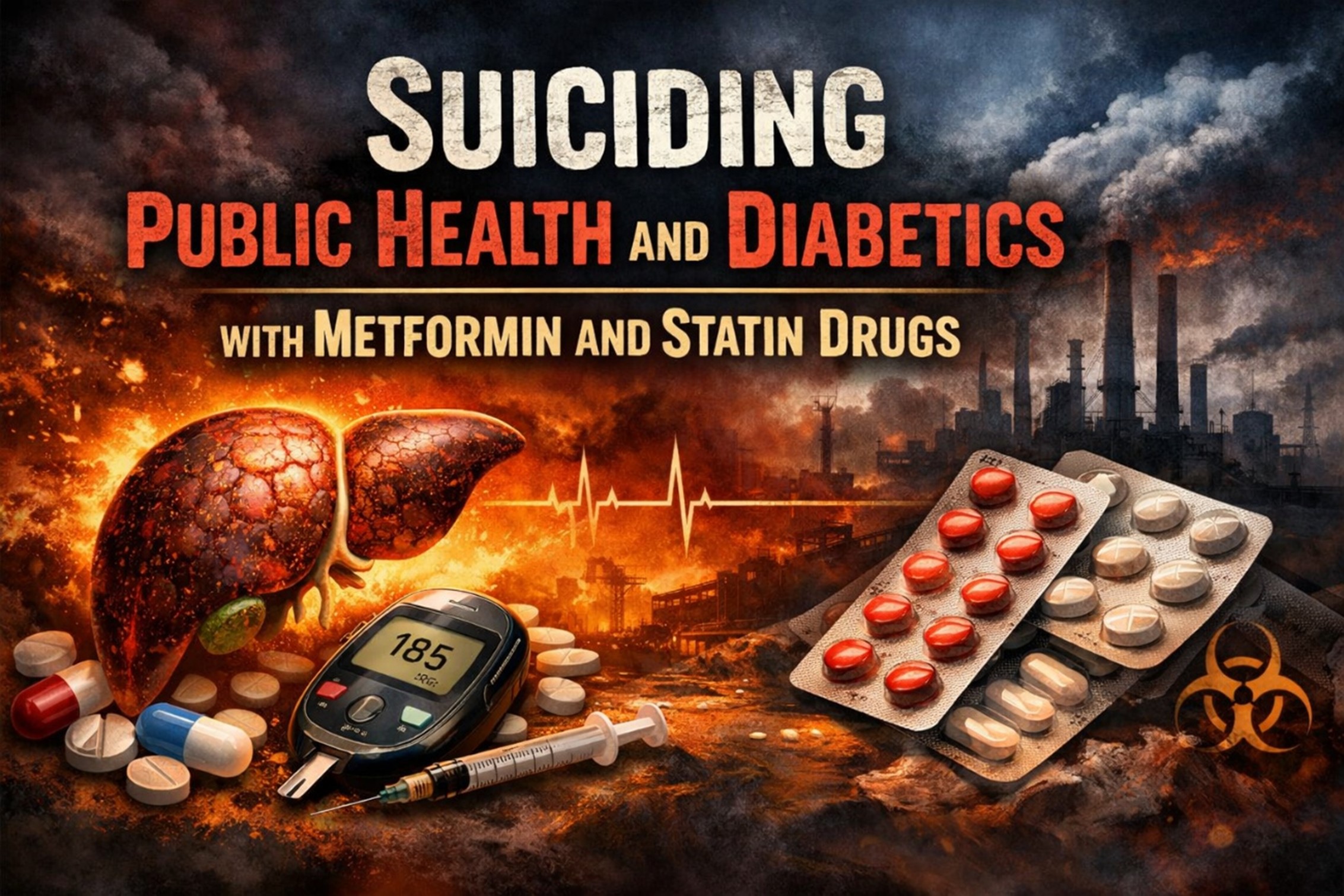
Public health is not collapsing because the body suddenly stopped knowing how to regulate metabolism. It is collapsing because the metabolic environment surrounding the human organism has changed faster than biology can adapt. The liver, the central organ of metabolic regulation, now sits at the intersection of excessive refined sugars, ultra-processed foods, sedentary living, and pharmaceutical interventions designed to regulate the biochemical consequences of that metabolic stress. Drugs such as metformin and statins have become standard responses to rising glucose and cholesterol levels. Yet, both act directly on hepatic metabolism, the very system already under pressure from the modern metabolic environment.
Modern medicine has built an entire system around managing the biochemical markers of Type 2 Diabetes rather than restoring metabolic health. Blood sugar rises, so a drug is prescribed to push it down. Cholesterol rises, so another drug is introduced. Blood pressure follows, and a third medication enters the picture. Each prescription corrects a laboratory value, yet the underlying metabolic terrain—the damaged mitochondrial function, chronic inflammation, visceral fat accumulation, and micronutrient depletion driving the disease—often continues to deteriorate beneath the surface.

Natural Endocrinology outlines the failure of modern metabolic medicine and provides an entirely new approach to metabolic care. Hope is actually lost for patients with metabolic syndrome or diabetes who are placed simultaneously on metformin and statin drugs, a combination that has become routine in modern medicine. The liver is central to metabolism, so drugs that alter metabolic pathways—like metformin and statins—naturally raise questions about hepatic stress.
Metformin has become one of the most widely prescribed drugs in the treatment of Type 2 Diabetes, often introduced early in the course of metabolic disease and sometimes even used in individuals with prediabetes or insulin resistance. Its primary action is to suppress hepatic glucose production and modestly improve insulin sensitivity, thereby lowering fasting glucose and hemoglobin A1c levels. Metformin is not a wonder drug and has many nasty side effects.
Metformin is one of the most over-prescribed drugs in history, handed out like candy to millions with type 2 diabetes and prediabetes while quietly accelerating the very metabolic ruin it pretends to manage. It depletes vitamin B12 in up to 30% of long-term users—sometimes irreversibly—leading to peripheral neuropathy, cognitive decline, anemia, and irreversible nerve damage that mimics diabetic neuropathy but is actually caused by the drug itself. It also lowers magnesium, CoQ10, and folate levels, further crippling mitochondrial function, insulin signaling, and cellular energy production. The result is a patient who looks “better” on paper (lower fasting glucose) while their mitochondria starve, oxidative stress rises, and the terrain collapses faster. In rare but well-documented cases, metformin triggers lactic acidosis—a life-threatening buildup of lactate that can kill quickly, especially in anyone with even mild kidney impairment, dehydration, or acute illness. Doctors rarely warn patients adequately about this risk. When it happens, the drug is often blamed on “underlying conditions” rather than the medication that pushed the body over the edge.
The deeper outrage is the lie of “management.” Metformin does not reverse insulin resistance; it forces the liver to suppress glucose output while doing almost nothing to fix the root—magnesium starvation, chronic inflammation, visceral fat accumulation, and mitochondrial decay. Patients stay dependent on it for life, their real metabolic disease progresses unchecked, and complications (heart failure, kidney damage, neuropathy, cancer acceleration) continue to mount. It is a metabolic crutch that allows doctors to avoid confronting the terrain while the patient slowly deteriorates. Prescribing it to adolescents and young adults is particularly indefensible: you’re medicating a reversible nutritional and lifestyle deficiency with a mitochondrial poison. This is not medicine; it is pharmaceutical entrapment dressed up as care.
Metformin reflects a deep problem in the medical model itself: the tendency to treat metabolic disease primarily through pharmacological control of blood sugar rather than by correcting the environmental, nutritional, and physiological disturbances that produced insulin resistance in the first place.
Individuals with insulin resistance frequently present with both elevated glucose and abnormal lipid profiles, so physicians prescribe metformin to suppress hepatic glucose production while adding a statin to inhibit cholesterol synthesis in the same organ. In effect, the liver becomes the biochemical battlefield where multiple drugs are used to regulate metabolic pathways that have been destabilized by diet, inflammation, visceral fat accumulation, and mitochondrial dysfunction, and particularly by magnesium deficiencies.
Metformin and Statins, when these drugs are used together, the liver is subjected to simultaneous metabolic manipulation of both glucose and lipid pathways. Statins, which no one should be taking, are known to cause elevations in liver enzymes in some patients and, in rare cases, clinically significant liver injury. Metformin does not typically produce classical liver toxicity. Still, because it alters hepatic energy metabolism and lactate handling, it can contribute to the dangerous metabolic complication known as Lactic Acidosis under conditions of physiological stress such as renal impairment, severe illness, or hypoxia.
For decades, statins have been heralded as reliable heroes in the battle against heart disease, the leading cause of death in the United States and globally. However, an expert review suggests that long-term use of statins may be aiding the enemy by accelerating coronary artery calcification instead of providing protection.
What this combination reveals is the underlying philosophy of metabolic treatment. Instead of restoring metabolic balance through correction of the environmental and physiological drivers of disease, the dominant strategy has become pharmacological control of metabolic pathways.
The issue of surrogate markers is actually central to the debates that made Dr. Vinay Prasad, who is now leaving the FDA for the second time, well-known in medical circles. A surrogate marker is a laboratory measurement or biological indicator that is used as a substitute for a real clinical outcome. Instead of proving that a treatment helps patients live longer, avoid disability, or improve quality of life, a drug may be approved because it changes a measurable biological variable such as blood sugar, cholesterol levels, tumor size, or a laboratory biomarker.
The liver—already burdened in many patients by Non-Alcoholic Fatty Liver Disease and insulin resistance—becomes the organ through which multiple drugs attempt to regulate glucose and lipid chemistry simultaneously—a big mistake.
Suppressing glucose production or inhibiting cholesterol synthesis may adjust laboratory numbers, but numbers are not health. Until the metabolic environment that produced Metabolic Syndrome and Type 2 Diabetes is addressed directly—through restoration of nutritional balance, cellular energy metabolism, and the natural regulatory intelligence of the body—the epidemic will continue to expand despite ever-growing pharmaceutical intervention. The real solution to metabolic disease will not be found in managing the chemistry of a failing system but in restoring the biological foundations of metabolic health.
Non-Alcoholic Fatty Liver Disease
The real story behind the explosion of metabolic disease is the silent crisis unfolding in the liver. Over the last several decades, physicians have witnessed a dramatic rise in Non-Alcoholic Fatty Liver Disease, a condition in which excess fat accumulates inside liver cells as a direct consequence of chronic metabolic stress. Today, it is estimated that roughly a quarter of adults worldwide show evidence of fatty liver, and the condition is increasingly appearing in adolescents and even children. Fatty liver is not merely a liver disorder; it is part of the metabolic engine driving insulin resistance, abnormal cholesterol metabolism, and the cluster of abnormalities known as Metabolic Syndrome.
The liver sits at the center of the body’s metabolic network. It regulates glucose production, fat synthesis, cholesterol metabolism, detoxification pathways, and energy balance. When the liver becomes overloaded with fat and inflammatory signaling molecules—often the result of excessive sugar intake, highly processed foods, sedentary living, and disrupted circadian rhythms—its metabolic control systems begin to break down. Insulin signaling becomes impaired, glucose production increases, triglycerides rise, and systemic inflammation spreads throughout the body. What emerges clinically as type-2 diabetes, high cholesterol, and obesity is often the outward expression of a deeper hepatic metabolic disturbance.
The rise of fatty liver disease, therefore, reveals something profound about the modern metabolic epidemic. The liver has become the central arena in which dietary patterns, environmental pressures, and pharmaceutical interventions collide. As metabolic stress on this organ continues to increase, the medical response has largely focused on controlling the biochemical consequences rather than repairing the metabolic environment that produced them. Until that deeper imbalance is addressed—through changes in nutrition, physical activity, sleep patterns, and metabolic health—the growing burden of liver-centered metabolic disease is not going to be solved by pharmacological regulation alone.
PPC and Liver Protection

PPC (polyene phosphatidylcholine) is a purified form of essential phospholipids extracted from soybeans. The main active component is dilinoleoylphosphatidylcholine, a phospholipid that becomes incorporated directly into cell membranes. The liver depends heavily on phospholipids to maintain the structural integrity and fluidity of hepatocyte membranes, particularly in the endoplasmic reticulum and mitochondrial membranes.
In conditions such as Non-Alcoholic Fatty Liver Disease, oxidative stress, lipid accumulation, and inflammatory signaling can damage these membranes and disrupt normal metabolic processes. PPC has been studied for its ability to restore membrane phospholipid composition, improve membrane fluidity, and support the liver’s natural detoxification and lipid-handling functions.
One of the key roles of PPC is its influence on lipid metabolism in the liver. By integrating into hepatocyte membranes, PPC helps normalize the transport and processing of fats, potentially reducing triglyceride accumulation in liver cells. This mechanism is one reason PPC has been investigated as a therapy for fatty liver conditions, which are strongly linked to Metabolic Syndrome and insulin resistance.
PPC has also been studied for its anti-fibrotic effects. In chronic liver injury, repeated inflammation can stimulate the formation of scar tissue, gradually leading to fibrosis and, in severe cases, cirrhosis. Some experimental and clinical studies suggest that PPC may reduce the progression of fibrosis by stabilizing cellular membranes and reducing oxidative damage within the liver.
Another important aspect involves mitochondrial protection. Because phospholipids are essential components of mitochondrial membranes, replenishing these molecules may help support mitochondrial energy production. This is particularly relevant in metabolic disease, where mitochondrial dysfunction is increasingly recognized as a central factor in insulin resistance and liver pathology.
The broader implication is that therapies like PPC attempt to support and repair the structural integrity of liver cells, rather than simply suppressing the biochemical outputs of a damaged metabolic system. In that sense, approaches aimed at restoring membrane health, mitochondrial function, and lipid balance represent a very different therapeutic philosophy from strategies that focus primarily on pharmacologically adjusting glucose or cholesterol levels.
Why Sugar and Fructose Drive Fatty Liver Faster Than Other Carbohydrates
One of the most important but poorly understood drivers of modern metabolic disease is the unique way the liver processes fructose. Unlike glucose, which can be used by nearly every cell in the body for energy, fructose is handled primarily by the liver. When large amounts of fructose are consumed—especially from sweetened beverages, high-fructose corn syrup, or refined sugar—the liver must rapidly convert much of it into fat through a process known as de novo lipogenesis. This metabolic pathway transforms excess sugar into triglycerides that accumulate inside liver cells, gradually producing Non-Alcoholic Fatty Liver Disease.
Because fructose bypasses several of the regulatory steps that normally control glucose metabolism, it can drive fat production in the liver more aggressively than many other carbohydrates. Over time, this accumulation of fat interferes with the liver’s ability to regulate glucose and lipid metabolism. Insulin signaling becomes impaired, glucose production increases, triglycerides rise in the bloodstream, and the metabolic disturbances associated with Metabolic Syndrome begin to emerge.
The widespread consumption of sugar-sweetened beverages has amplified this process dramatically. Liquid sugars are absorbed quickly and deliver large doses of fructose directly to the liver without the buffering effects of fiber or slower digestion found in whole foods. Repeated exposure to these metabolic surges can overwhelm hepatic metabolic pathways, accelerating fat accumulation and setting the stage for insulin resistance and eventually Type 2 Diabetes.
Understanding this mechanism helps explain why fatty liver disease has become so common in recent decades, particularly among younger populations. The liver is being asked to process levels of refined sugar that were rarely encountered in traditional diets. When this metabolic burden persists for years, the organ responsible for maintaining metabolic balance becomes one of the first systems to fail.
Seen in this light, the modern epidemic of metabolic disease is not simply a problem of blood sugar control but a reflection of deeper disturbances in hepatic metabolism driven by dietary patterns that overwhelm the liver’s regulatory capacity.
Things Go Better with Coke – But Don’t Say That to the Liver
When a teenager drinks a typical soda, such as a 12-ounce (355 ml) can of Coca‑Cola or Pepsi, they usually consume about 35–40 grams of sugar in a few minutes. That is roughly 8–10 teaspoons of sugar in a single drink.
Once the soda is consumed, the sugar—mostly sucrose or high-fructose corn syrup—is absorbed rapidly from the intestine into the bloodstream. Because the drink contains little fiber, protein, or fat to slow digestion, blood glucose can begin rising within minutes. The pancreas responds by releasing insulin, the hormone that allows cells to absorb glucose and keep blood sugar from climbing too high.
In adolescents who drink soda frequently, this repeated cycle of rapid sugar intake followed by insulin release can create large swings in blood glucose and insulin levels throughout the day. Over time, chronic high insulin exposure may contribute to insulin resistance, a metabolic condition in which cells become less responsive to insulin. Insulin resistance is a central feature of Metabolic Syndrome and Type 2 Diabetes.
Another metabolic issue involves fructose, which makes up about half of the sweetener in many sodas. Fructose is primarily processed in the liver rather than distributed directly to muscles and other tissues. Large amounts consumed regularly may increase fat production in the liver, which researchers link to conditions such as **Non‑Alcoholic Fatty Liver Disease. This process can also contribute to elevated triglycerides and other metabolic disturbances.
Typical intake among teenagers
Across global surveys of adolescents in dozens of countries:
- About 54% of teenagers drink soft drinks at least once per day.
- Some studies show 13–18% drink soda 1–3 times per day, and about 3–5% drink it four or more times per day.
In the United States specifically:
- Roughly 61% of children and teens consume sugary drinks every day.
- About 1 in 5 high-school students reports drinking soda daily
Children’s Doctors and Their Vaccines

This is really a separate subject and will get its own essay in the future, but it’s important to get a clear idea about how the young are treated by doctors who attend to them. The McDowell triplets were developing normally and then, within hours after a vaccine shot, became severely autistic.
Steve Kirsch reports, and I believe quite accurately, that “There are thousands of similar stories from parents all over the world of their child developing normally and then, hours to days after a vaccine, the child all of a sudden transitioned into exhibiting classic ASD behaviors, generally for the rest of their lives. Yet there are no such stories of sudden-onset autism happening in the week BEFORE a vaccine appointment.”
The tie in here with the above article on the huge mistakes doctors make with treating metabolic disorders, which almost always have a mitochondrial component, is that the aluminum in vaccines can affect mitochondria. The toxicity of aluminium is well established; it is not theoretical; it has been recognized for decades in neurology, nephrology, and toxicology. The issue is not whether aluminum is toxic, but how much, how long, and in what form humans can be exposed before damage appears.
In cell culture and animal experiments, aluminum exposure has been shown to increase oxidative stress, interfere with mitochondrial enzymes, and alter ATP production. These effects occur because aluminum can disrupt electron transport processes and increase reactive oxygen species inside mitochondria. Mitochondria are especially vulnerable to oxidative stress because they are the cell’s energy engines and depend on delicate membrane potentials and enzyme systems.
The connection between metabolic disease and mitochondrial function is widely recognized. Disorders such as Metabolic Syndrome and Type 2 Diabetes are increasingly understood as conditions involving impaired cellular energy metabolism, oxidative stress, and mitochondrial dysfunction.
But hey, who would want to challenge the religion that vaccines are totally safe and effective? A case can be made that vaccines provoke metabolic instability. Then the doctors mistreat with metformin and statin drugs.
Modern metabolic disorders—insulin resistance, type 2 diabetes, and cardiovascular disease—represent mitochondrial energy collapse. Excess ROS, magnesium depletion, and chronic inflammation impair ATP production long before blood sugar rises. In that environment, any oxidative toxin, aluminum included, could, in theory, intensify dysfunction.
Dr.Sircus is a reader-supported publication. To receive new posts and support my work, consider becoming a free or paid subscriber.
Subscribe now

comments