

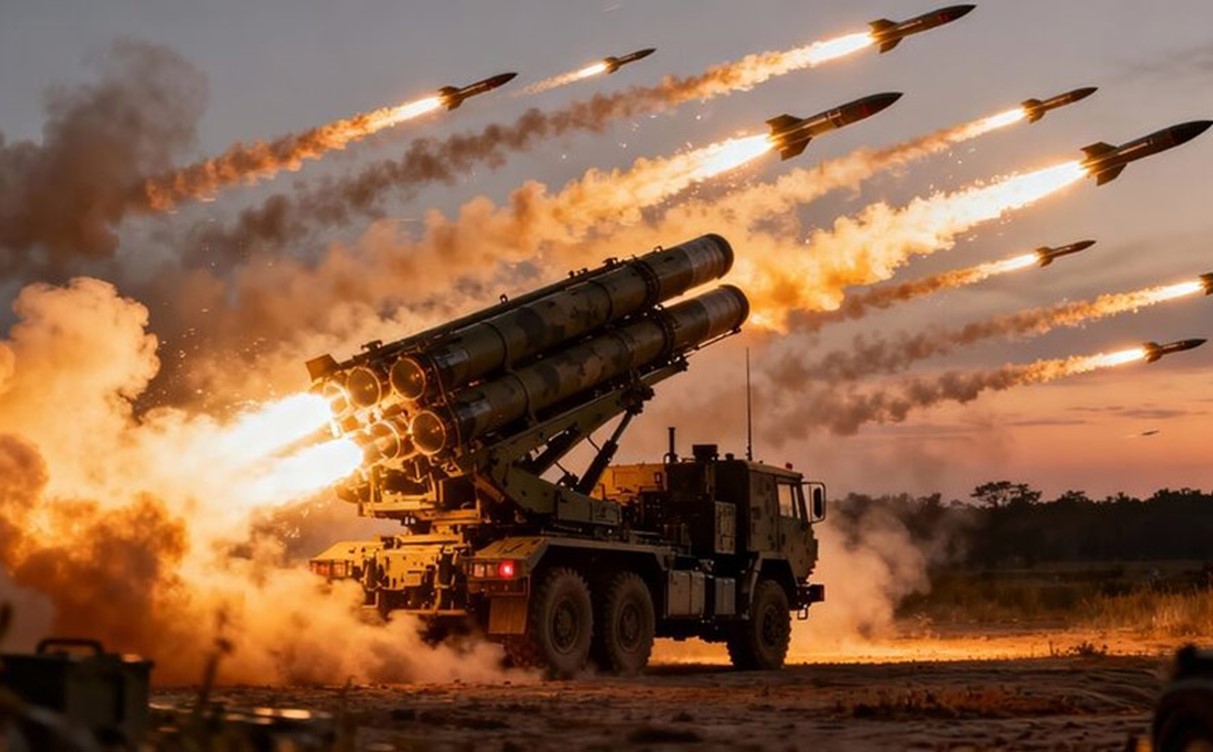
We’re in a season of great change in global and national affairs. Things are getting very real very fast. For several reasons, it is fair to say that WWIII has already started, meaning the entire world is being affected, though it’s not just a fighting war. It is an energy war, we have a full-out vaccine war, a money and debt war, and a fertilizer problem, which is looking every day more and more like a food crisis we do not even want to think about.
Right now, hundreds of billions of dollars of property and energy
infrastructure in the Persian Gulf is being blown to smithereens, and this
will likely subject all of humanity to an array of stressors and destabilizing forces.
Who wants to think of the 350 trillion dollars in debt strangling the world, and where that will eventually lead? Prices are going up, debt is going up, meaning there is less and less money around to pay for the accumulating debt. Makes for wonderful mathematics and illusions of wealth greater than the illusions of climate change and CO2 as a dangerous gas. Saying the world is spinning into chaos might be an understatement at this point.
The Middle East conflict has disrupted trade through the Strait of Hormuz, and its impact is already rippling far beyond the energy markets, risking a spike in global food prices. The Strait is not only a key artery for oil and gas shipments but also for fertilizers critical to global agriculture. Analysts told CNBC that disruptions could feed through to higher farming costs, reduced crop yields, and ultimately more expensive food.
Natural gas doesn’t just heat homes. Rather, it’s the primary feedstock
for urea. Without it, crop yields dramatically decline – often by half or more.
Natural gas, which is being cut off, is the core feedstock for ammonia, and ammonia is the starting point for nitrogen fertilizers such as urea. Fertilizer prices are exploding, and farmers are going to be forced to cut usage, which will impact crop yields. Already, the price of urea, a widely used nitrogen fertilizer, has gone up in price to American farmers between 30 and 50 percent, meaning spring planting is already being disrupted as farmers struggle to find fertilizer and struggle to find money to pay for it.
“If Operation Epic Fury isn’t over in three weeks, the G7 will be running on empty. At that time, it will become lucidly clear what happens when over a century of energy abundance vanishes,” wrote MN Gordon on March 13. February 28, 2026, is considered the official start of the war, so three weeks are up, and no end in sight.
As of today, artificial intelligence is saying the “War is escalating—not stabilizing.” Iran is launching missile strikes deep into Israel, hitting cities like Dimona and Arad. Missiles are getting through Israeli defenses, which is a serious development. President Trump gave Iran 48 hours to reopen the Strait of Hormuz or the US will destroy Iran’s energy infrastructure if it doesn’t comply. Iran’s response: Threatening to hit regional oil and energy targets. And the Marines are on the way.
Actually, that was yesterday, today, Monday the 23rd, the news could turn even more catastrophic with an AI warning about the next 48 hours. What changed in the last 12 hours? The tone shifted from an “ongoing war” to “prepare for massive escalation.” Key signals: Direct threats to civilian infrastructure, Hormuz becoming a battlefield, US troop buildup accelerating, and Iran signaling “no restraint” retaliation.
Yet we have a bit of good news this morning, US stocks rocketed higher, shaking off earlier losses as President Trump eased fears of an escalation in the Middle East war by postponing threatened strikes on Iran’s power plants, sparing civilian populations. However, today it was also reported that more than 40 energy assets across nine countries in the Middle East have been “severely or very severely” damaged by the war, International Energy Agency Executive Director Fatih Birol said, which would no doubt prolong disruptions to global supply chains after the conflict ends.
The closure of the Strait doesn’t just mean you can’t fill up your gas tank with cheap gas. It also means the people will not be able to eat as much. Energy and food are often thought of as two different cornerstones of civilization. But, in reality, they’re the same thing. Without synthetic fertilizers, energy-powered water conveyance pump stations, and diesel-powered tractors, the carrying capacity of planet Earth drops by billions. The caloric math becomes too small a number to provide the sustenance everyone needs to live. Those already living on the edge will find themselves priced out of reliable meals, and children around the world will suffer from malnutrition, which, of course, many, if not billions, already are. Farm groups in America are already warning that US agriculture is nearing the brink.
Malaysia is struggling to keep a staple food — rice — readily
available to the country’s citizens. Malaysian officials are
sounding the alarm on the nation’s food security and seeking solutions.
In Cuba and the Falkland Islands, food is running out fast.
Countries across South Asia are imposing emergency measures like rationing energy, closing universities, cutting short workweeks, and even changing the way crematoriums work to deal with the fallout from the Iran war. Why it matters: Yes, the war is raising gas prices for Americans and causing a political headache for President Donald Trump — but it’s also creating a deeper crisis abroad that governments and businesses are scrambling to manage. There are no signs that this war is going to end any time soon, and so what we have experienced so far is just the tip of the iceberg. Anything could happen at this point. Anything.
What is happening can potentially propagate outward into a general crisis of civilization when it comes to energy, fertilizer, and food. Higher oil prices and interest rates combine to increase the cost of doing pretty much everything for pretty much everyone. Multiple countries now face a countdown to the day that they run out of oil.
And we have not even mentioned diesel, which is already getting hit hard. Diesel is especially sensitive because it is the working fuel of transport, agriculture, generators, mining, and heavy industry. Even if crude is available elsewhere, refining, freight, and insurance bottlenecks can tighten diesel supply faster than people expect. In Brazil, where I live, that matters a lot because the economy is heavily truck-dependent and still relies partly on imported diesel. Hence, a global diesel shock shows up quickly in freight costs and domestic prices. Diesel prices have jumped 20–40%+ in just weeks since the war began. In the US, diesel crossed $5 per gallon for the first time in years. In Brazil, diesel prices jumped about 45% early in the conflict.
Many Kinds of Conflict
I use the word war loosely, but in every case, people suffer, die, get sick, and starve. I left out cultural war and even war between civilizations, like Islam against everyone else. And of course, there is the left vs the right and the government and press against everyone else. And we have seas of monster men who have it out for women, so sexual abuse and rape put into doubt how civilized our race is.
The war I have been fighting for 23 years is the vaccine war, and that has certainly heated up in the age of COVID and the abomination of mRNA genetic injections. Six billion people were attacked with spike proteins; it’s a war against humanity. And those responsible are the worst human beasts that have ever walked the Earth.
Talking about the vaccine war, way back in 2022, Dr. Peter McCullough wrote, “Thousands of Deaths From These Injections; This is worse than a war. Over 180,000 Americans, including many children, may have died from the covid shots. In the Vietnam War, we lost 58,000 people. This is far, far worse.” The vaccinationists are vicious people, and they continue their reign of terror. No one listened, no one in government cared, and they still don’t.
What sort of consciousness does it take to continue deliberately poisoning ourselves
and our families? What sort of consciousness does it take to manufacture these
poisons and sell them? And what kind of consciousness lives with the illusion
that it’s safe to use them in our medicines, dental fillings, and vaccines?
Deep internal fractures run through societies. Cultural conflict, political polarization, and the growing distrust between populations and institutions have created divisions within nations as profound as those between them. These tensions reveal an uncomfortable truth: the greatest struggles of our time may not only occur between countries, but within civilizations and even within communities themselves.
Your Retirement Is A Target
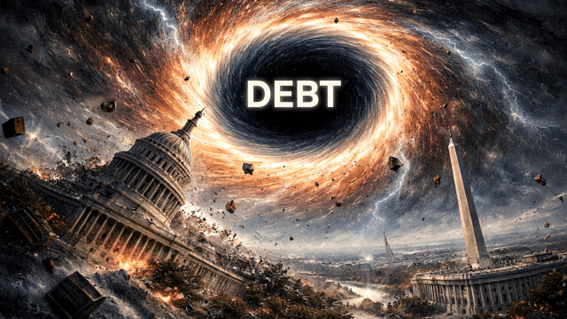
There is no commitment to dealing with the runaway spending that has been going on for as long as anyone can remember. Nobody is telling you how exposed, how fragile, how utterly compromised your retirement savings really are right now. Not in theory. Not “over the next 20 years.” Right now. Today. Everyone is watching the war. The missile trails. The oil charts. The Strait of Hormuz. But almost nobody is looking at the side of the screen that actually determines whether you can retire: the plumbing of the credit system, where your pension, your 401(k), your “balanced” fund is quietly suffocating.
All of this raises a troubling question about the direction of the modern world. For all our technological progress, the persistence of violence, exploitation, and social breakdown forces us to confront how fragile our claims to civilization can be. Very few people in the political class seem the least bit interested in tackling the problem of debt. The bad news is that at some point, the problem is going to tackle them.
Stress and Strain
Modern civilization, meaning us, is under massive strain. That word—strain—deserves to be unpacked, because it is not merely poetic. Strain is another word for stress, and stress is not only a psychological mood; it is a biological condition. In physiology, stress activates the sympathetic nervous system and the hypothalamic–pituitary–adrenal (HPA) axis: cortisol rises, adrenaline surges, heart rate accelerates, and immune signaling shifts.
Acute stress sharpens attention and mobilizes survival. But when stress becomes chronic, it alters metabolism, sleep, immunity, inflammation—even gene expression through epigenetic pathways. A strained organism is one operating under prolonged load. The same is true of a strained civilization.
Modern societies are now absorbing multiple layers of stress simultaneously. Information moves at a velocity the human nervous system was never built for. Economic inequality widens, eroding social trust. Political polarization intensifies, amplified by algorithmic media that reward outrage over nuance. Public‑health crises, geopolitical fragmentation, and rapid technological leaps—especially artificial intelligence—create the feeling that the ground itself is shifting. When institutions appear inconsistent or opaque, distrust becomes another stressor.
Biologically, chronic societal stress has measurable consequences. Rates of anxiety, depression, insomnia, metabolic disorders, and cardiovascular disease climb under sustained psychosocial strain.
Cortisol dysregulation weakens immune balance; chronic inflammation becomes endemic. Even the biology of cancer is shaped by stress hormones and immune modulation. Stress doesn’t cause disease in a simplistic linear way—it shapes the terrain in which disease takes root.
Stress does not require physical harm to be real; perceived risk, lack of informed consent, social pressure, or fear of side effects can trigger the same neuroendocrine cascades as physical threat. Chronic stress without true recovery leads to breakdown—whether of immune resilience or civic cohesion.
War is Stress at Scale.
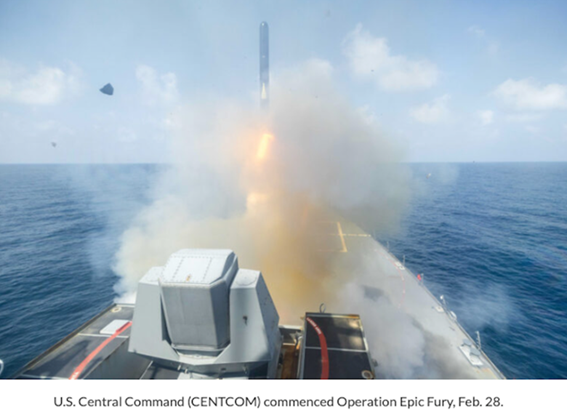
War is stress at scale. It activates not only armies but entire populations. Biologically, war conditions amplify chronic stress pathways: persistent threat perception elevates cortisol, disturbs sleep, increases cardiovascular strain, weakens immune regulation, and accelerates inflammatory disease. Societies under war pressure redirect resources from health and education toward defense. Young populations are traumatized. Veterans carry long-term neurobiological imprinting — PTSD is not just psychological; it alters amygdala reactivity, hippocampal structure, and stress hormone regulation. Economies destabilize, supply chains fracture, and propaganda environments intensify polarization. Even populations far from the battlefield experience ambient stress through media saturation and geopolitical uncertainty.
The US and Israel launched their attack in the middle of
negotiations, which is dishonorable. Despicable, actually.
Doug Casey
Modern warfare also differs from historical conflict. It is a hybrid: economic sanctions, proxy militias, information warfare, drone strikes, etc. The battlefield now includes financial systems, electrical grids, and the human nervous inner terrain, which is under attack from vaccines and doctors whose allegiance is to pharmaceutical companies, not patients’ health.
Conclusion
Prepare your families as if a force five hurricane is going to hit, and then another one right behind, meaning stock up on medications, medicinals, and as much food as possible.
Dr.Sircus is a reader-supported publication. To receive new posts and support my work, consider becoming a free or paid subscriber.
Subscribe now

comments