


The human brain cannot function properly without magnesium. This essential mineral helps regulate neurotransmitters, neuronal excitability, stress hormones, mitochondrial energy production, and the delicate electrical activity that governs thought, emotion, attention, and behavior. Yet millions of people struggle with anxiety, depression, chronic stress, irritability, and attention disorders while their magnesium status receives little or no consideration. We have become accustomed to treating these conditions primarily as psychiatric disorders, often overlooking the nutritional and metabolic foundations upon which mental and emotional stability depend.
The British Journal of Psychiatry reported that people with a diet heavy in processed food had a 58% higher risk of depression. Ultra-processed foods make up roughly 60% of calories in the British and American diet. Ultra-processed food attacks mood from four directions at once. Junk food displaces the raw materials—magnesium, B6, omega-3s, potassium, fiber—that neurotransmitter synthesis and neuronal membrane function depend on, while delivering refined carbohydrates that produce glycemic spikes and crashes people feel as irritability and fatigue.
Magnesium deficiency can leave the nervous system increasingly vulnerable to overstimulation, disturbed sleep, heightened stress responses, and difficulties with emotional regulation. Chronic stress can, in turn, disturb magnesium metabolism, potentially creating a vicious cycle in which magnesium depletion and psychological distress reinforce one another. Research has associated inadequate magnesium with depression, anxiety, and ADHD, while clinical investigations suggest that magnesium supplementation can improve certain symptoms, particularly when magnesium status is inadequate.
The implications for mental health medicine are profound. Before assuming that every anxious, depressed, restless, or inattentive patient needs another psychiatric medication, physicians should consider whether the brain is receiving the minerals required for normal function. Magnesium is not a minor accessory to neurological health; it is fundamental. A medicine that focuses on manipulating neurotransmitters while neglecting the mineral metabolism that helps regulate them overlooks an essential part of the picture.
Life depends on nutrition. Life depends on magnesium. Life is diminished physically and mentally when people and children are malnourished, leading more quickly to a life of pain and disease.

Researchers at the Department of Family Medicine of the Pomeranian Medical Academy in Poland identified an extraordinary relationship between magnesium deficiency and attention-deficit/hyperactivity disorder. In a 1997 investigation involving 116 children with ADHD, magnesium deficiency was identified in 95 percent using measurements of serum, red blood cells, and hair. Yet conventional serum testing detected low magnesium in only 33.6 percent.
In a companion investigation, children receiving magnesium supplementation for six months experienced improvements in hyperactivity compared with children receiving standard treatment without magnesium. These findings raise an important question for pediatric medicine: How many children struggling with hyperactivity, impulsivity, and disruptive behavior are also suffering from an unrecognized nutritional disturbance that deserves investigation? Nearly three decades later, researchers continue to report associations between lower magnesium status and greater behavioral difficulties.
ADHD (Attention-Deficit/Hyperactivity Disorder) is now routinely diagnosed in adults, not just children. In fact, adult ADHD has become a major focus of psychiatric research and clinical practice.
ADHD is considered a neurodevelopmental disorder, meaning symptoms generally begin in childhood, even when the diagnosis isn’t made until adulthood.
In adults, it often presents differently than in children:
- Difficulty concentrating, organizing tasks, and managing time.
- Forgetfulness and frequent procrastination.
- Impulsivity and emotional dysregulation.
- Inner restlessness rather than obvious physical hyperactivity.
- Difficulty completing projects or maintaining consistent attention.
Adults may first seek assessment when work demands, relationships, or everyday responsibilities become difficult to manage.
How common is adult ADHD? According to the CDC’s national survey of U.S. adults: 15.5 million
Before assuming that every difficulty with attention, impulsivity, or emotional regulation requires a pharmaceutical solution, medicine should investigate whether the nervous system has the essential minerals it needs to function properly. But you know, psychiatrists and doctors in general, they would rather dish out dangerous drugs like cotton candy, and who knows how many of the mass shooters are on these drugs that drive them over the edge. The press will never tell us.
Magnesium deficiency or imbalance plays a role in the symptoms of mood disorders. Observational and experimental studies have shown an association between magnesium and aggression[i],[ii],[iii] anxiety[iv],[v],[vi] ADHD[vii],[viii],[ix],[x] bipolar disorder[xi],[xii] depression[xiii],[xiv],[xv],[xvi] and schizophrenia [xvii],[xviii],[xix],[xx]. Patients who had made suicide attempts (by using either violent or nonviolent means) had significantly lower mean CSF magnesium levels irrespective of the diagnosis.[xxi]
The Department of Family Medicine, Pomeranian Medical Academy, states that dietary factors can play a significant role in the origin of ADHD and that magnesium deficiency can result in disruptive behaviors.[xxii] Even a mild deficiency of magnesium can cause sensitivity to noise, nervousness, irritability, mental depression, confusion, twitching, trembling, apprehension, and insomnia. Magnesium deficiency, even when mild, increases susceptibility to various types of neurological and psychological stressors in both animals and healthy human subjects.
Dr. Leo Galland says, “Mg deficiency increases susceptibility to the physiologic damage produced by stress. The adrenergic effects of psychological stress shift Mg from the intracellular to the extracellular space, increasing urinary excretion and eventually depleting body stores.[xxiii]
Stress

The reality is that it is difficult for us to understand our own internal stress level. It is one reason why a stroke or heart attack happens so suddenly and unexpectedly. How a person perceives stressful situations is important. One individual may feel major stress from a particular situation, whereas another may handle it very differently. Many people live in a state of permanent stress and magnesium deficiency without thinking, without feeling it directly, so they have little idea of what dangers their stress poses. We are mostly unconscious of the depth and dangers of our stress, but certainly, those aches and pains we feel disturb our consciousness.
The sad news is that stress is going off the Richter scale for many, if not most, people around the world. Perhaps life has never been easy historically, but we have just passed through what might be considered a golden age of comfort, at least for some of the world’s population; now stress is increasing; health is decreasing.
As the world’s financial and economic situation careens out of control, as toxic exposures increase, as the rich steal the poor and middle classes blind, as rape and child sexual abuse continue, and as wars and religious hatred increase, governments get meaner and more aggressive against their own and other’s peoples; stress is increasing along with magnesium deficiencies. And for too many women, the most common cause of stress is still sexual trauma.
Dr. Dennis Charney, a psychiatrist and director of clinical neuroscience at the National Center at Yale University, tells us that, “It does not matter if it was the incessant terror of combat, torture, or repeated abuse in childhood, or a one-time experience. All uncontrollable stress can have the same biological impact.” The operative word here is uncontrollable. The key psychological aspect of PTSD is helplessness: the feeling that you are being threatened or your life is in danger, and there is absolutely nothing you can do to avoid it. There are so many things in life today that we can do nothing about, and we know it, but politicians pretend everything is fine, and the media lies through its teeth.
Harvard physiologist Walter Cannon recognized 90 years ago that when confronted by a threat – physical or emotional, real or imagined – the body responds with a rise in blood pressure, heart rate, muscle tension, and breathing rate. We now know that this physiological “stress response” involves hormones and inflammatory chemicals that can foster everything from headaches to heart attacks.
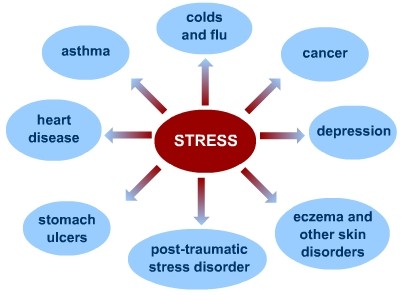
Behind all of this, complicating matters, are depleted magnesium stores.
Patients who had made suicide attempts (by using either
violent or nonviolent means) had significantly lower mean
CSF magnesium levels irrespective of the diagnosis.[xxiv]
Treating Underlying Conditions

Mg deficiency increases susceptibility to the
physiologic damage produced by stress.
The adrenergic effects of psychological stress induce a shift
of Mg from the intracellular to the extracellular space,
increasing urinary excretion and eventually depleting body stores.[xxv]
Dr. Leo Galland
Dealing with Stress with Magnesium Medicine

In 2000, the National Institutes of Health (NIH) listed depression as a sign of magnesium deficiency. NIH defined magnesium deficiency symptoms as having three categories:
Early symptoms include (one or more) irritability, anxiety (including Obsessive Compulsive Disorder (OCD) and Tourette syndrome), anorexia, fatigue, insomnia, and muscle twitching. Other symptoms include apathy, confusion, poor memory, poor attention, and reduced ability to learn.
Moderate deficiency symptoms can consist of the above and possibly rapid heartbeat, irregular heartbeat, and other cardiovascular changes (some being lethal).
Severe deficiency symptoms can include one or more of the above symptoms, or more severe symptoms including full-body tingling, numbness, a sustained contraction of the muscles along with hallucinations and delirium (including depression), and finally dementia (Alzheimer’s Disease).
Mild magnesium deficiency appears to be common among patients with disorders considered functional or neurotic. It appears to contribute to a symptom complex that includes asthenia, sleep disorders, irritability, hyperarousal, striated and smooth muscle spasms, and hyperventilation. Magnesium deficiency in children is especially serious.
A marginal deficiency can easily become a more significant problem when stressful events trigger additional magnesium loss. In extreme situations, stressful events trigger sudden drops in serum magnesium, leading to cardiac arrest. One of the reasons people die or suffer from heart attacks and strokes is the difficulty people have in being aware of and dealing with their own internal stress levels. It is why strokes and heart attacks happen so suddenly and unexpectedly.
When we start getting anxious, our heart starts beating irregularly, and when our depression starts to crush us, we find ourselves boxed in. We certainly do not experience magnesium deficiencies directly, and we can be stressed, anxious, and depressed not because of external factors but because of our lack of magnesium. Our bodies and cells get stressed when there is not enough magnesium to keep them and us healthy.
[i] Bennett CPW, McEwen LM, McEwen HC, Rose EL. The Shipley Project: treating food allergy to prevent criminal behaviour in community settings. J Nutr Environ Med 8:77-83, 1998.
[ii] Kirow GK, Birch NJ, Steadman P, Ramsey RG. Plasma magnesium levels in a population of psychiatric patients: correlation with symptoms. Neuropsychobiology 30(2-3):73-8, 1994.
[iii] Kantak KM. Magnesium deficiency alters aggressive behavior and catecholamine function. Behav Neurosci 102(2):304-11, 1988
[iv] Buist RA. Anxiety neurosis: The lactate connection. Int Clin Nutr Rev 5:1-4, 1985.
[v] Seelig MS, Berger AR, Spieholz N. Latent tetany and anxiety, marginal Mg deficit, and normocalcemia. Dis Nerv Syst 36:461-5, 1975.
[vi] Durlach J, Durlach V, Bac P, et al. Magnesium and therapeutics. Magnes Res 7(3/4):313-28, 1994.
[vii] Durlach J. Clinical aspects of chronic magnesium deficiency, in MS Seelig, Ed. Magnesium in Health and Disease. New York, Spectrum Publications, 1980.
[viii] Kozielec T, Starobrat-Hermelin B. Assessment of magnesium levels in children with attention deficit hyperactivity disorder (ADHD). Magnes Res 10(2):143-8, 1997.
[ix] Kozielec T, Starobrat-Hermelin B. Assessment of magnesium levels in children with attention deficit hyperactivity disorder (ADHD). Magnes Res 10(2):143-8, 1997.
[x] Starobrat-Hermelin B, Kozielec T. The effects of magnesium physiological supplementation on hyperactivity in children with attention deficit hyperactivity disorder (ADHD). Positive response to magnesium oral loading test. Magnes Res 10(2):149-56, 1997.
[xi] George MS, Rosenstein D, Rubinow DR, et al. CSF magnesium in affective disorder: lack of correlation with clinical course of treatment. Psychiatry Res 51(2):139-46, 1994.
[xii] Kirov GK, Birch NJ, Steadman P, Ramsey RG. Plasma magnesium levels in a population of psychiatric patients: correlations with symptoms. Neuropsychobiology 1994;30(2-3):73-8, 1994.
[xiii] Linder J et al. Calcium and magnesium concentrations in affective disorder: Difference between plasma and serum in relation to symptoms. Acta Psychiatr Scand 80:527-37, 1989
[xiv] Frazer A et al. Plasma and erythrocyte electrolytes in affective disorders. J Affect Disord 5(2):103-13, 1983.
[xv] Bjorum N. Electrolytes in blood in endogenous depression. Acta Psychiatr Scand 48:59-68, 1972.
[xvi] Cade JFJA. A significant elevation of plasma magnesium levels in schizophrenia and depressive states. Med J Aust 1:195-6, 1964.
[xvii] Levine J, Rapoport A, Mashiah M, Dolev E. Serum and cerebrospinal levels of calcium and magnesium in acute versus remitted schizophrenic patients. Neuropsychobiology 33(4):169-72, 1996.
[xviii] Kanofsky JD et al. Is iatrogenic hypomagnesemia common in schizophrenia? Abstract. J Am Coll Nutr 10(5):537, 1991.
[xix] Kirov GK, Tsachev KN. Magnesium, schizophrenia and manic-depressive disease. Neuropsychobiology 23(2):79-81, 1990.
[xx] Chhatre SM et al. Serum magnesium levels in schizophrenia. Ind J Med Sci 39(11):259-61, 1985.
[xxi] Banki CM, Vojnik M, Papp Z, Balla KZ, Arato M. Cerebrospinal fluid magnesium and calcium related to amine metabolites, diagnosis, and suicide attempts. Biol Psychiatry. 1985 Feb;20(2):163-71.
[xxii] The effects of magnesium physiological supplementation on hyperactivity in children with ADHD. Mag Res 1997; 10(2):149-56.
[xxiii] http://www.mdheal.org/magnesiu1.htm
[xxiv] Banki CM, Vojnik M, Papp Z, Balla KZ, Arato M. Cerebrospinal fluid magnesium and calcium related to amine metabolites, diagnosis, and suicide attempts. Biol Psychiatry. 1985 Feb;20(2):163-71.
[xxv] http://www.mdheal.org/magnesiu1.htm
Dr.Sircus is a reader-supported publication. To receive new posts and support my work, consider becoming a free or paid subscriber.
Subscribe now

comments