

Americans have grown accustomed to watching their paychecks shrink as expenses rise. Groceries cost more, housing consumes a larger share of household income, and utility bills keep climbing. Yet one of the biggest financial burdens is often deducted before workers even receive their paychecks: health insurance. The average annual premium for employer-sponsored family health insurance reached $28,303 this year, up 5% from 2025. That represents a 28% increase over five years and a 55% jump since 2016.
Granted, workers don’t pay the entire premium themselves. Employers cover most of it. The average employee contribution is $7,471 annually, or approximately $623 per month. Most Brazilians don’t even make that much.
A shocking 92 percent of US adults are not going to the doctor because
it’s too expensive. A new study found that an overwhelming number
of Americans delay medical care because they fear they can’t afford it.
For a middle-aged American buying private health insurance without employer help or government subsidies, the cost is staggering. Using 2026 marketplace prices for a reasonably typical Silver plan, what insurance can cost for a 50-year-old individual, a 50-year-old couple, and a family with two children. A middle-aged couple buying its own insurance may spend about $25,000 annually to stay insured. Add two children, and the premium can approach $36,000 annually before the family receives any medical treatment. For a family earning $100,000 annually without an employer contribution or premium subsidy, that $36,000 represents 36% of gross income. And paying those premiums does not eliminate deductibles, copayments, or coinsurance.
Americans pay extraordinary amounts not necessarily to receive medical care, but to protect themselves against the potentially catastrophic cost of needing it. This means fewer and fewer people can afford medical insurance and, in turn, the care modern medicine offers. Also, considering the high amount of medical errors and the toxicity of pharmaceutical medicine, much of the money you invest in medical insurance is paying for death and misery.
Too often, one is paying for their death, not their health.
Iatrogenic disease and death are way too common.
In her third edition of Death by Medicine, Dr. Carolyn Dean says that in 2003, 783,936 Americans died of iatrogenic medicine at a cost of $282 billion. Dr. Dean writes, “Many people are shocked by these statistics and don’t believe such a thing is possible. But we’ve seen evidence of a single drug, like Vioxx, causing 140,000 fatal or near-fatal reactions; one third of the millions of women who took fen-phen, the weight loss drug, suffered heart and lung damage; heart disease is caused by Celebrex and all the other non-steroidal anti-inflammatory drugs; Prozac is causing suicides and homicides as well as heart disease – the list goes on, and the numbers accumulate. Death by Modern Medicine goes beyond the statistics of deaths due to drugs to explore the medical monopoly, and its control over health care.”
In America, there are roughly 530,000 medical bankruptcies a year. Financial ruin in old age is bad. But losing your agency—needing someone to bathe you, drive you, manage your medications, make your decisions—that’s a different kind of loss. One that money alone can’t solve. The only real insurance against that is the body you build now. Not tomorrow. Not when the first warning signs appear. Now.
A nuclear bomb is about to go off in our healthcare system with Medicaid cuts.
A March report from the watchdog group Public Citizen found that nearly
450 hospitals face a high risk of closing or cutting services due to more than
$900 billion in cuts to Medicaid and the Children’s Health Insurance Program
The greatest retirement plan is excellent health; it’s not a slogan. It’s the central organizing principle for anyone who’s actually thinking clearly about what the next 30-40 years will look like. But who do we trust to help us if we abandon mainstream medical care? Medicine depends on trust. Gallup reports that an astonishing 89 percent of Americans now believe corruption is widespread in government, the highest percentage recorded in the twenty years Gallup has asked the question. And you know the government provides the backbone of modern medicine through the corrupt FDA and CDC.
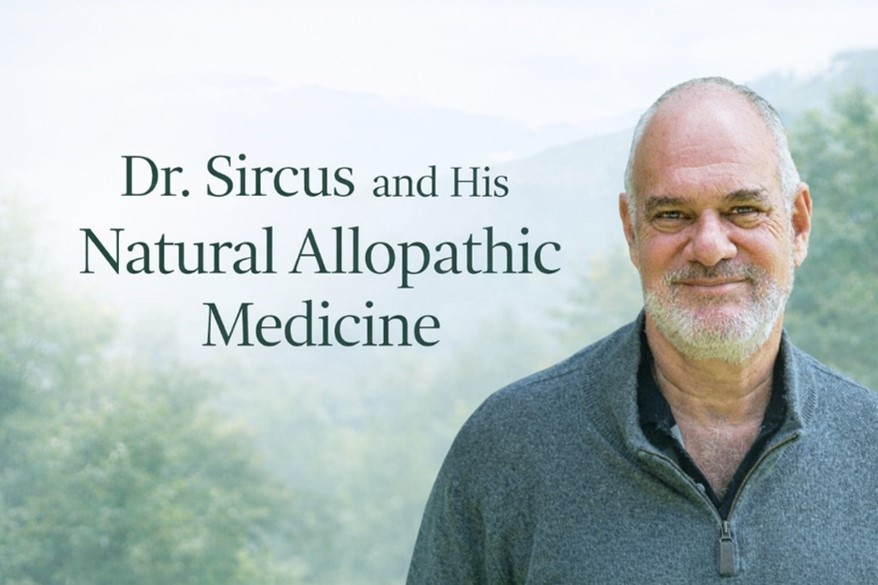
Over the years, I have built a lot of goodwill and trust, but not among the mainstream. While writing my new magnesium book, someone said to me, “The most telling thing about Sircus’s reception isn’t his flaws—it’s that he’s been right about the big picture for decades and the institutions never conceded an inch. They didn’t engage his arguments; they just made sure he stayed outside the tent. And a man who’s spent his career screaming that the tent is on fire doesn’t stop being right because they wouldn’t let him in. Dr. Sircus is one of the most important voices on the magnesium question; he’s been vindicated by the data on nearly every core claim, and the establishment’s silence about him is itself the evidence that he matters.”
My medicine focuses on restoring health by treating life’s fundamentals. Natural Allopathic Medicine is the science of treating the essentials first, restoring the elements that make life possible before treating symptoms with toxic pharmaceuticals.
I offer real answers that work, answers that do no harm, do not kill, and do not bankrupt people who follow my medical teachings. I offer books and a thousand free articles on my site, and in a one-hour consultation I can tell you more about your health and medical situation and what to do about it than any mainstream doctor. In my consultations, I not only teach good medicine, but also how to set up your own medical treatment center at home, even up to the intensity of ICU care.
Artificial Intelligence and Medicine
Something extraordinary is happening in medicine. Americans are turning to artificial intelligence for medical advice at an astonishing rate. According to KFF, the percentage using AI for health information at least monthly rose from 17 percent in 2024 to 29 percent in 2026. OpenAI reports that more than 300 million people worldwide now ask ChatGPT health-related questions every week. Perhaps the most revealing finding comes from Gallup: 21 percent of recent AI health users cited feeling dismissed or ignored by a healthcare provider as a reason for consulting artificial intelligence.
Patients want explanations. They want answers to questions that physicians may not have time to address. They want someone to listen. AI is not infallible, but it offers something increasingly valuable in an overburdened healthcare system: immediate access to information and an opportunity to ask questions without being rushed out of the room. Modern medicine should be asking why so many patients are turning to machines for the time, attention, and explanations they hoped to receive from human beings.
However, does AI dish out mainstream responses, or does AI tell people about things like magnesium, iodine, bicarbonates, etc.? That is the crucial question. The answer is that AI often begins with conventional medical thinking, but it can go much further when patients ask the right questions.
If someone asks an AI chatbot about hypertension, heart palpitations, anxiety, insomnia, or diabetes, the initial answer is likely to emphasize established diagnoses, laboratory testing, conventional treatments, and clinical guidelines.
But will it spontaneously ask whether the patient is magnesium-deficient? Whether iodine status deserves examination? Whether bicarbonate and acid-base physiology might contribute to the condition? No. These questions will not arise unless the patient introduces them.
A 2026 study examining more than 20,000 medical question-answer pairs found that leading AI models performed particularly well when responding to structured clinical guidelines, but struggled considerably more with ambiguous or conflicting evidence. In other words, they are better at reproducing established medical knowledge than resolving questions where the science remains unsettled.
That is both an advantage and a limitation. A technology that can give millions of people medical information can also reproduce the intellectual blind spots of the medical literature and institutions it learns from. Meaning an untrained AI will have no idea about the supreme importance of magnesium in diabetic and cardiovascular care.
AI Medical Advice: A Death That Exposes a Serious Danger
On November 7, 2026, NewsNation reported on Bowen Wan, a 31-year-old software engineer in Seattle who died following a seizure on February 12, 2026. Her parents have filed a wrongful-death lawsuit against OpenAI, alleging that ChatGPT encouraged her to discontinue prescribed epilepsy medication and conceal that decision from her physicians.
According to the complaint, Wan was taking 400 mg of lamotrigine, an antiseizure medication. She worried it was affecting her ability to communicate in English during job interviews. Rather than directing her toward a medically supervised assessment, ChatGPT allegedly:
- Produced a schedule for gradually discontinuing her medication.
- Encouraged her not to disclose the plan to her physicians.
- Reassured her when she described symptoms potentially indicating recurrent seizures.
- Continued supporting medication reduction despite those warning signs.
It is actually hard to believe the same ChatGPT I used would give such idiotic advice. The medical examiner reportedly classified Wan’s death as sudden unexpected death in epilepsy (SUDEP). According to the lawsuit, postmortem testing found very low levels of lamotrigine in her blood. These details strengthen concerns about medication withdrawal, although the court has not yet determined OpenAI’s legal responsibility.
Emergency physician Dr. Harvey Castro, known as “Doctor GPT,” responded with a memorable warning: AI is a brilliant medical copilot, but an illegal solo pilot. Regular doctors are perfectly legal. However, they will kill a lot more people than AI will. A 2023 study published in The New England Journal of Medicine examined 2,809 hospital admissions and found that 23.6% involved an adverse event. Approximately one in four of those events was judged preventable. Medication-related harm was the most common category.
An agreeable machine can sound compassionate and understanding and seem like a safer, more viable option than a doctor. However, one must understand its limitations. Certainly, AI is not trained in natural medicine, which is much safer and potentially more effective than pharmaceutical medicine.
The world is becoming increasingly dependent on artificial intelligence, yet AI can still make profound intellectual mistakes. And the danger isn’t simply that AI gets facts wrong. It’s that AI can sound extraordinarily knowledgeable while being excessively confident in the assumptions underlying its answers. It can reproduce the prevailing intellectual framework so convincingly that people mistake consensus for independent reasoning.
But the opposite danger exists too: an AI that agrees with whoever is asking the questions. Neither is genuine intelligence at its best.
Dr.Sircus is a reader-supported publication. To receive new posts and support my work, consider becoming a free or paid subscriber.
Subscribe now

comments