

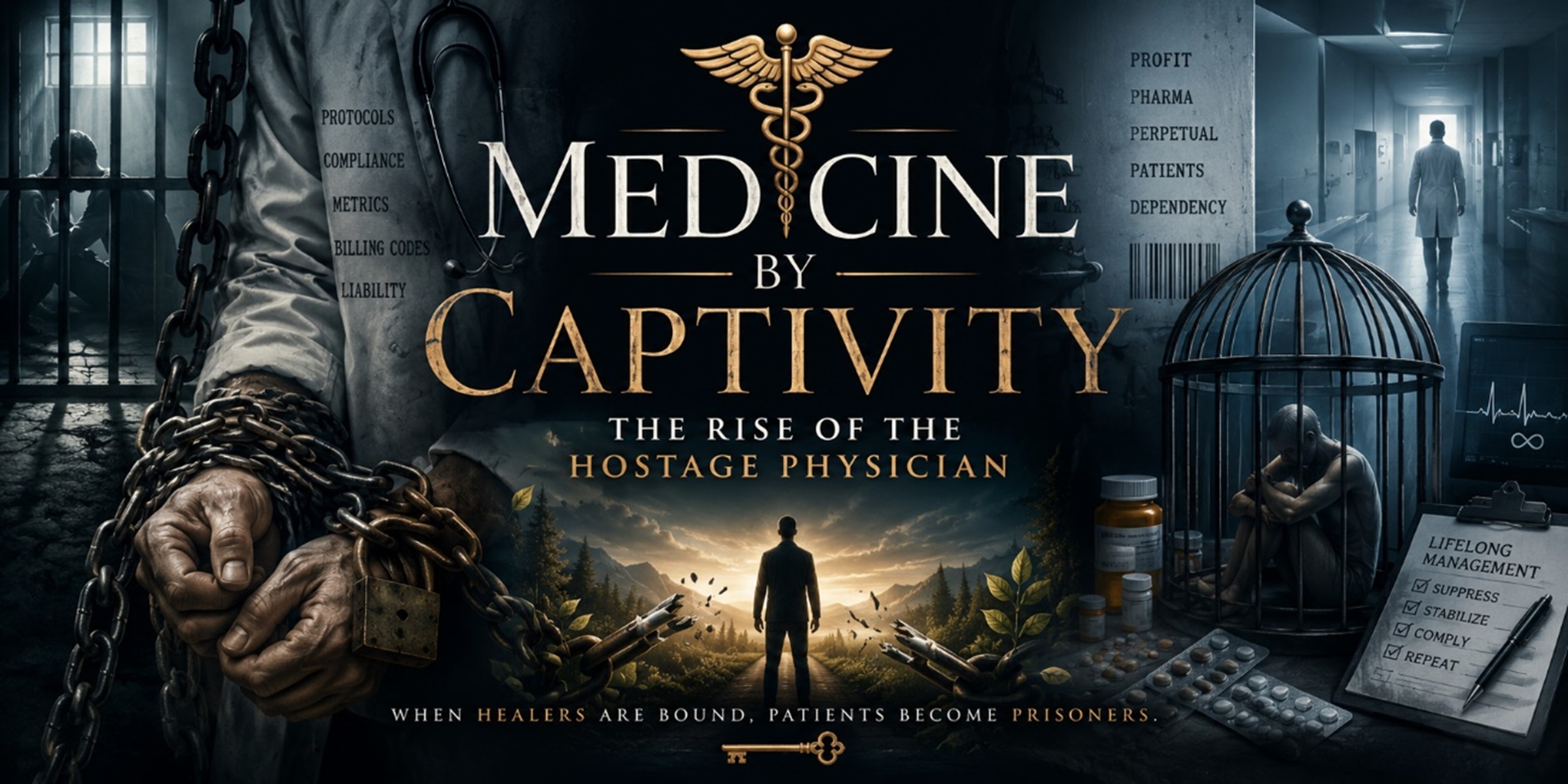
Dr. Joseph Varon: (published by Brownstone Institute)
“The intensive care unit (ICU) was crowded before sunrise, again. After 40 years in medicine, I am not sure what “full” even means anymore. Every ICU now feels just one patient away from disaster. Patients wait in emergency departments for beds that do not exist. Another transfer is already on the way because someone thinks our ICU still has space. Nurses are exhausted. Residents are exhausted. Families are scared. Doctors try to think clearly while phones ring, alarms sound, charts pile up, and somewhere, someone checks dashboards and occupancy numbers while real people struggle to breathe just a few feet away.
I remember one morning clearly because it still bothers me years later. An administrator came into the ICU and asked about the “game plan” for one of my patients since his insurance would run out at the end of the week. I remember feeling angry, not because I cared about getting paid, but because I realized how much institutional pressure had taken over medical decisions. The focus was no longer on whether the patient needed ICU care or if the family understood what was happening. Instead, the conversation was about the “insurance clock.” I stood there wondering when this became normal. When did hospitals stop feeling like hospitals and start feeling like big systems moving people through pathways, numbers, and coverage limits?
Nobody in the room seemed shocked because everybody already understood the environment we were functioning inside. That may actually be the part that bothers me the most and made me write this article. We adapted to it. We normalized it. Human beings can normalize almost anything if they live inside it long enough. Physicians are especially vulnerable to this because medicine trains doctors to absorb enormous pressure quietly.”
This account from Dr. Varon perfectly encapsulates the tragedy of modern medicine: the transformation of the healing arts into a systems-driven industrial enterprise. When Dr. Varon speaks of “physician captivity,” he describes a reality in which the doctor is no longer the patient’s primary advocate but a middle manager tasked with navigating the competing interests of insurance companies, hospital administrative metrics, and the “insurance clock.”
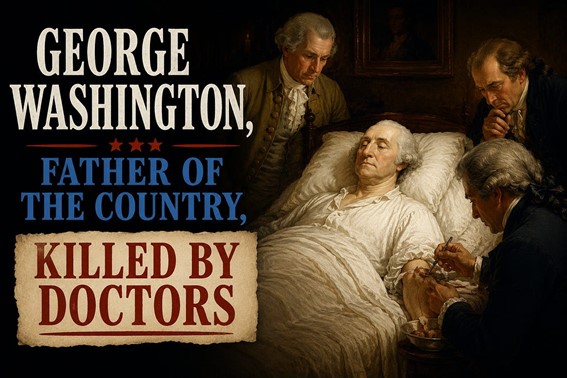
Yes, they did, they drained half his blood, gave him an enema, and that was the end of him. Doctors have been killing humans for a long time. They literally drained the life out of Washington, not out of malice but simply by following the established protocols recommended by the best physicians at the time. Today, the medical orthodoxy has replaced bloodletting with mRNA genetic injections hailed as the saviors of humanity.
Yes, as we trash modern medicine’s treatment of chronic disease, it is fair to say modern medicine performs miracles in moments of crisis. It can stop bleeding, restart hearts, replace joints, suppress infections, and keep premature infants alive. Yet beneath these undeniable achievements lies a darker structural reality that more and more people instinctively feel but struggle to articulate: much of modern medicine no longer restores health—it manages captivity.
Not captivity in chains and prison bars, but a quieter biological captivity, where human beings become permanent patients, lifelong consumers, and dependent inhabitants of a medical-industrial system that profits far more from chronic illness than from resilient health.
The tragedy is not that modern medicine is useless. The tragedy is that it has become extraordinarily sophisticated at managing deterioration while remaining remarkably poor at cultivating vitality.
It excels at suppressing symptoms, controlling biomarkers, and extending pharmaceutical dependency, yet often ignores the metabolic, nutritional, emotional, environmental, and spiritual terrain from which disease emerges. A person with diabetes is managed rather than metabolically restored. A depressed person is chemically stabilized rather than deeply understood. An inflamed society is sedated instead of healed.
This is not primarily the fault of individual doctors. Most physicians enter medicine wanting to help people. The problem is systemic. Medicine has increasingly become institutional rather than relational, algorithmic rather than human, industrial rather than biological. The patient is processed through protocols, billing codes, pharmaceutical pathways, and liability structures that reward intervention far more than restoration. In this system, disease management becomes the business model.
The result is a subtle but profound form of captivity. Millions live inside a permanent pharmaceutical architecture—sleep medications, antidepressants, statins, blood pressure drugs, diabetes drugs, anti-inflammatory drugs—often stacked one upon another for decades.
The body is chemically negotiated with instead of fundamentally repaired. Symptoms are muted while the underlying terrain continues to degrade through inflammation, glycation, oxidative stress, mitochondrial dysfunction, nutritional depletion, loneliness, chronic stress, and toxic lifestyles. We are medicating the consequences of civilizational collapse while refusing to confront its causes.
In some settings, emotional suffering is approached less as a human cry for meaning and more as a neurochemical inconvenience to be controlled. Sedation replaces understanding. Compliance replaces transformation. The goal quietly shifts from helping people flourish to helping institutions maintain order.
The danger lies in a system that has drifted away from biological wisdom and toward perpetual management.
Conclusion
The mainstream media and hospital HR departments love to talk about “physician burnout.” It is a convenient label—it places the problem on the individual doctor’s inability to “cope” with the stress, implying they need more meditation, better time management, or “resilience training.”
Dr. Varon correctly identifies this as a deflection. It is not burnout; it is moral injury. Physicians are suffering because they are being forced to participate in a system that systematically conflicts with the very reason they entered the profession: to help people. You cannot “meditate” your way out of a system that views your patients as units of profit and you as a cog in an insurance-driven machine.
Dr. Varon’s perspective is a necessary reminder that the modern hospital is increasingly an anti-healing space. The machinery of the system has become so dominant that it effectively overwhelms the humanity that was once the institution’s primary purpose. When the “game plan” is based on the insurance clock rather than the patient’s heartbeat, the system is no longer practicing medicine humanely and knowledgeably.
Dr.Sircus is a reader-supported publication. To receive new posts and support my work, consider becoming a free or paid subscriber.
Subscribe now

comments