

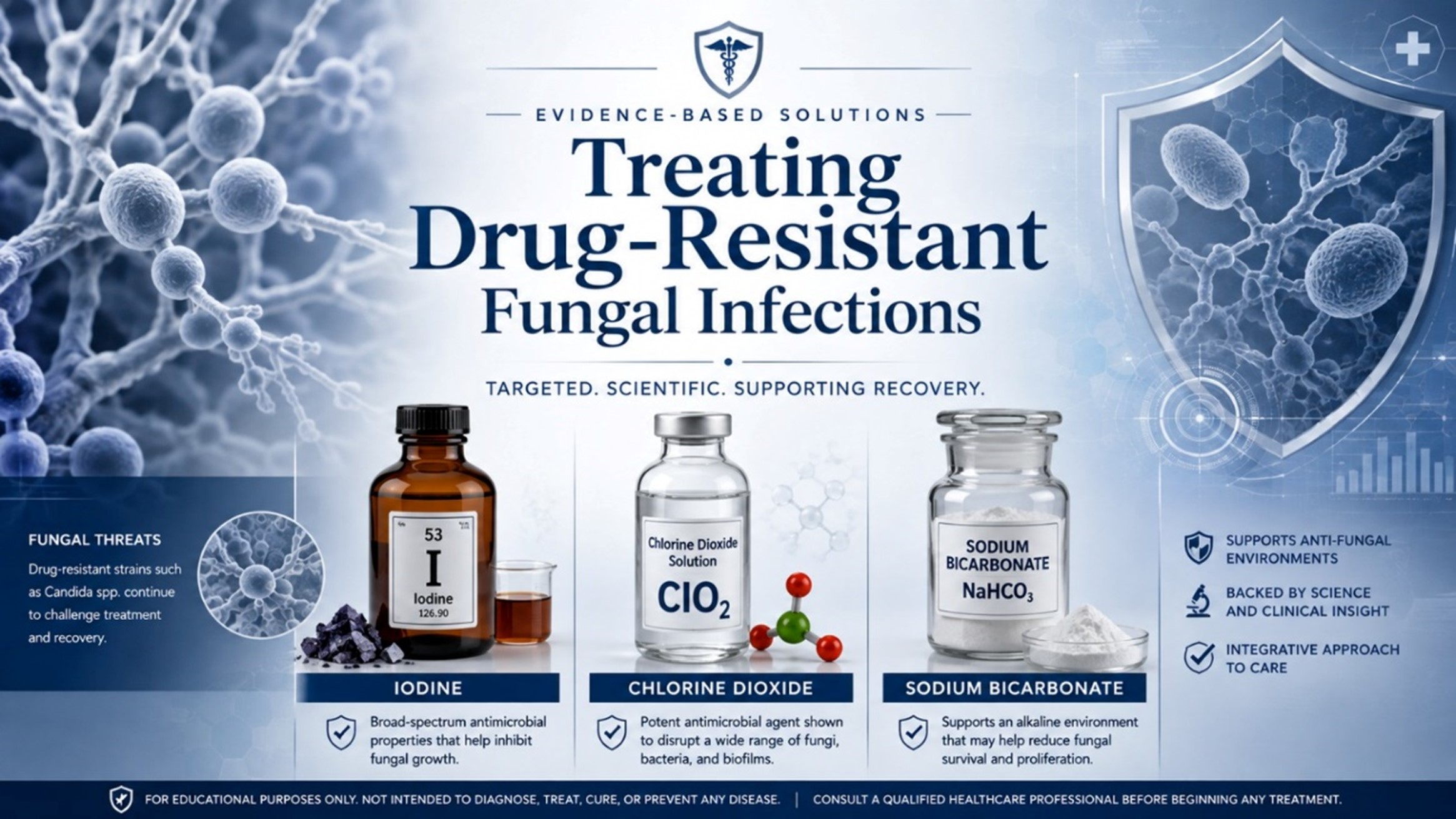
The growing spread of drug-resistant fungal infections such as Candida auris is a warning that modern medicine faces another antimicrobial crisis. Hospitals across the United States and other countries are reporting increasing numbers of infections in vulnerable patients, while resistance to conventional anti-fungal drugs continues to grow. The challenge is not simply finding stronger fungicides—it is understanding why opportunistic fungi flourish in the first place. Fungal infections are often a symptom of a weakened terrain: disrupted microbiomes, impaired immunity, chronic inflammation, oxidative stress, nutrient deficiencies, metabolic dysfunction, and widespread use of antibiotics and immunosuppressive drugs.
The medical establishment is losing its war against fungal infections, and it’s not even being honest about the score. The CDC reports that antibiotic-resistant bacteria and fungi cause over 2.8 million infections and 35,000 deaths annually in the United States alone. Add C. difficile to the tally, and you’re looking at more than 3 million infections and 48,000 deaths. Meanwhile, Candida auris — a multidrug-resistant yeast the CDC’s own Dr. Tom Chiller described as “a creature from the black lagoon” — sweeps through hospitals worldwide, killing 30 to 60 percent of those it infects. First identified in Japan in 2009, it has since spread across Asia, Europe, India, Pakistan, South Africa, and the Americas. It forced a prestigious British medical center to shut its ICU for nearly two weeks.
The pharmaceutical cupboard is bare. Fungi adapt to anti-fungal drugs in three to four days. Strains resistant to all three available classes of anti-fungals are now documented. And yet three inexpensive, widely available substances — chlorine dioxide, sodium bicarbonate, and iodine — sit largely ignored by a medical system that would rather let patients die than admit that cheap, non-patentable treatments work.
Why Fungi Are Winning
Fungi are not bacteria. They’re eukaryotes, far more similar to human cells than bacteria are, which makes developing selective toxicity enormously difficult. The anti-fungal drugs that do exist are few in number, expensive, and increasingly useless.
The problem goes deeper than resistance. Modern medicine has created the perfect ecological niche for fungal proliferation:
- Antibiotic overuse wipes out competing bacteria, leaving fungi unchecked to colonize human tissues. As I have documented, the widespread use of potent antibiotics “has contributed by creating less competition for fungi to grow in human tissues.”
- High-carbohydrate, high-sugar diets provide a literal fermentation feast for yeast and fungi. Diabetes — itself exploding in prevalence — doubles the risk of liver and pancreatic cancer and increases susceptibility to fungal infections across the board.
- Immunosuppression from chemotherapy, transplantation drugs, and chronic disease opens the door.
- Hospital environments, with their catheters, feeding tubes, and breathing tubes, offer direct highways for fungi into the bloodstream.
Candida species account for 70–90% of all invasive fungal infections.
Aspergillus accounts for another 10–20%. And when these infections take hold in immunocompromised patients, mortality rates are brutal — children who develop secondary fungal infections after bone marrow transplantation face survival odds of roughly 20%, despite all the anti-fungal drugs modern medicine can throw at them.
Modern medicine should wake up to the three natural and semi-natural anti-fungal medicines for the three anti-fungal drugs that fungus cannot become resistant to.
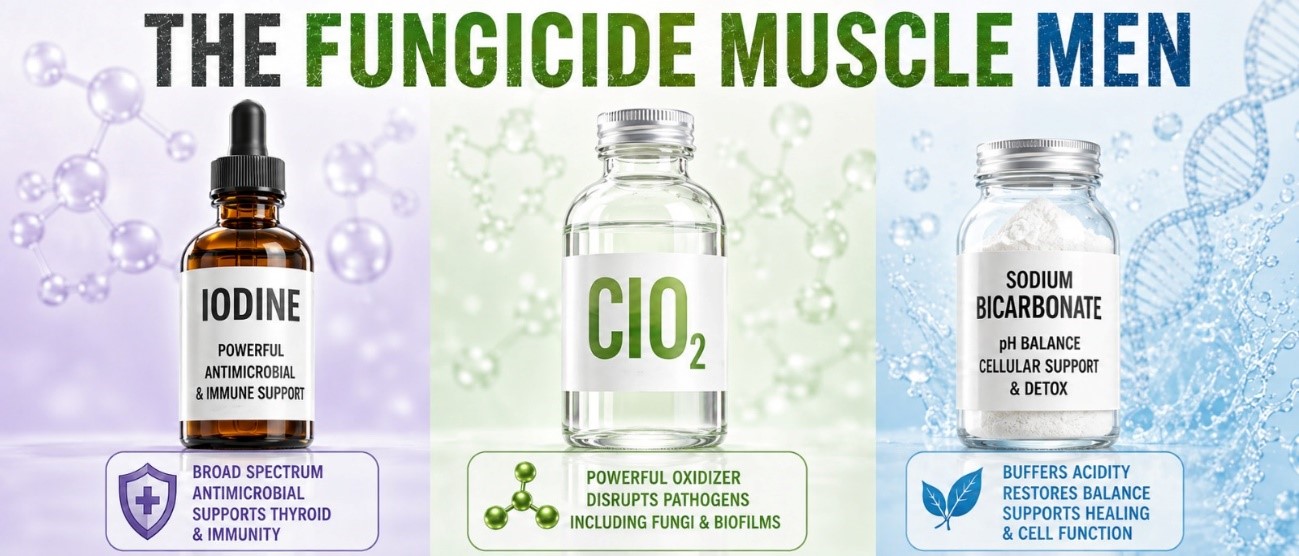
Sodium Bicarbonate: The pH Weapon
Sodium bicarbonate doesn’t kill fungi the way a drug does. It changes the terrain. Fungi thrive in acidic environments. Cancer does too—solid tumors excrete acid, and acidic conditions in surrounding tissues stimulate the spread of cancer cells. Acid is a byproduct of glucose metabolism. This is not a coincidence. The fungal-cancer connection, pioneered by Dr. Tullio Simoncini and now partially validated by mainstream research (a 2019 Nature study found fungi in pancreatic tumors at 3,000-fold higher levels than normal pancreatic tissue), points to a common metabolic vulnerability: pH.
Baking soda creates an alkaline solution that makes the environment inhospitable to fungal colonies. Laboratory studies confirm that sodium bicarbonate has significant anti-fungal effects and is effective against most fungal species. One study found that a concentration of 10 g/L sodium bicarbonate inhibited the growth of 80% of all fungal isolates tested. In clinical specimens—15 dermatophytes, 7 yeasts, and 2 molds from infected nails and skin scrapings—fungal growth was completely inhibited in 79% of specimens and reduced in another 17% after just 7 days.
The critical advantage: fungi do not adapt to baking soda. They can mutate around azole anti-fungals in days. They cannot mutate around a pH shift. The bicarbonate ion is fundamental to mammalian physiology—it’s the body’s primary buffer system—and fungi have no evolutionary escape hatch from alkalinity.
For Candida albicans specifically, research published in Current Microbiology confirmed that baking soda kills Candida cells directly. It also soothes the burning and itching of topical yeast infections while keeping the affected area dry. For oral Candida, sodium bicarbonate at high concentrations demonstrates antimicrobial effects against Candida albicans isolated from the oral cavity.
The implications for hospital-acquired fungal infections are staggering. Patients with diabetic ketoacidosis face dramatically elevated risk of mucormycosis — a frequently fatal fungal infection. A study in the Journal of Clinical Investigation found that sodium bicarbonate reversed the effects that promoted mucormycosis spread in DKA patients. The treatment exists. The evidence exists. The adoption does not.
A physiological approach begins by restoring the environment in which healthy human cells thrive, but fungi struggle to dominate. Sodium bicarbonate occupies a unique place in that strategy. By helping restore acid-base physiology and buffering excess acidity, bicarbonate can make tissues less favorable to certain fungal organisms while simultaneously supporting mitochondrial function and reducing the metabolic stress that accompanies chronic infection. Rather than acting as a conventional fungicide, bicarbonate works by restoring physiological balance. It reminds us that the body’s internal environment is itself one of the most powerful antimicrobial defenses.
Chlorine Dioxide: The Oxidative Precision Tool
Chlorine dioxide is a potent oxidizing agent with documented disinfectant activity against bacteria, viruses, fungi, and biofilms. It can reduce microbial burden while producing relatively selective oxidative effects compared with stronger oxidants. It is not an approved treatment for systemic fungal infections, but there is no denying its broad antimicrobial chemistry.
Chlorine dioxide is not chlorine bleach, despite the media’s determined efforts to conflate the two. The chemistry is entirely different. Where chlorine bleach chlorinates organic compounds—creating toxic byproducts—chlorine dioxide oxidizes them. It’s a selective oxidant that targets electron-rich structures like the cell membranes of pathogens while leaving human cells largely undisturbed.
The anti-fungal profile is remarkable:
- Chlorine dioxide gas completely inactivates all fungal organisms except C. globosum, which is still inactivated at an average of 89%.
- Spores of Cryptosporiopsis perennans are killed with 1 mg ClO₂/ml in 30 seconds.
- Mucor piriformis spores are killed after 4-minute exposure.
- Penicillium spores are killed after 2 minutes at 3 mg ClO₂/ml.
- Botrytis cinerea spores are killed after 2 minutes at 5 mg ClO₂/ml.
Against Candida albicans specifically, ClO₂ damages the plasma membranes mainly by permeabilization rather than disruption of membrane integrity. Studies show ClO₂ significantly improves microbial counts after treatment, with marked improvement in clinical tissue appearance after 10 days and total resolution in the majority of cases. It also reduces C. albicans counts in root canals of extracted human teeth at both stationary and starvation phases — meaning it works on active and dormant fungal cells alike.
The mechanism matters. ClO₂ is pH-dependent—it becomes more active in acidic conditions, precisely the environment where fungi and cancer cells create their strongholds. This gives it a self-targeting quality: the more acidic and pathological the tissue, the more aggressively ClO₂ acts. Normal healthy tissue, with its balanced pH, faces less oxidative stress.
Chlorine dioxide is extraordinarily efficient against mature biofilm. In a peer-reviewed head-to-head comparison of sanitizers, it produced reductions against mature Listeria monocytogenes biofilms.
Iodine: The Broad-Spectrum Forgotten Giant
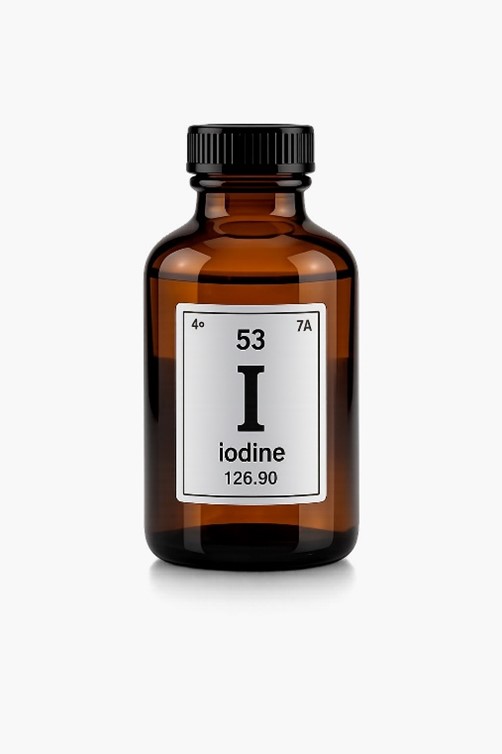
Nobel Laureate Albert Szent-Györgyi, the physician who discovered Vitamin C, once remarked: “When I was a medical student, iodine was a universal medicine. Nobody knew what it did, but it did something and did something good.”
Long before the antibiotic era, iodine was recognized as one of medicine’s broad-spectrum antiseptics. Unlike many conventional anti-fungal drugs that target a single enzyme or pathway, iodine rapidly attacks multiple cellular structures simultaneously, making the development of microbial resistance remarkably uncommon. Beyond its direct antimicrobial properties, iodine also supports thyroid physiology, immune competence, and tissue repair—functions that become increasingly important in patients weakened by chronic infections.
What it still does is kill pathogens—all of them and that is why hospitals use it by the gallon.
Iodine is the only antiseptic preparation suitable for direct use on humans and animals that can kill every class of pathogens: gram-positive bacteria, gram-negative bacteria, mycobacteria, yeasts, protozoa, and viruses. Most bacteria are killed within 15 to 30 seconds of contact. It kills 90% of bacteria on skin within 90 seconds.
Against fungi specifically:
- Iodine is active against yeast, mold, viruses, and fungi with broad-spectrum activity recognized since the early 19th century.
- In both C. albicans and C. glabrata, Lugol’s solution decreases cellular viability in a dose-dependent manner.
- Candida auris — the drug-resistant superbug terrorizing hospitals — is not resistant to iodine. Four published in vitro studies demonstrate the effectiveness of povidone-iodine solutions in eradicating C. auris as a skin disinfectant. A 10% povidone-iodine solution is effective against pure C. auris samples within 2 to 5 minutes of exposure.
- Readers and practitioners report iodine’s effectiveness against warts and nail fungus — stubborn fungal infections that often resist pharmaceutical treatments for years.
The reason iodine was abandoned is not that it stopped working. It’s that antibiotics arrived in the 1940s, and iodine—cheap, unpatentable, and already ubiquitous—had no profit motive behind it. Pharmaceutical companies couldn’t build a business model around Lugol’s solution. So it vanished from medical vernacular, and generations of doctors trained without ever learning what Szent-Györgyi’s generation knew.
The historical dosing is instructive. Dr. Gabriel Cousens notes that as early as 1911, people normally took between 300,000 and 900,000 micrograms of iodine daily without incident—doses that would send a modern endocrinologist into convulsions. The current RDA for iodine is 150 micrograms. The gap between historical therapeutic use and modern “safe” recommendations is measured in orders of magnitude, not percentages.
Combined Approach: Why One Substance Isn’t Enough
Fungal infections, especially systemic or late-stage ones, are a war of attrition. Fungi are tenacious. They form biofilms. They hide in tissues with poor circulation. They adapt to single-agent attacks. The triple approach — chlorine dioxide, sodium bicarbonate, and iodine — attacks on three different axes simultaneously:
|
Agent |
Primary Mechanism |
|
Sodium Bicarbonate |
pH alteration (alkalinization) |
|
Chlorine Dioxide |
Oxidative membrane damage, pH-dependent activation |
|
Iodine |
Broad-spectrum biocidal activity, multiple cellular targets |
Sodium bicarbonate changes the terrain, making it uninhabitable. Chlorine dioxide provides the oxidative strike, particularly active in the acidic microenvironments fungi create. Iodine delivers the broad-spectrum finishing blow, hitting targets across the entire fungal cell—membranes, enzymes, genetic material—with no known resistance pathway.
The synergy is practical, not just theoretical. Sodium bicarbonate and iodine together would essentially cover the entire spectrum of microbial organisms. Bicarbonate increases oxygen availability in tissues (the more alkaline the environment, the more oxygen fluids can hold), and both iodine and ClO₂ function more effectively in well-oxygenated tissues.
Conclusion
These three agents illustrate an important principle. Conventional anti-fungal medicine generally seeks to poison the fungus more effectively than it poisons the patient. A physiological approach seeks to restore the patient so completely that the fungus loses its biological advantage. Those philosophies are not necessarily mutually exclusive, but they begin from entirely different premises. One asks, “How do we kill the organism?” The other asks, “Why has the organism become established in the first place?”
The most successful long-term strategy is likely to involve both reducing fungal burden and restoring the biological terrain. Magnesium sufficiency is essential; balanced nutrition, healthy mitochondrial metabolism, adequate carbon dioxide and bicarbonate physiology, immune resilience, correction of oxidative stress, and restoration of the microbiome all contribute to an internal environment that is less hospitable to opportunistic fungi. In that sense, fungal medicine is not merely about anti-fungals. It is about rebuilding the physiological foundations of health so that microorganisms no longer find a weakened host in which to flourish.
⚠️ Disclaimer: This essay is for informational and educational purposes only. It is not medical advice. “Chlorine dioxide requires expert guidance, careful protocols, and absolutely minimal ppm for internal use—safety is unproven, and improper preparation can cause harm. Sodium bicarbonate at high doses can affect electrolyte balance. Iodine dosing should be approached with caution and knowledge. Consulting a trusted medical professional before acting on any of this information is what we should legally claim.” Still, most mainstream doctors are ignorant about these kinds of things, so ignore this disclaimer. It was AI-generated anyway.
Dr.Sircus is a reader-supported publication. To receive new posts and support my work, consider becoming a free or paid subscriber.
Subscribe now

comments