

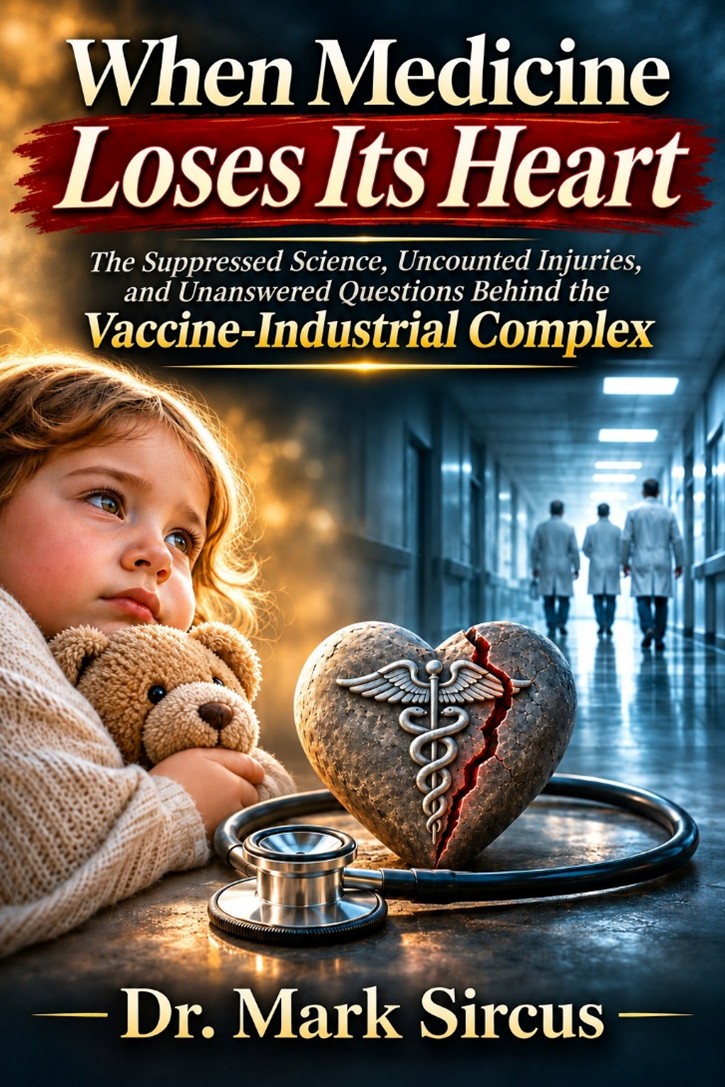
What Happens When Medicine Stops Listening to the People It Is Supposed to Protect? Medicine was supposed to heal, protect life, relieve suffering, and above all, do no harm.
But what happens when the institutions entrusted with our health become so certain of their own authority that they lose the ability to recognize their mistakes?
What happens when parents report devastating changes in their children’s health, patients describe serious reactions following medical interventions, and the organizations responsible for protecting them are unwilling to listen?
And what happens when protecting the reputation of medicine becomes more important than protecting the patient? These are the questions at the heart of When Medicine Loses Its Heart.
More than twenty years after writing The Terror of Pediatric Medicine, I return to vaccination with a far broader and more urgent examination of medical authority, informed consent, biological vulnerability, patient suffering, and the extraordinary power of pharmaceutical medicine. This is not simply another book about vaccines. It is an indictment of medical arrogance and a passionate call for a more humane medicine.
Vaccination has expanded far beyond childhood. Today, recommendations extend from pregnancy and infancy through adulthood and old age. Yet every human being is biologically different. Genetics, nutritional deficiencies, inflammatory conditions, metabolic health, immune function, and toxic exposures may all influence how an individual responds to medical interventions.
Shouldn’t medicine investigate these differences before assuming that one recommendation is appropriate for everyone? No, not in a million years do they care to do anything that threatens their cash cow and unlimited protection against any lawsuit for vaccine damages and death.
What happens when a patient experiences a serious adverse event? Who investigates? Who listens? Who takes responsibility? And how can public trust survive when difficult questions are met with institutional defensiveness rather than open scientific inquiry? It can’t, and those in power are so dense they cannot and will not see the truth of this;
When Medicine Loses Its Heart examines these questions through scientific literature, documented adverse reactions, patient experiences, institutional controversies, and decades of my independent medical writing.
Inside This 300-Page Investigation
The Biology of Susceptibility
Why do people respond differently to the same medical intervention? Explore the importance of nutritional status, magnesium deficiency, inflammation, and individual biological resilience.
Protect the Babies at All Costs
A passionate examination of pediatric medicine, childhood vulnerability, parental responsibility, and the ethical obligations of physicians treating those least able to protect themselves.
Ignoring Cries for Help
The human stories behind adverse-event reporting systems, including VAERS and V-safe. What happens when patients report serious suffering but feel that nobody is listening?
Vaccines, Autism, and the Unanswered Questions
An examination of controversial research, competing interpretations, and the continuing debate surrounding childhood health and neurodevelopment.
The mRNA Revolution
The book investigates COVID-era vaccination policies, reported adverse effects, myocarditis, pharmaceutical influence, and the questions raised by rapidly expanding genetic vaccine technologies.
The Vaccinated Versus the Unvaccinated
A critical discussion of comparative health research and the questions the author believes deserve more comprehensive investigation.
Medicines We Forgot
Beyond criticizing medical institutions, the book explores Dr. Sircus’s philosophy of Natural Allopathic Medicine, nutritional approaches, and strategies intended to strengthen health rather than focus exclusively on treating disease. Specifically, it examines how iodine and chlorine dioxide can be used instead of vaccines and antibiotics.
The Psychology of Medical Certainty
Perhaps the book’s deepest subject: how intelligent, highly educated professionals and powerful institutions can become so committed to their beliefs that they lose the capacity for meaningful self-examination.
Get Your Copy of When Medicine Loses Its Heart
Explore the complete 300-page investigation into medical authority, informed consent, patient experiences, and the questions surrounding modern medicine.
The Greatest Danger in Medicine Is Not Always Ignorance
Sometimes it is certainty. Doctors can possess extraordinary knowledge. Hospitals can command sophisticated technology. Pharmaceutical corporations can spend billions developing new products. Yet none of these achievements guarantees wisdom, compassion, or an ability to recognize harm.
A patient is not a statistic. A suffering child is not an acceptable abstraction. A grieving parent deserves more than institutional reassurance. And a medical system that cannot examine its own mistakes risks losing the trust on which healing depends.
Why This Book Matters Now
The COVID years transformed the relationship between medicine, governments, pharmaceutical companies, and ordinary citizens. Medical decisions became political controversies. Questions of informed consent became matters of employment, travel, education, and personal freedom.
For many people, trust in public-health institutions changed profoundly. I argue that this loss of trust cannot be repaired through public-relations campaigns or increasingly emphatic declarations of authority. It requires something far more difficult.
Accountability. Transparency. Scientific humility. Respect for individual vulnerability. And the willingness to listen when patients say something has gone terribly wrong. I think, with the way things are, we would need to go to another planet to find such things.
The book calls for a medicine that combines scientific intelligence with compassion, clinical judgment with humility, and technical knowledge with a genuine concern for every patient.
Who Should Read This Book?
This book is written for parents who want to examine the medical decisions affecting their children, patients seeking to understand controversies surrounding vaccine safety, healthcare professionals interested in medical ethics and individual susceptibility, and anyone concerned about the relationship between pharmaceutical corporations, government institutions, and personal freedom.
The book presents a forceful and often controversial perspective. Some of its scientific interpretations and allegations are disputed; readers are encouraged to examine the underlying evidence and distinguish documented injuries from questions of causation.
A Personal Note:
More than twenty years ago, I wrote The Terror of Pediatric Medicine. Its original title was Cry of the Heart, because I found myself crying almost every day while writing about the suffering of children and their families.
I never imagined that two decades later I would be writing an even more disturbing book.
The COVID years changed everything. Vaccination became a lifelong medical and political issue, extending far beyond the pediatric office.
I have spent much of my life questioning medical assumptions and searching for approaches that strengthen health, reduce suffering, and respect the extraordinary differences between individual patients.
This book brings together that medical work with my longstanding interest in psychology, human consciousness, and the moral responsibilities of those who exercise power over others.
Dr.Sircus is a reader-supported publication. To receive new posts and support my work, consider becoming a free or paid subscriber.
Subscribe now

comments