

Skin aging is not merely a dermatological problem. It is a reflection of the inner terrain reflected in the face. Aged skin is the visible output of internal invisible imbalances, especially stress. Meaning, the face doesn’t age randomly. It records everything happening beneath the surface—in our guts, our sleep, our hormones, and our emotions. Our face records our emotional life. However, the good news is that most skin aging can be significantly delayed and even improved. Successful antiaging treatments would be reflected in the skin, with beauty and youth returning.
Excessive sugar ages the skin. When blood sugar cross-links with collagen molecules, advanced glycation end products (AGEs) form. AGEs make collagen stiff, brittle, and discolored—similar to the chemical process that browns bread in a toaster, except that it occurs inside the skin every time blood sugar spikes. AGE accumulation makes skin look older, thicker, and less luminous—and it accelerates with every refined carbohydrate and sweetened beverage we take in.
The formation of Advanced Glycation End-products (AGEs) degrades the skin and the terrain of the entire body. We are describing the Maillard reaction—the literal charring of our tissues—and it is a perfect diagnostic for the systematic degradation of the body caused by modern dietary “terrorism.” In food, the Maillard reaction creates flavor. In the body… it creates aging. The Maillard reaction is one of the most important bridges between food chemistry, aging biology, diabetes, and the terrain model of disease I champion.
Most people know it from cooking:
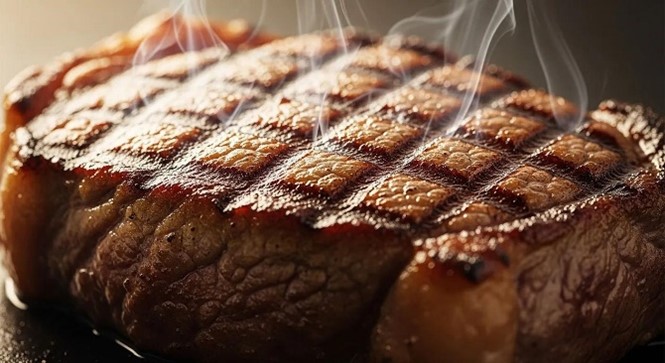

It’s what makes:
- bread brown
- steak develops a crust
- onions caramelize
- coffee roast
Those smells, colors, and flavors come from a chemical reaction between sugars and proteins.
The War Between Sugars and Structural Lipids
If the formation of AGEs is the “browning of the bread”—the structural breakdown and hardening of the tissue—PPC (Phosphatidylcholine) is the repair crew that keeps the machinery of the cell fluid and functional. Phosphatidylcholine is a phospholipid, the primary component of all biological membranes. In a world where sugar is constantly stiffening your collagen and hardening your cellular structures, PPC is the direct metabolic antagonist to that brittleness.
- Restoring Membrane Fluidity: Think of your cell membranes as the gatekeepers of your terrain. When AGEs build up, they make membranes rigid, sluggish, and unable to communicate. PPC works to maintain the fluidity and integrity of those membranes. It ensures that nutrients can get in and waste products (like the precursors to AGEs) can get out.
- The Metabolic Buffer: By supporting the cell’s structural integrity, PPC helps it resist the “stiffness” imposed by chronic glycation. It is essentially keeping the “machinery” lubricated in an environment that is trying to gum it up with sugar.
The battle for your skin and your internal organs is a war between sugars (glycation) and fats (lipids/phospholipids).
- The Sugar/AGE Aggression: Sugar cross-links collagen, creates a rigid, brittle, non-functional structure. This is a one-way street toward degradation. It is a “hardening” process.
- The PPC/Lipid Defense: PPC acts as the “softener.” By ensuring that your cellular architecture is composed of healthy, flexible lipids, you are creating a biological buffer against the hardening effects of glycation. It is the cellular equivalent of keeping a machine running smoothly so it doesn’t seize up.
Why the Medical-Industrial Complex Ignores PPC
If you go to a standard dermatologist or oncologist, they will tell you to use a cream or take a drug. They will never tell you to optimize your phospholipid terrain. Why? PPC is a foundational nutritional requirement for cellular repair. It is not an “attack” molecule; it is a “repair” molecule. You cannot patent the biology of cellular repair, and you cannot make a “chronic management” profit model out of it.
Using PPC—especially in high-quality, bioavailable forms—is a direct strike against the metabolic damage caused by a high-sugar lifestyle. It is an act of cellular reclamation. You are literally replacing the “brittle” parts of your biology with the “flexible” parts.
PPC is not just a supplement—it is a strategic recalibration of your terrain. It is the structural insurance policy that keeps you from becoming a dried-out, glycated husk of your former self. The “terrorists” want you brittle and dependent; the terrain-focused rebel wants you fluid, resilient, and structurally sound. Keep the membranes fluid.
Hydrogen Reverses Skin Aging in Humans

This past year, I have been using hydrogen inhalation therapy heavily, and it was delightful when an old-time reader of my work took a look at me and said, “Looks like you had a facelift.” I do look 20 years younger than I am. Though I always employ a full protocol for my health and for life extension, hydrogen inhalation therapy anchors my efforts.
Hydrogen is what I believe is the most exciting
and profoundly effective antioxidant.
Dr. Joseph Mercola
Molecular Hydrogen is a fascinating subject with significant implications for skin biology, as it exerts powerful effects on oxidative stress, inflammation, mitochondrial function, and collagen preservation. Hydrogen is unique because it doesn’t act like a vitamin, hormone, or drug. It’s the smallest molecule in biology. Because it is so small, it:
- diffuses rapidly through membranes
- crosses mitochondrial membranes
- penetrates skin tissue
- can reach intracellular compartments quickly
One of the biggest drivers of skin aging is Reactive oxygen species (ROS), which turn up the heat on oxidative stress.
Excess ROS damages:
- collagen
- elastin
- phospholipid membranes
- mitochondrial DNA
Leading to:
- wrinkles
- dryness
- pigmentation
- slower repair
- inflammation
Hydrogen’s best-known mechanism is to selectively neutralize the most damaging free radicals.
Collagen Protection
Hydrogen may indirectly help by reducing matrix metalloproteinase activation, inflammatory signaling, and oxidative collagen breakdown. This potentially means less collagen degradation and slower structural aging. Not “miracle wrinkle reversal”—but preservation.
Mitochondria
Skin cells are highly metabolic. Fibroblasts need ATP for:
- collagen synthesis
- repair
- turnover
Better mitochondrial function may support:
- healing
- skin turnover
- resilience
Inflammation
Hydrogen has shown anti-inflammatory effects in preclinical and some early human work.
Potential effects on:
- NF-κB signaling
- inflammatory cytokines
- oxidative cascades
That matters for:
- inflammatory skin aging
- UV stress
- wound repair
Some experimental studies suggest that Hydrogen may reduce:
- UV-induced oxidative injury
- inflammatory damage
- apoptosis in skin cells
Carbon Dioxide and the Skin
Since ancient times, people have sought out the healing powers of hot springs, not only to relax their bodies but also to rejuvenate their skin. These natural spas, rich in carbon dioxide (CO₂), have long been associated with improved circulation and enhanced skin vitality. Today, modern science helps us understand why CO₂ is so beneficial—and why it’s becoming a sought-after ingredient in skincare innovation.
One of CO₂’s most remarkable effects is its ability to act as a vasodilator. When CO₂ is absorbed through the skin, it relaxes and opens up blood vessels, allowing more blood, oxygen, and nutrients to flow to the skin’s surface.
This increased circulation nourishes the skin at a deep level, promoting cellular renewal, enhancing detoxification, and delivering the essential building blocks needed for a healthy, radiant glow. It’s one of the reasons why skin often looks so radiant after a soak in a natural hot spring. One can recreate such treatments with bicarbonate and citric acid baths (with magnesium, of course), or with a CO2 body suit called the Cardisuit.
When CO₂ is absorbed through the skin, it relaxes the smooth muscle in blood vessel walls. In a Japanese study, immersing the legs in carbonated water at 38°C increased skin blood flow by 779% compared with plain water at the same temperature. Temperature alone does not do this. CO₂ does.
The Bohr effect adds a second benefit. CO₂ signals hemoglobin to release its oxygen into the surrounding tissue. More blood reaches the skin, and more of that blood actually offloads its oxygen. The cells that build collagen, repair tissue, and maintain the skin’s protective barrier suddenly have what they need to do their job.
The results are visible. Puffiness that reflects poor fluid movement resolves. Dullness caused by low tissue perfusion lifts. Dry, rough skin softens. These are not cosmetic effects. They are signs that the supply system is working again.
The slower we breathe, the more we increase both CO2 and oxygen delivery to the cells. Scientific research has examined how breathing patterns and respiratory regulation affect cutaneous blood flow, tissue oxygenation, inflammatory processes, adipose tissue metabolic activity, stress-related skin responses, and recovery following injury or inflammation. Proper breathing also interacts indirectly with skin and fat tissue through its effects on the autonomic nervous system and vascular function.
CO2 gel treatments can help stimulate collagen production, improve skin elasticity, and reduce the appearance of fine lines and wrinkles. CO2 laser skin treatment, or fractional carbon dioxide laser therapy, is a cosmetic procedure used to address skin concerns. It involves using a high-energy CO2 laser to target and treat specific areas of the skin.
Lipid Selenium

This is where the story becomes elegant: skin aging is largely a story of structural proteins, membrane lipids, oxidation, inflammation, and glycation happening at once. Selenium supports enzymes such as Glutathione Peroxidase, which help neutralize lipid peroxides. Selenium helps stop membrane lipids from becoming rancid, oxidized, and inflammatory. Lipid selenium leaves all the other forms in the dust.
In skin that may help preserve:
- membrane integrity
- hydration signaling
- mitochondrial function
- barrier resilience
Conclusion

Beauty is far more than aesthetic pleasure—it is a vital force that nourishes the human soul, regulates the nervous system, and inspires coherence in both biology and spirit. Across cultures and traditions, beauty has been understood as a bridge between the visible and the invisible, between form and meaning. Its presence has measurable effects on well-being and is deeply tied to the healing process.
Seven years ago, I slept with my hydrogen inhalation machine every night, and after six months, I looked 20 years younger. At 73 now, I still look and feel better than I did at 60. Beauty and health go together well.
Dr.Sircus is a reader-supported publication. To receive new posts and support my work, consider becoming a free or paid subscriber.
Subscribe now

comments