

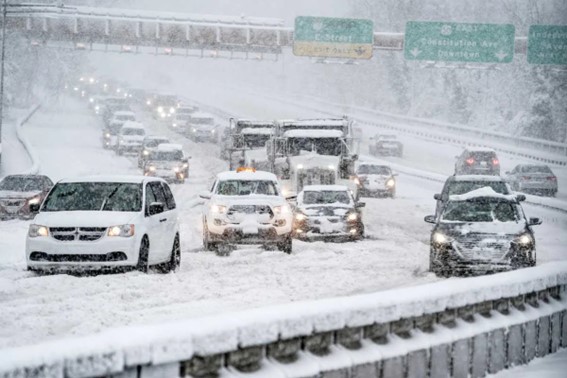
Multiple areas of the United States have been absolutely hammered by record snowfall and bitter cold this Winter, and Syracuse, NY, is among the hardest hit. It has been a fierce winter in the United States, with much of the country hit by severe frigid temperatures over the past several weeks. However, this is just the beginning of Winter. Storm after storm is being announced, and it seems like it’s not going to stop. Hope you are up for a long, cold, snowy winter. For a few hundred million, if not a billion people, it’s going to be hard to believe in man-made global warming.
Yet we read on December 28 pathetic statements from the mainstream press that, according to National Geographic, warmer winters mean that the atmosphere holds more moisture, making blizzards more likely to occur. Climate experts are famous for saying there would be no more snow.
The day before Christmas, prominent meteorologist Ryan Maue issued a warning about what could be a “full load” Arctic blast coming in early January. He said, “Need to keep a close eye on the historically cold air building over Western Canada and Alaska. We rarely see this type of cold during the past 1,000 years.” Now that’s a profound statement coming from a climate expert.
For decades, including in earlier IPCC reports, scientists stated that
warming would reduce the frequency of extreme cold events, particularly
nighttime lows, because the Arctic cold source region would weaken.
Yet the press, government, and climate experts insist we are facing catastrophic global warming. It does not look like anybody has been so wrong about something as big as climate change in history. What we hear constantly are things like the Mohawk Valley will get hit with another band of lake effect snow that could bring up to 30 inches of snow in some areas. Or a warning to postpone all travel. Syracuse, New York, has already logged 76 inches of snow this season, nearly double its annual average. Miami saw out 2025 with its coldest New Year’s Eve in 25 years.
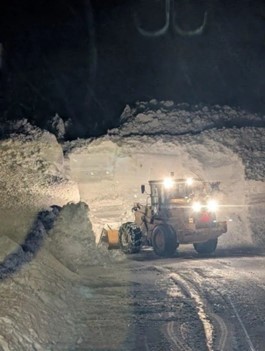
In a world without snow, according to the climate experts we see, again, before Christmas, Teton Pass Highway is buried beneath avalanche debris after road workers set off a large controlled slide early Monday morning. The Jackson Hole News & Guide, a local news outlet, reported that the debris is as deep as 35 feet, containing dense, wet snow.
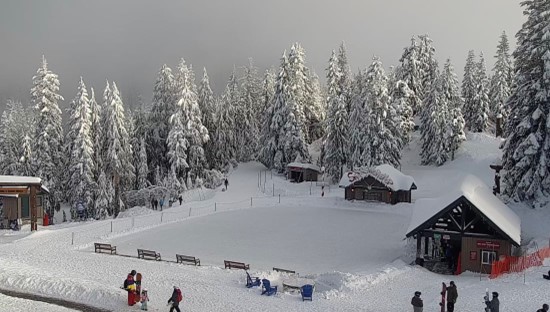
Cold has fully locked in across Canada. Braeburn plunged to -55.7 °C (-68.3F) (on December 23), the lowest December temperature recorded anywhere in Canada since 1975 (-56.7 °C / -70.1F) and an all-time record for the station.
The deep freeze extended to Faro, with -52.5C (-62.5F), to Nursery and Rabbit Kettle in the Northwest Territories, which reached -52.2C (-62.0F), to Carmacks, with -51.8C (-61.2F), to Pelly Ranch at -50.5C (-58.9F), and to Beaver Creek with -50.2C (-58.4F).
Extreme Temperature Changes
Atlanta flipped from near 70F (21C) highs to near 28F (-2C)
lows. Minneapolis and Chicago tanked into the single digits, with
Minneapolis–St. Paul received half a foot of snow in 24 hours.
The Plains and the Mississippi Valley saw a 40° to 60° drop in temperature between last Sunday and Monday. I live in subtropical Brazil, where it’s summer, and the news is that a cold air mass is approaching the country and is expected to cause a considerable drop in temperatures in different regions over the next few days. The cooling is expected to be so pronounced that frost may form in the South, even at the peak of summer. I see the predictions for the change happening over my head, and I will take out my winter clothes.
Extreme Cold Grips NE China
Extreme cold whipped through northeast China late last week, delivering the lowest temperatures of Winter so far. Tulihe tanked to -42.3C (-44F), with an AWS as low as -46.6C (-52F), setting a new winter low for the country. The cold intensified the next morning. On December 26, Genhe recorded -42.1 °C (-44F), while an AWS dropped to –46.9 °C (-52F).
Kurdistan Paralyzed By Cold And Snow

A severe winter outbreak has locked down the Kurdish regions of western Iran near the Iraqi border, with extreme cold and heavy snowfall cutting off hundreds of villages and crippling infrastructure. In Iran’s Urmia province, Takab plunged to -17C (1F), with Chaldiran following closely at -15C (5F). Even the ‘warmest’ Urmia town, Naqadeh, held below freezing at -2.2 °C (28F). The cold was accompanied by intense snowfall, with blizzard conditions rendering many roads impassable.
In neighboring Sanandaj province, the situation escalated into a full-scale emergency. Snowstorms blocked access to 400 villages, and electricity went down for most. Communications collapsed in 100 villages after phone and internet lines failed. In the UK, heavy snow has disrupted roads, rail, and aviation, particularly across Scotland where deep drifts and blizzards hit.
The keyword above is paralyzed, that is what intense cold and snow can do to a region, and with predictions from NOAA about decreasing solar output, we have something to worry about in the years ahead. Around half a meter of snow (20 in) has buried Maykop in southern Russia, overwhelming snowplows, collapsing roofs, downing power lines, and paralyzing road, bus, and taxi networks. The word “paralyzing” is coming up more and more, and it’s what we should expect as we move deeper into a grand solar minimum.
Siberia is locked in an extreme cold wave, with temperatures plunging to -56 °C (-69F) across Yakutia. Schools and kindergartens have been shut, residents have been told to remain indoors, and authorities warn the cold is set to intensify further, with forecasts hinting at lows of -60C (-76F).
A multi-day blizzard along the coastal Tiksi has buried homes, sealed doors with snow, and blocked roads. Visibility has collapsed, supplies are disrupted, and emergency services are struggling to operate amid heavy snowfall and strong winds. Residents are effectively trapped indoors while authorities race to clear access routes and keep essential services running. Meteorologists say relief is unlikely anytime soon.
California mountain highway used by millions ‘destroyed’ by heavy rainfall.
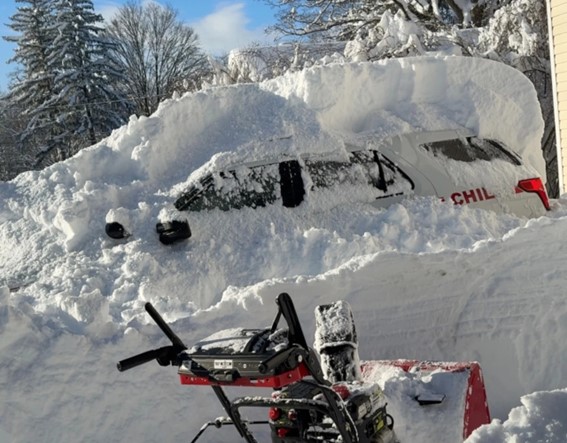
As much as 4 feet of snow has fallen on several towns in Oswego County since New Year’s Day, and it’s still coming. Businesses have closed, and residents have been trapped inside, according to social media posts. Syracuse.com reported, warning that the storm, still in progress, is “absolutely nuclear.”
Believe that NOAA Knows What It is Talking About
It is a cold destiny that awaits us, not only just this Winter, but according to the US government’s NOAA, even more frigid and longer winters are yet to come as sunspot activity falls off a cliff in about three years, as if it is not cold enough already.
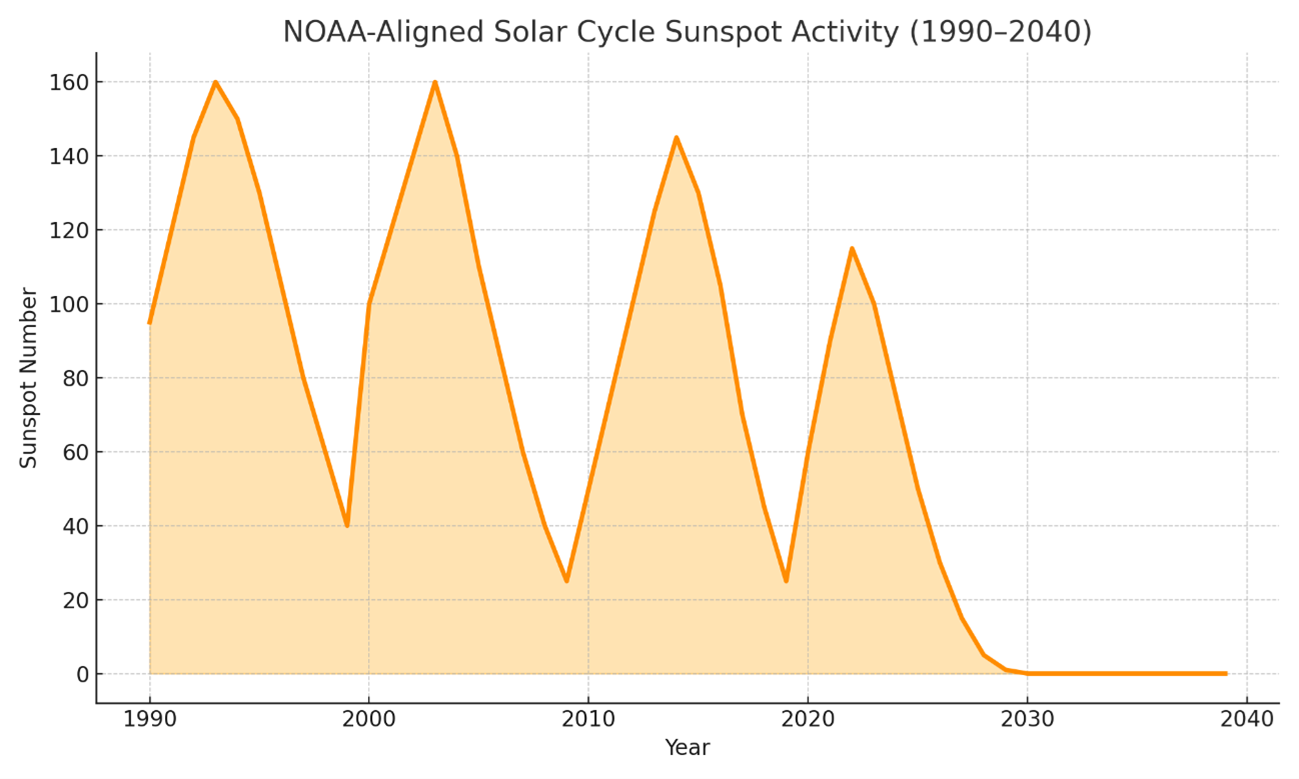
In the shadows of the mainstream climate narrative — filled with fears of overheating, carbon overload, and global boiling — lies a quiet admission from one of the most established scientific institutions in the world: NOAA predicts a complete drop-off of sunspots beginning around 2030.
The Sun Matters
The silence has consequences that will build. When solar activity collapses, we are not looking at just colder winters. We are looking at:
- Global food insecuritydue to shortened growing seasons
- Increased mortalityfrom cold-related illnesses
- Strain on energy gridsas heating demands soar
- Rising geopolitical tensionsover resources and migration
- Vastly increasing cost of keeping warm
- Increasing cost of snow removal
- Restricting transportation and movement in general
- The Sun, not CO₂, is the primary driver of climate.
- Cold, not heat, poses the greatest threat to life.
- Human health, agriculture, and emotional well-being are all compromised by declining temperatures.
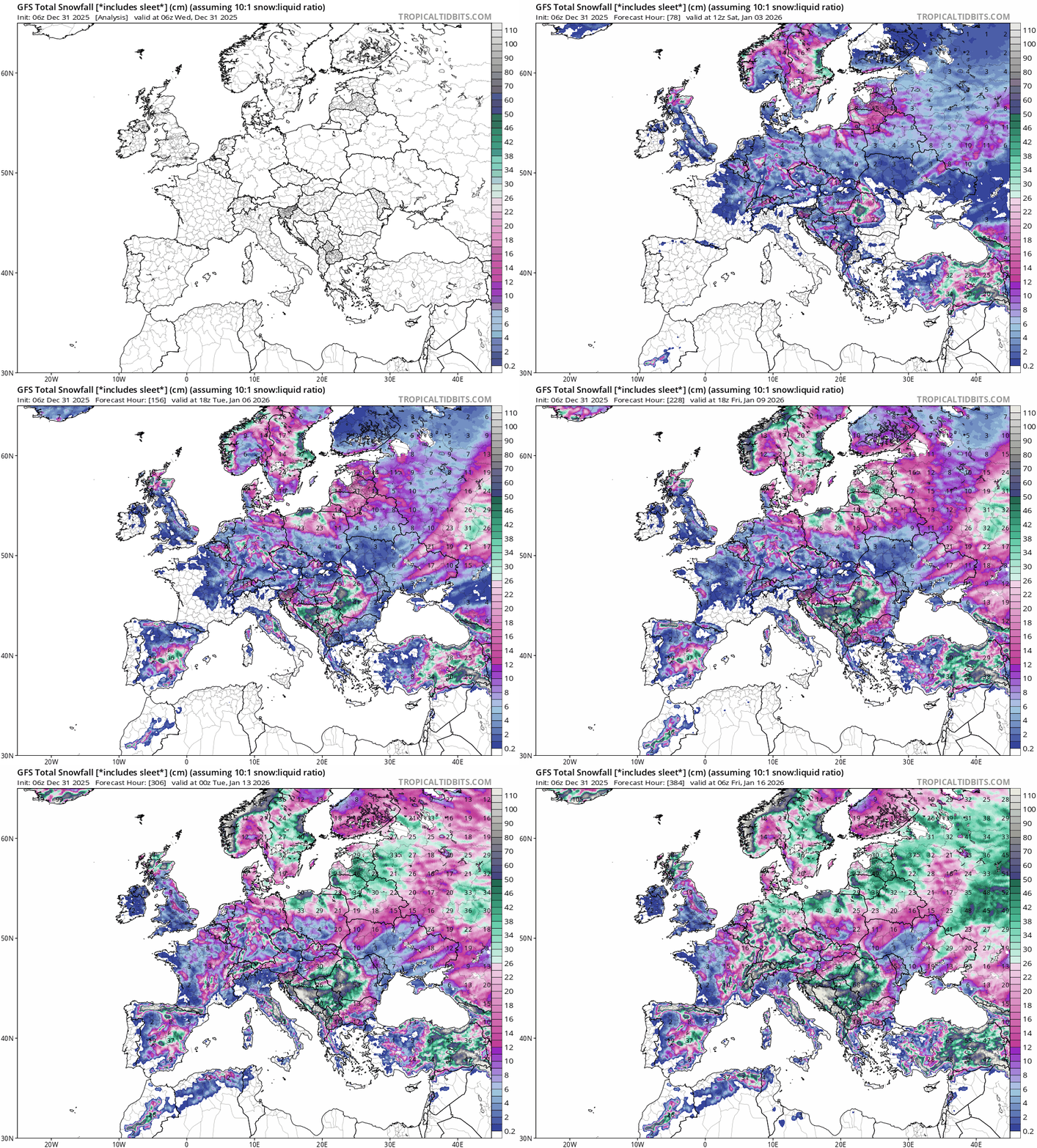
Snowfall across southeastern Europe has been severe, and it’s just getting started there.
Official projections from NOAA indicate sunspot numbers should remain elevated through the first half of 2026, but with a gradual decline setting in by May. By late 2026, SC25 is expected to be clearly descending toward the next solar minimum. The long slide back down has begun.
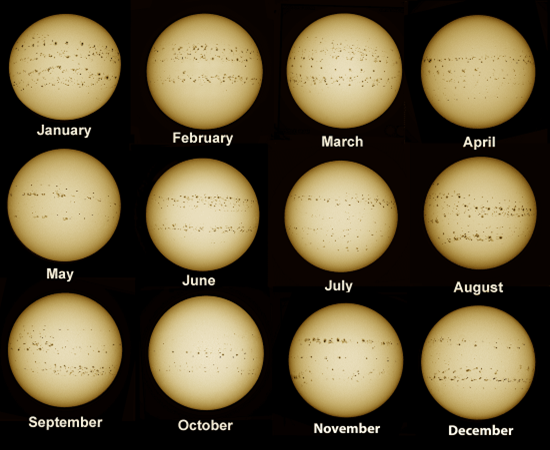
Solar Cycle 25: The Peak Has Passed
2025 was a strong year for solar activity, but the peak now looks to be in. The annual average sunspot number slipped back to levels last seen in 2023, confirming a rollover from the 2024 high.
Annual averages:
2023: 124.8
2024: 154.4
2025: 123.7
Dr.Sircus is a reader-supported publication. To receive new posts and support my work, consider becoming a free or paid subscriber.
Subscribe now

comments