

A massive storm system is set to span more than 2,000 miles and impact cities from New York City to Dallas. It comes as residents are preparing for a crippling freeze, with temperatures plunging into the single digits and even lower in the Northern Plains, where the wind chill could reach nearly negative 50 degrees. The extreme cold is sending natural gas futures surging by as much as 75% over the past five days, so staying warm will be expensive, and God help you if your electricity fails.
However, behind the storm comes the real cold, and it is going to keep coming, one arctic blast after another. So you need to take steps to protect yourself from the serious health risks posed by the cold. Every square inch of Russia is buried in snow, and though snow levels in America will, we hope, not get completely out of hand in most places, predicted ice storms can easily bring down power lines. The cold will not be easy to deal with, so be prepared as if a category 5 hurricane is bearing down on you and your family.
Next week, after the storm passes and the reality of the cold and snow sinks in, I will publish what I planned to publish today, which will be a complete report on the situation not only in North America but around the world. The mainstream news is all over the present storm, and what will happen after, so beware and take care, and good luck, for some it will be a matter of survival. Cold kills much more quickly and efficiently than heat.
Disruption of the stratospheric polar vortex weeks ago allowed extreme cold pools to build over Canada, with air near -40F extending through much of the troposphere. That cold is now being released in waves.
Arctic Blast 1 arrives late this week, plunging the Midwest and Great Lakes into the -20s and -30s before driving south into Texas. Dallas is forecast to be near 5F, an exceptionally low temperature for people not accustomed to such cold.
Arctic Blast 2 follows quickly around Jan 29-31, reinforcing the cold over the eastern half of the country and preventing any meaningful recovery. Infrastructure stress accumulates as power demand remains elevated and ground conditions stay frozen.
Arctic Blast 3 then drops in around Feb 2-4 as the polar vortex reloads. This final surge merges with the lingering cold, locking much of the eastern U.S. into a prolonged deep freeze.
As noted by meteorologist Ryan Maue, these waves consolidate into a dominant Arctic air mass, driving temperatures 35F to 45F below normal across large portions of the eastern United States, rivaling the January 2014 polar vortex.
This matters in medicine and health since studies show that heart attacks and strokes are up to twice as likely during cold spells that last four days or more. This is because blood vessels in the skin, fingers, and toes narrow in response to cold, as the body attempts to preserve heat.
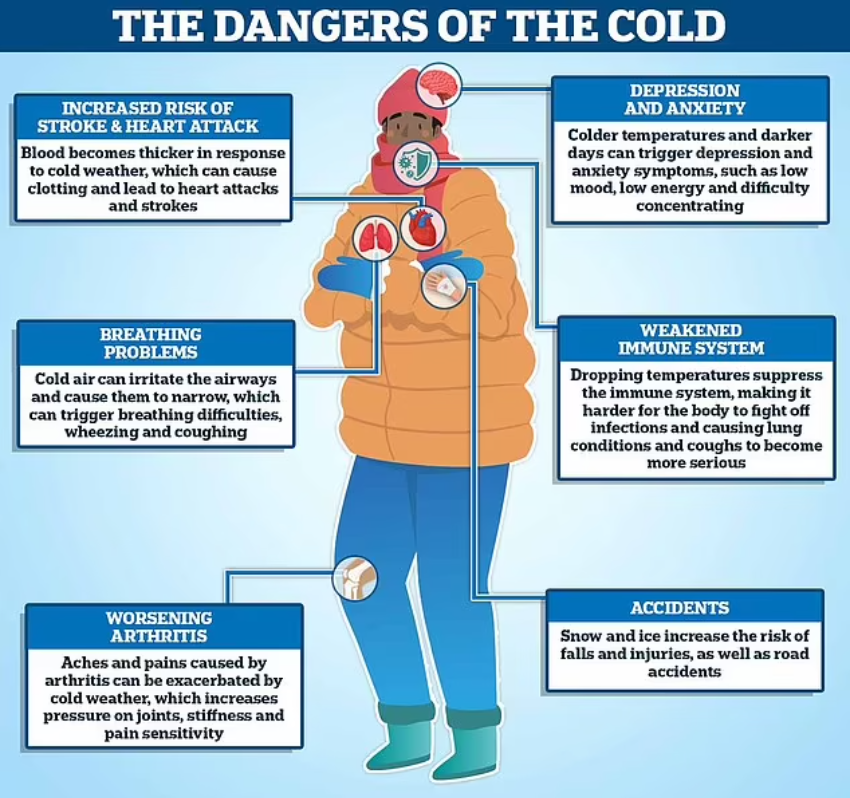
A process, called vasoconstriction, raises blood pressure and heart rate, as the heart has to work harder to pump blood around the body. At the same time, the blood becomes thicker and stickier in response to lower temperatures. This is because the body produces more platelets — blood cells that form clots to stop bleeding — in response to the cold, which increases the risk of clotting.
While this is the body’s normal response to chilly weather, and a bid to protect vital organs and keep the internal temperature at 37C, it can raise the risk of strokes and heart attacks — especially among those with heart conditions.
The British Heart Foundation advises keeping warm by wearing plenty of layers when outside and minimizing time spent outdoors when it is freezing. But that is not enough, because people’s homes are also colder due to the incredibly high cost of heating today. If the electricity goes down in your area, many will have a real problem on their hands, as the Ukrainians in Kiev will tell you.
People with low body temperature react poorly to medicines and therapies. As the body’s core temperature decreases, all cellular energy decreases. The cooperative and collective intelligence of the human organism is short-circuited as the body temperature cools. As a result, all cellular functions decrease. There is a decrease in the production of all hormones, neurotransmitters, and other body chemicals necessary for normal, healthy regulation.
Infants and older people are particularly at risk, but anyone can be affected. To keep yourself and your family safe, you should know how to prevent cold-related health problems and what to do if a cold-weather health emergency arises.
Hypothermia means the body temperature has fallen below 95 degrees Fahrenheit. It occurs when your body can’t produce enough energy to keep the internal body temperature warm enough. It can kill you. Heart failure causes most deaths in hypothermia. Symptoms include lack of coordination, mental confusion, slowed reactions, shivering, and sleepiness.
Immune System
Cold weather suppresses the immune system, increasing the risk of infection and making it harder for the body to fight off illness. Studies suggest the immune system is hampered during winter because the cold air kills off billions of virus and bacteria-fighting cells in the nose, the main entry point for bugs.
Some scientists say keeping the nose warm, even by wrapping a scarf around the face, could counteract this drop-off in immunity. However, other research points to cold, dry air as a factor in reduced immunity, as it can reduce mucus in the nose and throat, which usually traps and expels viruses.
How do Cold, Damp, and Wind Affect Your Health?
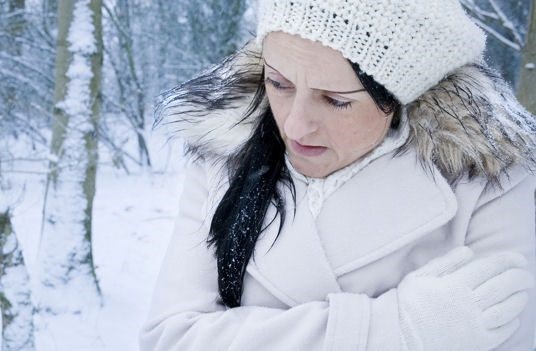
In regions relatively unaccustomed to winter weather, near freezing temperatures are considered “extreme cold.” Whenever temperatures drop decidedly below normal, and as wind speed increases, heat can leave your body more rapidly. When temperatures whip wildly from high to low, people are often adversely affected. It is not only the shock of the change that our bodies react to, but sometimes we are just not prepared or appropriately dressed. People with high blood pressure, especially, need to take extra care to dress warmly for cold-weather walks.
Wind is hazardous because it removes the layer of heated air from around your body. At 30 degrees Fahrenheit in a 30-mile wind, the cooling effect is equal to 15 degrees Fahrenheit. Similarly, dampness causes the body to lose heat faster than it would at the same temperature in drier conditions.
Extreme cold is a dangerous condition that can trigger health emergencies in susceptible people. Cold is a known source of disease and death. Cold reduces the heart’s blood supply, while exertion increases the demand for it. This imbalance between supply and demand can cause attacks of chest pain. Even in people without heart disease, cold exposure can raise blood pressure. To conserve heat, the muscles contract to restrict blood flow to the arms and legs. This reroutes extra blood to vital organs.
For an estimated 5-10 percent of the population, cold weather triggers a painful and sometimes debilitating disorder for people who suffer from Raynaud’s disease. Raynaud’s is an autoimmune disorder in which spasms in the blood vessels can interrupt blood flow to the fingers, toes, nose, and ears. Exposure to cold triggers the spasms, typically causing the affected area to turn white, then blue, then bright red. Cold-induced pain is caused by smaller blood vessels that tend to spasm at low temperatures, leading to a restriction of blood flow to the associated areas.
Cold Syndrome – Chinese Medicine
In Chinese medicine, cold contracts and obstructs. Imagine how you feel standing outside when it is in the 30’s, and how ice cream feels in your mouth. Cold symptoms include feeling chilly, cold limbs, a pale face, and a desire to drink warm liquids. Even pain in joints and limbs, or in the stomach, can be due to cold.
Cold syndromes can present with a variety of symptoms: pale complexion, preference for warmth, a bland taste, cold limbs, fatigue, clear, profuse urine, loose bowels, and thin, clear body discharges. There is usually a pale tongue with a white, glossy coating, and a slow or tense pulse.
Treatments for Cold Conditions
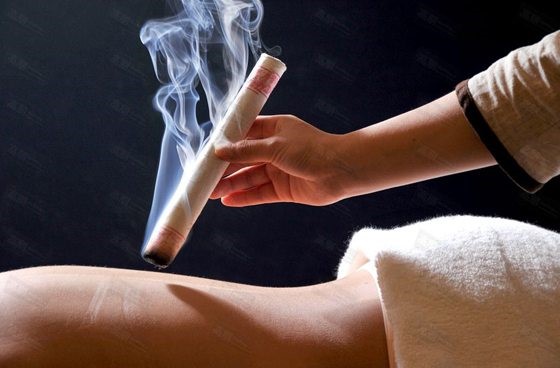
Moxibustion is an ancient Chinese method of burning herbs on or above the skin, usually at specific acupuncture points. Moxa is burnt like a cigar and held above the skin, producing a pleasant warmth that deeply penetrates the tissue to stimulate, energize, and direct healing energy to specific acupuncture points.
The heat warms the body’s energy (chi) and blood, and helps treat disease and maintain health. Quite often, pain and disease result from a blockage or an improper flow of energy and blood, and moxibustion, with its heat, stimulates the blockage to alleviate it and correct the flow.
Moxa is created from the herb Chinese Mugwort. This warming quality brings healing energy for many conditions, such as in the chest, where it soothes asthma; in the abdomen, where it relieves abdominal pain, diarrhea, and vomiting; and in the extremities, where it helps ease arthritis and rheumatic pain.
Moxa expels cold and dampness. Moxa is an excellent disease preventative and helps maintain health. It has been used as a regular treatment for longevity. Since moxa is hot, it should not be used in febrile diseases of excess heat.
Far Infrared Mat

This is simply the best medical device for elevating internal body temperature. The Biomat’s far-infrared light penetrates deep into cells, warming and stimulating them with frequencies that nurture and strengthen, providing pain relief and a heavenly relaxation. The Biomat is an excellent piece of therapeutic equipment that improves circulation and cardiovascular function, improves the immune system, relieves pain, burns calories, eases joint pain, and reduces stress.
Biomats are approved medical devices that heat you from the inside out with far infrared light. This raises core body temperature, making one’s immune system considerably stronger and more effective at fighting colds, flu, and even cancer.
With a Biomat, you can turn the heat way down in the house at night while still heating your body. It pays for itself in colder climates just with the reduced heating costs. It is nothing like sleeping on a heating pad.
Their only drawback is that they use electricity, so they are no help when the lights go out unless you have a generator. Otherwise, they are perfect pieces of medical machinery that reduce pain, discomfort, and even emotional upset. They warm the body and our hearts, and that is why they are so easy to love.
Dr.Sircus is a reader-supported publication. To receive new posts and support my work, consider becoming a free or paid subscriber.
Subscribe now

comments