

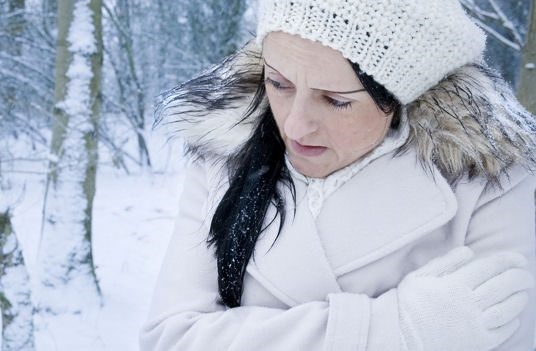
Your heating bills may leave you ‘speechless’ this winter. When Tracie Klossner opened up her utility bill this month, she immediately walked over to her thermostat and turned the temperature down by a few degrees. “I was just utterly speechless,” said Klossner, a purchasing manager for a small manufacturing company. As millions of Americans reel from the coldest invasion of the Arctic in years now comes the sticker shock of high utility bills after heat ran nearly nonstop to combat the freeze.
Turning down the heat can be dangerous. Prolonged exposure to low indoor temperatures affects the body in several intertwined ways—physiological, metabolic, and psychological—and the risks rise sharply for infants, the elderly, and anyone with cardiovascular or respiratory conditions. When ambient temperature drops, blood vessels constrict to conserve heat, which raises blood pressure and thickens the blood, significantly increasing the risk of angina, heart attack, and stroke. Epidemiological data show a clear winter spike in these events even in temperate climates.
Cold, dry air dries the mucous membranes of the nose and throat, weakening the first line of immune defense and making you more vulnerable to viral and bacterial infections. Asthmatics often notice tighter airways and more frequent coughing attacks in cold homes.
Cold environments lower serotonin activity and oxygen delivery to the brain. Long periods below 18 °C (65 °F) correlate with irritability, poor concentration, and seasonal depression. The psychological toll—constant discomfort and sleep disruption—accumulates silently.
Healthy baseline: maintain indoor temperatures around 19–21 °C (66–70 °F) in most rooms and 18 °C (64 °F) in bedrooms. Wear layers, seal drafts, hydrate well, and boost magnesium and bicarbonate intake to help blood vessels and nerves tolerate temperature shifts.
In short, shrinking the heating bill too far often transfers that cost to your body. Warmth is not a luxury—it’s fundamental physiology.
When Cold Weather Becomes a Death Sentence
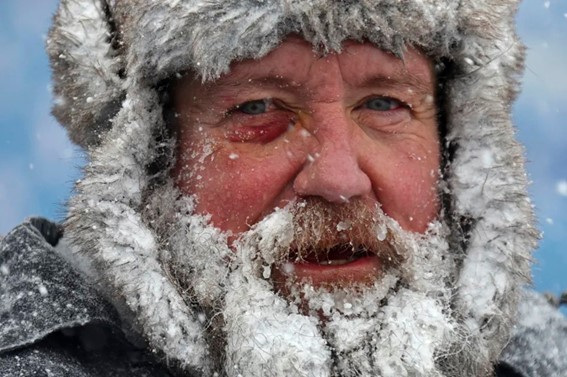
As temperatures outside the DeKalb County Jail plunged into the teens, a tragedy was unfolding inside the Georgia jail. Lamar Walker was begging for help and slowly freezing to death, according to a federal lawsuit filed by his family. Anticipating the cold temperatures, a jail official directed employees to provide two blankets to inmates in the coldest cells. But Walker was given no blankets and left “completely naked and agitated,” the lawsuit said.
Just eight days after his arrest, Walker was dead. Temperatures in his cell had reached 50 degrees, well below the 72 to 76 degrees required by jail policy, and an autopsy report found his cause of death was hypothermia, according to the lawsuit.
Death From Cold Indoors — A Hidden Public Health Issue
Deaths from indoor cold are a quiet but documented public health reality, particularly among the elderly and low-income populations. When thermostats are set too low due to rising energy costs, fuel shortages, or poverty, indoor temperatures can fall below levels required for safe thermoregulation. Older adults are especially vulnerable because aging reduces heat production, blunts cold perception, and often coincides with cardiovascular disease or medication use that impairs circulation. Many cold-related deaths are not recorded as hypothermia but as heart attacks, strokes, or respiratory failure, even though cold stress was a contributing factor.
Cold exposure thickens blood, raises blood pressure, increases the risk of clotting, and suppresses immune defenses. Excess winter mortality statistics in countries such as the United Kingdom consistently show higher death rates during colder months, particularly in poorly heated homes. These deaths are rarely dramatic; they occur quietly, overnight, in inadequately heated rooms. When energy becomes unaffordable, the boundary between environmental hardship and medical vulnerability dissolves, and cold becomes not just a temperature problem but a structural one.
New York mayor Mamdani admin dismisses questions about 7 who died of hypothermia at home, as the outdoor death toll climbs to 19. Last year, the UK recorded 4,950 excess winter deaths amid its cost-of-living crisis. Recent winters have provided stark examples of how indoor cold can quietly turn fatal. During Arctic freezes in the United States and the United Kingdom, public health analysts have linked thousands of “excess winter deaths” to living in cold, damp housing amid rising energy costs, with elderly residents disproportionately affected.
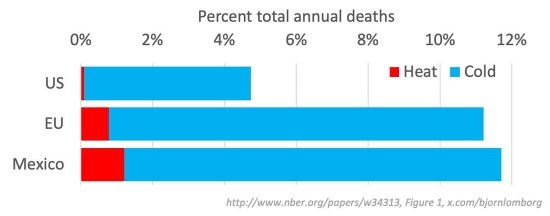
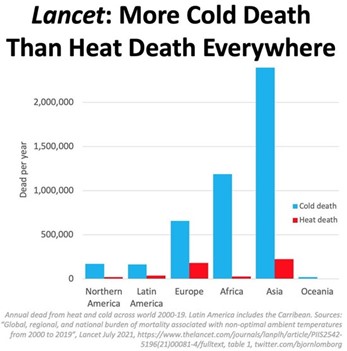
A new NBER study spanning 30 countries confirms what officialdom keeps dodging: cold is one of the most significant external threats to human life today, killing far more people than heat across every context examined. In the US, the authors estimate about 120,000 temperature-attributable deaths annually; in the EU, more than 500,000, with the burden of cold exposure outweighing that of heat by at least 5 to 1 in temperate regions.
Conclusion
People worldwide claim that the weather has a direct connection to their health, from altering the symptoms of existing ailments to increasing susceptibility to new illnesses. Atmospheric scientists have been studying the impact of weather on the human body for years (called biometeorology) and have found that sudden temperature changes, cold snaps, heat waves, and even thunderstorms can directly affect certain conditions.
Exposure to cold temperatures, whether indoors or outside, can cause serious, life-threatening health problems. Infants and older people are particularly at risk, but anyone can be affected. To keep yourself and your family safe, you should know how to prevent cold-related health problems and what to do if a cold-weather health emergency arises.
The body’s reactions to low temperatures put stress on the cardiovascular system. These reactions include constriction of blood vessels in the skin, shallow breathing through the mouth, and slight thickening of the blood, all of which can, in turn, lead to angina (chest pain) in people with heart disease.
Hypothermiameans the body temperature has fallen below 95 degrees Fahrenheit. It occurs when your body can’t produce enough energy to keep the internal body temperature warm enough. It can kill you. Heart failure causes most deaths in hypothermia. Symptoms include lack of coordination, mental confusion, slowed reactions, shivering, and sleepiness.
Special Note: Keeping Warm For Less Money with Infrared Mats

This is simply the best medical device for elevating internal body temperature. The Biomat’s far-infrared light penetrates deep into cells, warming and stimulating them with frequencies that nurture and strengthen, providing pain relief and a heavenly sense of relaxation. The Biomat is a wonderful piece of therapeutic equipment that improves circulation and cardiovascular function, improves the immune system, relieves pain, burns calories, eases joint pain, and reduces stress.
Biomats are approved medical devices that heat you from the inside out with far infrared light. This raises core body temperature, making one’s immune system considerably stronger, and comes in handy when fighting colds, flu, and even cancer.
With a Biomat, you can turn the heat way down in the house at night and just heat your body. It pays for itself in colder climates just with the reduced heating costs. It is nothing like sleeping on a heating pad. When we are cold, hurt, or have any health issues, the first thing we want to do is solve the problem so we can get back to feeling fantastic and enjoy our lives. That solution is no further away than the next time you jump into bed to relax and nurture yourself on a Biomat.
Dr.Sircus is a reader-supported publication. To receive new posts and support my work, consider becoming a free or paid subscriber.
Subscribe now

comments