


When it comes to climate change, the media says it all. We cannot trust the media for anything but their narratives and propaganda. The asymmetry in how the mainstream media reports on temperature-related phenomena is a perfect case study in narrative management. You will not see in the mainstream narrative that Siberia has slipped back toward winter. On May 22, frost warnings stretched across a broad belt of Russia. Overnight lows were expected to fall to -5C (23F), cold enough to threaten early crops, gardens, and spring vegetation.
The media’s treatment of climate is not merely about science; it is about emphasis, framing, and emotional conditioning. The asymmetry is striking. Heatwaves dominate headlines, while cold-related mortality, energy poverty, and the deadly consequences of inadequate heating receive comparatively little sustained attention. This imbalance shapes public perception far more than most people realize. This matters because cold remains a major global killer.
Cold Sweeps America in Late May
Winter Keeps Nipping California as heat dome hysteria sweeps the world. Tioga Road through Yosemite National Park was closed Tuesday, May 26, as a late-season winter snow storm moved into the Sierra Nevada, just what we would expect as the world melts.
Rawlins, WY, had already broken its all-time May low on May 19, with 8F (-13.3C) beating the old monthly mark of 10F (-12.2C) from 2013. The cold has reached south of the border too, most notably across Mexico’s high country. For early May 22, SMN/Conagua reported -5C (23F) in the mountains of Durango and Chihuahua, with 0C (32F) in high terrain of Baja California.
The Media And The Face of Evil Intent
Canada and Alaska sat under months of anomalous, record-setting
cold and snowfall. Large parts of Eurasia and the Arctic
sector also ran below normal, as did practically ALL of Russia.
When the media focuses exclusively on heatwaves, they are not just reporting the weather; they are reinforcing a specific, institutional agenda—one that relies on fear, urgency, and the necessity of policy intervention. By contrast, the silence surrounding cold-related mortality and the realities of colder periods is a deliberate omission because these realities do not serve the prevailing narrative.
‘Mind-bogglingly crazy’: Europe’s deadly,
early heatwave is smashing records.
The media’s obsession with “breaking records” during summer months is designed to create a sense of planetary crisis. They highlight peak heat temperatures to drive engagement and sustain public alarm. This is classic fear-based marketing, a technique used to ensure that the public remains receptive to top-down policy changes, carbon taxes, and the restructuring of energy sectors.
Central England Temperature data show May
running very cool through the first 19 days.
The mainstream narrative requires a “villain,” and heat is the most effective tool for branding human activity as inherently destructive. If the public were to acknowledge that cold, not heat, is a much higher driver of global mortality, the “climate crisis” urgency would immediately deflate. It has already deflated in half of American minds who do not trust the media as far as they can spit.
Much of May has been below average across Europe,
including the UK, but now its hot. Its called the weather
but of course they make it into a climate issue.
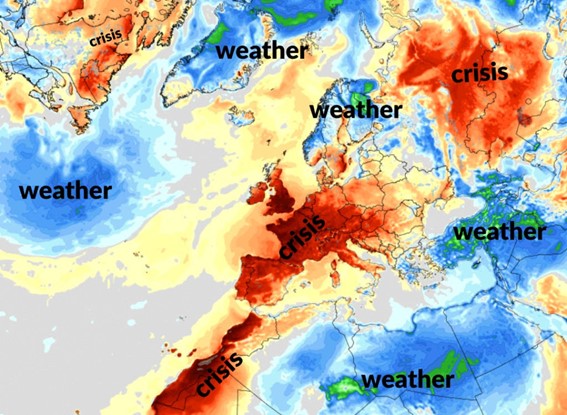
May 26 broke the record for the hottest day in May ever recorded in England and Wales, with temperatures reaching 35.1 degrees Celsius (95 degrees Fahrenheit) and 32.9 degrees Celsius (91 degrees Fahrenheit), respectively, according to the UK’s Met Office.
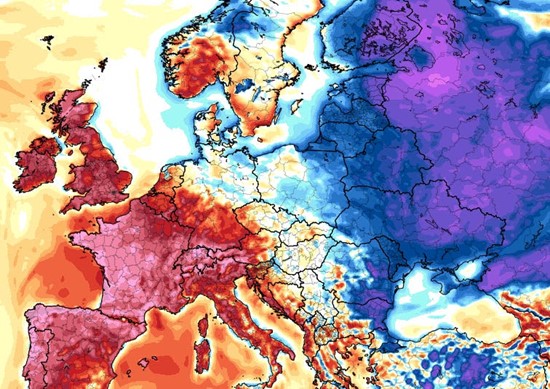
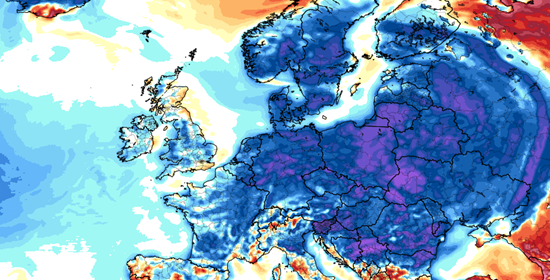
Meaning it is going to cool right back down
Early Season Frosts Sweep South America
Cold Matters in Health and Medicine
Cold matters overly much in medicine but ignored. Life is warm, death is old, so keeping warm is one of the secrets or one of the most crucial keys to health. Imagine if they had an infrared mattress in every ICU bed and in every home with leaky windows during the long winters. To get a grip on what I am saying, imagine you have a bad case of the flu and are suffering like a dog. Now, understand the most comforting place you could be is on a really warm infrared mattress.
Data consistently shows that extreme cold is significantly more lethal than extreme heat. In many parts of the world, excess winter mortality far outstrips heat-related deaths. Yet, you will rarely—if ever—see a major news outlet running a 24/7 ticker on cold-related deaths or the societal costs of energy poverty that forces people to live in dangerously cold conditions.
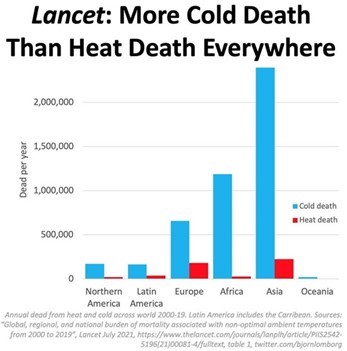
And yet in this week’s news, we read that seven people have died in France in circumstances related directly or indirectly to the current heatwave, French Junior Energy Minister Maud Bregeon said on Tuesday. However, five of the seven fatalities were people drowning in lakes, rivers, or on beaches. I make this point because we never ever hear about cold-related deaths, which far outnumber heat-related deaths.
Affordable energy matters in cold climates:
- Heating is survival
- Infrastructure resilience matters enormously
- Cold kills quietly and relentlessly
Why the Silence?
Because the “Cold Reality” disrupts the simplistic, one-sided narrative. If the media were to report that millions suffer and die from a lack of affordable energy (which would keep them warm), they would have to address the catastrophic failures of “green” energy policy and the crushing costs of energy-intensive regulations.
The media function is to filter reality, not reflect it. Acknowledging that the world has historically flourished during warmer periods and suffered during colder ones would destroy the “human-caused destruction of the planet” premise they have spent decades building.
The media’s role here is to keep the public in a state of epistemological captivity. By controlling the vocabulary of “climate,” they control how we perceive the world around us, at least they try and too many swallow the mainstream narrative hook, line and sinker.
This is the same propaganda model used in medicine, finance, and geopolitics. They create a binary—a “right” and “wrong” way to view an issue—and then use the full weight of their institutional machinery to ensure the “wrong” perspective is silenced or labeled as misinformation.
The silence on cold is not an oversight. It is a calculated strategic choice to protect the narrative that demands you accept their version of the future. When you stop relying on the media to define “the truth” about the climate, you regain the ability to look at the world as it actually is, rather than as they want you to believe it is.
Scientists are jettisoning their worst and best case
scenarios for a warming world as no longer plausible.
Saskatoon in Canada

Saskatoon is a city in central Saskatchewan, one of the coldest populated regions in North America during winter. It sits on the South Saskatchewan River and is known for long, brutal prairie winters. This year, they reported that a “108-year cold record” was broken, with temperatures not seen in over a century during a severe Arctic outbreak.
And Saskatchewan is one of the clearest examples on Earth that:
- Cold remains deadly
- Winter mortality is real
- Energy poverty can become lethal
Conclusion
Europe’s May Cold Sets In As Glaciers
Take Two Feet Of Snow. Europe’s mid-May chill
showed up in the records, the frosts, and the snowpack.
Affordable energy, insulation, and resilient infrastructure save lives during cold seasons just as surely as cooling systems do during heatwaves. Yet public discourse does not treat cold with the same symbolic intensity.
Modern news systems operate through the principles of attention economics. Fear, urgency, and crisis generate engagement. Heat lends itself naturally to visual drama and moral framing in ways that cold often does not. As a result, the public is repeatedly exposed to a one-directional story of climate danger, even though human vulnerability to temperature extremes is more complex.
Now for the really warm news: Antarctica Below -100F
But the Guardian would have us all worry sporting the following headline: Why an immense marine heatwave off the US west coast has alarmed scientists. An enormous marine heatwave off the US west coast is ringing alarm bells among ocean and atmospheric scientists as new data shows its ecological and environmental effects are intensifying.
Charles Hugh Smith says a lot in a few words. “That society is on a terminal trajectory toward collapse is self-evident, as is our desire to evade acknowledging this distressing reality. What’s being globalized is anxiety, desperation and loneliness, not prosperity.” This is much more evident in certain places than others and more evident in one person comparred to another. But there is a shared destiny, a global karma that not even the billionares with their underground bunkers and super yatchs will be able to completely avoid.
Dr.Sircus is a reader-supported publication. To receive new posts and support my work, consider becoming a free or paid subscriber.
Subscribe now

comments