

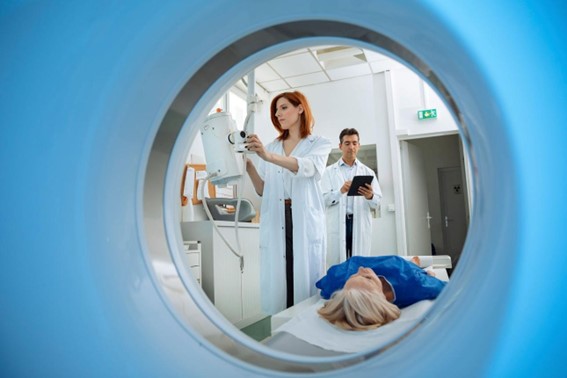
Really, what a surprise. A new study has made a troubling discovery about the health of ecosystems near Los Alamos, New Mexico, where the atomic bomb was born. Scientists measured plutonium levels in recreational areas near the nuclear site and found they were similar to those detected at the Chornobyl nuclear disaster site in Ukraine.
And now we read of an attack on a nuclear plant in Iran where a bomb fell less than 100 meters from the plant, risking a worldwide catastrophe. The insane are certainly in control over there in the Middle East. Military activity near nuclear infrastructure is clearly insane. Bombarding patients with intense radiation via CAT and PET scans, and using radiation to treat Cancer, can be seen by physicists as madness. Radiation is dangerous, yet modern medicine loves to use it more than ever.
Radiation is one of those forces that modern science describes with precision. Physicists will tell us, correctly, that radiation is simply energy moving through space and matter. There is nothing inherently moral about it, nothing good or bad in its definition. But when that energy reaches a certain intensity, what we call ionizing radiation, it begins to interact with life in a profoundly disruptive way. It tears at the fabric of biological order itself. It knocks electrons from atoms, breaks chemical bonds, and fractures DNA. At that point, radiation is no longer an abstraction of physics. It becomes a force acting directly on the integrity of life.
But radiologists have no problem slamming patients with radiation and pretending to their patients that it is safe. But what they radiate bodies with is dangerous, intimate, and immediate. Ionizing radiation does not politely pass through tissues; it collides with them. It breaks DNA strands directly or, more insidiously, splits water molecules to generate free radicals—highly reactive fragments that then attack cellular structures.
That is why hydrogen inhalation therapy is so important for cancer patients receiving repeated radiological tests and even for astronauts who are exposed to increasing cosmic radiation. Hydrogen gas is like a fire truck, putting out the fires of oxidative stress by neutralizing the worst, most damaging free radicals by turning them into water.
Linear No-Threshold Model
Mainstream physics acknowledges the Linear No-Threshold model. It is a stark and uncompromising framework: there is no completely safe dose. Every exposure, no matter how small, carries some level of risk. The risk may be tiny, almost immeasurable at low levels, but it is not zero. Each dose adds to the cumulative burden. This is not speculation; it is the working assumption used by governments, nuclear industries, and medical institutions worldwide. Even if debated in certain academic circles, it remains the foundation of radiation protection policy, yet it is strangely mostly ignored.
Decades ago, the philosopher-scientist Dr. Walter Russell described radiation as “the death principle.” Modern physicists would reject that language as unscientific, yet there is a deeper resonance here that should not be dismissed too quickly. At the molecular level, ionizing radiation is indeed a disruptive force. It breaks apart what biology has carefully constructed. It introduces instability into systems that depend on exquisite precision. In that sense, Russell’s insight, while poetic, aligns with the observable effects of radiation on living systems. It is not that radiation is death itself, but that it acts consistently toward disintegration.
A single CT scan can expose a patient to the equivalent of years of natural radiation, and a PET-CT can multiply that several times over. Yet patients are rarely told this in clear terms. Instead, they are reassured in the language of immediacy, ‘it’s safe,’ ‘it’s necessary,’ while the long-term burden is left unspoken. The issue is not that these technologies have no value, but that their risks, though probabilistic and delayed, are systematically minimized in a system that prioritizes immediate answers over cumulative consequences.
CT scan (Computed Tomography)
Uses X-rays (ionizing radiation)
Takes multiple slices → reconstructs a 3D image
Much higher dose than a simple X-ray
PET scan (Positron Emission Tomography)
Injects a radioactive tracer (often fluorine-18 glucose)
The body emits radiation → scanner detects it
Often combined with CT → PET-CT = double exposure
Approximate typical doses:
Chest X-ray: ~0.1 mSv
CT scan (chest/abdomen): ~7–15 mSv
PET-CT scan: ~20–25 mSv
For context, the average yearly background radiation is ~3 mSv
So:
One CT scan = several years of natural exposure
One PET-CT = up to ~8 years of background radiation equivalent
That’s not trivial.
Some researchers estimate that CT scans deliver far more radiation than most of us believe and may contribute to 29,000 new cancers each year, along with 14,500 deaths. A patient could get as much radiation from one CT scan as 74 mammograms or 442 chest X-rays.
Researchers also found that the radiation dose delivered by each scan varied widely. Even when looking at the same type of scan on the same part of the body, one person’s radiation exposure could be 13 times higher than another’s. The risk of developing cancer following one of these scans varied dramatically depending on how much radiation patients received, as well as their age and sex.
Heidi Stevenson writes, “We all know that X-rays and other ionizing radiation can be harmful, but the risk has been casually dismissed as minor, certainly not great enough to avoid tests. However, a pair of recent studies documents that our children’s rate of cancer is dramatically affected by the tests.”
Cancer Radiation Treatments – Standing in Front of a Nuclear Firing Squad

Doctors, specifically radiologists, are more than ready to line up their patients against a wall (actually a table) and fire nuclear projectiles at their bodies in massive quantities if you opt for radiation treatments for your cancer. No, you will not drop dead as fast as rifles loaded with lead, but on a cellular level, the death and devastation can be as great. Radiotherapy can leave patients with a lifetime of suffering, with life expectancy severely shortened. The New York Times said, “These interventions can be just as brutal on the patient as they are on a tumor.”
Dr. Edward Golembe, who directs a hyperbaric oxygen chamber at Brookdale University Hospital in Brooklyn, said he had treated serious radiation injuries to the jaw and called them “a horrible, horrible thing to see.” When we deal with radiation, we deal with death, for it is the death principle that doctors are trying to harness with terrible results. Most people who undergo radiation in their cancer treatments suffer, but some suffer more than others.
About half of all people with cancer are treated with radiation therapy, either alone or in combination with other types of cancer treatment. Radiation therapy uses ionizing radiation to kill cancer cells and shrink tumors. Unfortunately, it can kill you.
In radiation therapy, patients are exposed to doses that, if delivered to the entire body, would be lethal. The only reason these treatments do not immediately kill is that the radiation is tightly focused and fractionated over time. This does not make the radiation harmless—it means the damage is concentrated and managed. Radiation therapy is, in essence, the deliberate use of a destructive force, applied with precision in the hope that cancer will be destroyed before the organism itself is overwhelmed.
Radiation is Safe Until It’s Not
Radiation at extremely low levels is a health hazard that medicine is not dealing with because it uses dangerous levels of radiation in both its diagnosis and treatment of disease. Radiation hazards have been grossly underestimated because they must be. If they were not, both the medical and nuclear power industries would be vulnerable to staggering liabilities.
Radiation is an invisible terror that operates insidiously in the background, making it easy to hide its role in the deterioration of public health. But slowly and steadily, radiation hazards are destroying not only our health but that of our children and our children’s children and many more generations to come.
Medical radiation, received even at very low doses, is an important
cause of death from Ischemic Heart Disease; the probable mechanism
is radiation-induced mutations in the coronary arteries,
resulting in dysfunctional smooth muscle cell clones (mini-tumors).
Dr. John W. Gofman
Dr. John Gofman, M.D., Ph.D., was a nuclear physicist and author ofRadiation from Medical Procedures in the Pathogenesis of Cancer and Ischemic Heart Disease. His findings strongly indicate that over 50% of the death rate from cancer today, and over 60% of the death rate from Ischemic Heart Disease today, are x-ray-induced.
Conclusion
Reducing the oxidative stress we are constantly exposed to is one of the most important things we can do for our health. Chronic oxidative stress is the main cause of the late post-radiation effects, including cancer. Cellular exposure to ionizing radiation triggers oxidizing events that alter the atomic structure through direct interactions between radiation and target macromolecules. Further, the oxidative damage may spread from the targeted to neighboring, non-targeted bystander cells.
The American Cancer Society concedes that “radiation can damage normal cells, and sometimes this damage can have long-term effects. For instance, radiation to the chest area may damage the lungs or heart. In some people, this might affect their ability to do things. Radiation to the abdomen (belly) or pelvis can lead to bladder, bowel, fertility, or sexual problems in some people. Radiation in certain areas can also lead to fluid build-up and swelling in parts of the body, a problem called lymphedema. A long-term problem linked to radiation treatment is the possible increased risk of getting a second cancer many years later. The radiation damage to healthy tissues causes this. The risk of this happening is real.”
Dr.Sircus is a reader-supported publication. To receive new posts and support my work, consider becoming a free or paid subscriber.
Subscribe now

comments