

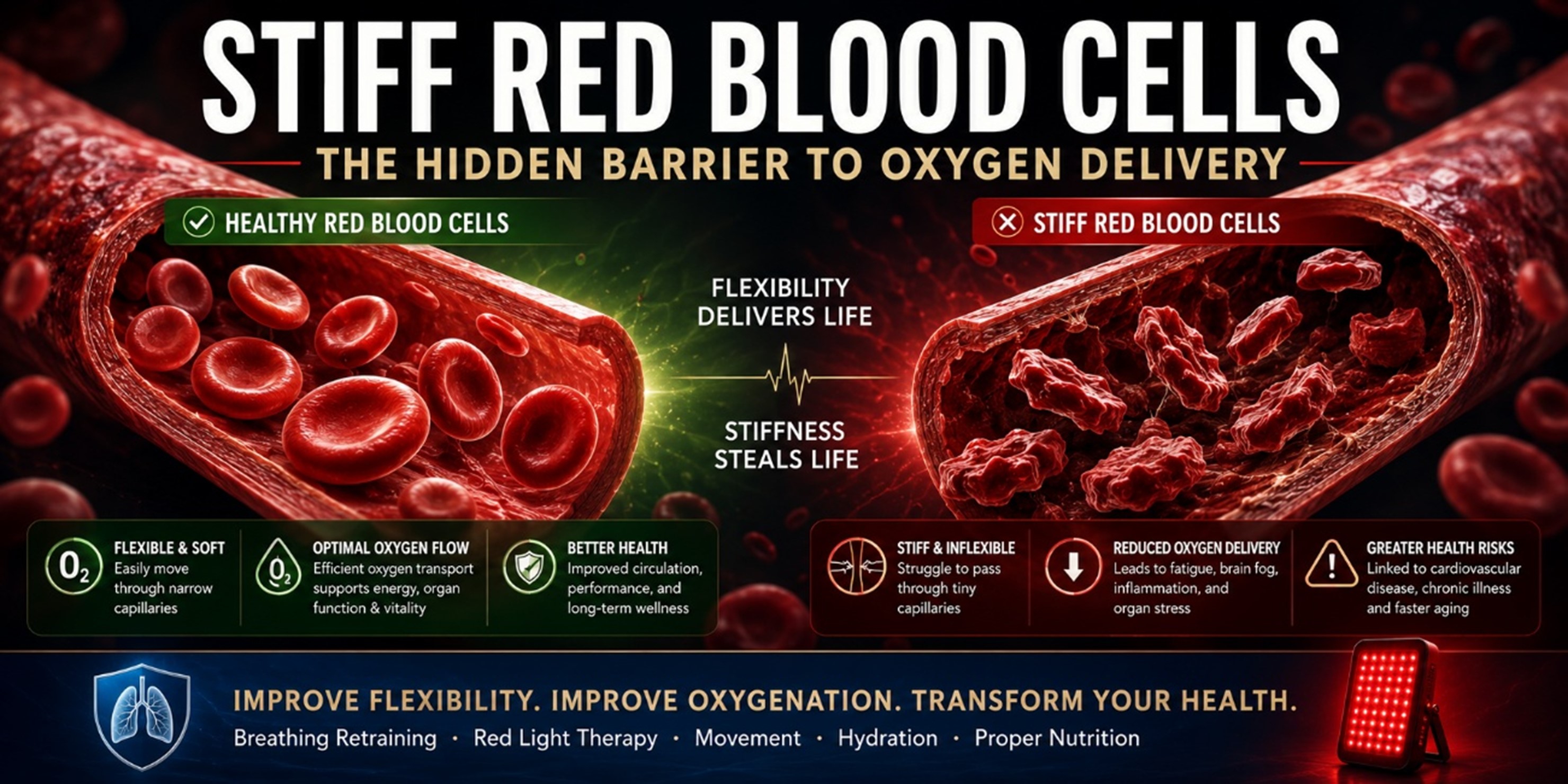
Red blood cells have been reported to shrink and become stiffer under hypoxic conditions, leading to a downward spiral in oxygen transport and delivery. So, “Early detection and correction of tissue hypoxia is essential if progressive organ dysfunction and death are to be avoided. However, global measurements cannot identify hypoxia in individual tissues or organs caused by the disordered regional distribution of oxygen delivery or by disruptions in cellular oxygen uptake and utilization processes. Regional oxygen transport and cellular utilization are important in maintaining tissue function. When tissue hypoxia is recognized, treatment must be aimed at the primary cause,” concluded Drs. R M Leach, D F Treacher.
This statement opens the door to a completely different understanding of oxygen, circulation, and disease. Oxygen delivery is not simply about filling the lungs with air or achieving a good oxygen saturation reading on a monitor. The true story of oxygen is written deep inside the microcirculation, where the smallest blood vessels determine whether tissues actually receive the oxygen they need. Oxygen must be inhaled, transported, released from hemoglobin, carried through tiny capillaries, and finally utilized by the mitochondria. Failure anywhere along this chain can produce cellular suffocation even when standard oxygen measurements appear normal.
Red blood cells (RBCs) exhibit unique deformability, enabling them to change shape in response to external forces reversibly. This allows RBCs to flow in microvessels while transporting oxygen and carbon dioxide.
The red blood cell is one of the great miracles of biological engineering. Though approximately 7–8 microns wide, it must repeatedly squeeze through capillaries smaller than itself. It accomplishes this through extraordinary flexibility, bending and folding as it travels through the narrowest passages of the body. This flexibility is essential for life. When red blood cells lose their ability to deform, circulation slows exactly where oxygen delivery is most critical.
When blood is abundant, nourished, and well-connected, we feel alive. Blood does more than run through our veins and oxygenate cells. It ensures the entire body receives nourishment and moisture. Blood keeps our tendons, skin, and hair healthy, strong, and flexible. It lubricates joints, allowing for smooth movement. Blood nourishes the mind and is considered the material basis for mental activity. Vital blood helps us sleep well and wake feeling rested.
The definition of blood in Chinese Medicine differs from that in Western Medicine. In Chinese Medicine, blood is enlivened by energy (Qi), which moves the blood to nourish every aspect of our body, from the skin and muscles to the brain and deep organs. The quality of blood circulating through our systems helps give us vitality, focus, and even rosy cheeks.
Although we primarily address blood issues in this chapter, we cannot separate the blood from the health of the vessel walls. Atherosclerosis is a plague, even touching the young, and tissue hypoxia, or low oxygen conditions, is another serious problem.
Hypoxia and Red Blood Cells
Hypoxia creates a dangerous biological cycle. When oxygen availability falls, red blood cells experience metabolic stress. These cells depend on ATP to maintain their membrane structure, electrolyte balance, and flexibility. As energy production declines, membrane function suffers, calcium regulation is disrupted, oxidative stress increases, and the smooth, flexible red blood cell can become progressively more rigid. Instead of flowing easily through the microvascular system, stiff red blood cells struggle to pass through tiny vessels.
This creates a downward spiral: poor oxygen delivery promotes red blood cell stiffness, and stiff red blood cells further reduce oxygen delivery. The result is worsening tissue hypoxia, impaired metabolism, inflammation, and progressive loss of cellular function. This is one reason why looking at oxygen saturation can be misleading. A patient may have adequate oxygen levels in the bloodstream. At the same time, certain organs and tissues remain oxygen-starved because the problem is not the presence of oxygen but its delivery and utilization.
Carbon dioxide is one of the most overlooked elements in this equation. For generations, CO₂ has been viewed only as a waste product of metabolism, but physiology shows that it is essential for proper oxygen delivery. Through the Bohr effect, CO₂ helps regulate hemoglobin’s ability to release oxygen into tissues. Without adequate carbon dioxide, oxygen can remain bound too tightly to hemoglobin, reducing its availability where it is needed most.
This is where breathing retraining becomes a powerful approach. Chronic overbreathing and excessive CO₂ elimination can disturb the delicate balance required for optimal oxygen transfer. Slower, calmer, more efficient breathing patterns can help preserve carbon dioxide levels, support circulation, and encourage better oxygen unloading into tissues. The objective is not simply to put more oxygen into the blood; the objective is to help oxygen reach the cells.
Magnesium is Crucial
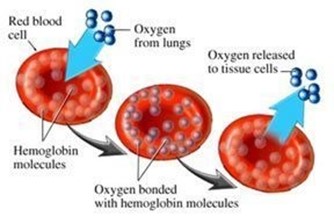
Magnesium is an essential factor in the oxygen story because it is fundamental to energy production. ATP, the energy molecule of life, functions biologically as magnesium-ATP. Without sufficient magnesium, cellular energy production and regulation suffer. Red blood cells require energy to maintain their structure and flexibility. Magnesium supports enzyme activity, membrane stability, vascular relaxation, and proper electrolyte balance. A magnesium-supported red blood cell is better equipped to remain flexible and perform its oxygen-carrying mission.
Abnormal magnesium-deprived red blood cells lack the flexibility to enter tiny capillaries. Numerous studies have examined the mechanism by which red cells maintain their biconcave shape. One critical factor is the level of red cell adenosine triphosphate (ATP). The interaction of calcium, magnesium, and ATP with membrane structural proteins plays a significant role in controlling the shape of human red blood cells.
Mitochondrial Function: Magnesium is indispensable for mitochondrial ATP production – it activates enzymes in oxidative phosphorylation and is required for ATP synthase function. Without adequate Mg2+, mitochondria generate less ATP and may leak more electrons (contributing to ROS formation).
Magnesium has a fibrinolytic action, prolongs clotting time, delays peak thrombin time, slows down platelet clumping, and appears to reduce fibrinogen levels, all of which may prevent the development or extension of an infarct. In addition, its vasodilator action opens collateral circulation and reduces myocardial damage.
Magnesium enhances the binding of oxygen to haem proteins. The concentration of Mg2+ in red cells is relatively high, but free Mg2+ is much lower in oxygenated red blood cells than in deoxygenated ones. This suggests some kind of magnesium pump where oxygen climbs aboard the red cells, magnesium jumps off, then jumps right back on.
Molecular Hydrogen
Molecular hydrogen represents another important area of oxygen medicine because oxidative stress plays a major role in damaging blood cells and tissues. During hypoxia and especially during reperfusion—when oxygen returns after a period of poor circulation—reactive oxygen species can damage delicate cellular structures.
Red blood cell membranes are particularly vulnerable because they depend on healthy lipids and proteins to remain flexible. Molecular hydrogen has been studied for its effects on oxidative stress, inflammation signaling, and mitochondrial protection, all of which are connected to the preservation of cellular function.
Photobiomodulation
Red light and near-infrared therapy add another dimension by targeting mitochondria, the final destination of oxygen. Delivering oxygen is only half the equation; cells must also be able to use it. Photobiomodulation influences mitochondrial pathways involved in cellular energy production and repair. Supporting mitochondrial function improves the biological environment in which oxygen is converted into usable energy.
Heat and infrared therapies also deserve attention because circulation depends on movement and flow. Warmth encourages vascular relaxation and improved blood movement, while cold and constriction can reduce circulation. Infrared mats and other heat-based therapies may support the body by helping maintain temperature, relaxation, and blood flow. Oxygen medicine is ultimately circulation medicine, because oxygen cannot heal tissues it cannot reach.
The future of medicine requires a deeper appreciation of the terrain in which disease develops. The body is not simply a collection of isolated organs waiting to fail. It is an interconnected river of blood, oxygen, minerals, gases, energy, and communication. Restoring health requires restoring the conditions that allow cells to function.
The goal is to restore red blood cell flexibility, improve microcirculation, support carbon dioxide balance, optimize magnesium status, protect mitochondria, and maintain the flow of oxygen from the atmosphere all the way into the cell.
When red blood cells become stiff, the river of life slows. When they regain their flexibility, circulation improves, oxygen reaches deeper tissues, and the body’s natural capacity for repair is supported.
Healthy blood creates healthy tissues. Healthy tissues create stronger organs. And restoring oxygen delivery is one of the deepest foundations of healing.
Red Cells Need Healthy Separation
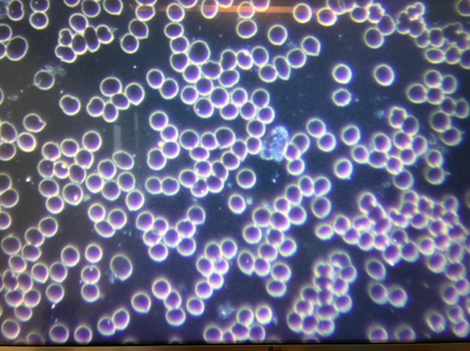
Red blood cells must demonstrate healthy separation.
Poor blood viscosity, RBC aggregation, and poor rheology, independently or collectively, are linked to cardiovascular diseases. For example, Neumann et al. claim that “Plasma viscosity and erythrocyte aggregation were more predictive of myocardial infarction (heart attack) than age, male gender, fibrinogen concentration, abnormal ECG readings, or coronary score.” High blood viscosity is associated with stroke, heart attacks, and deep vein thrombosis.
The aggregating property of red blood cells was first described by John Hunter in 1786 and was long considered pathophysiologically important, as aggregation is elevated in many disease states; hence, the term “blood sludging” was coined by M. H. Knisely to describe the phenomenon.[i]
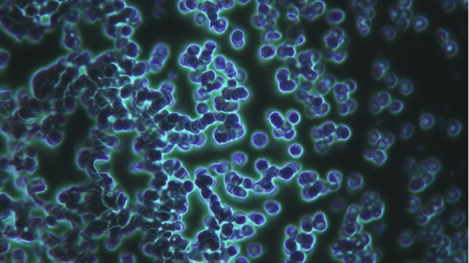
The aggregating property of red blood cells (RBCs) refers to their tendency to stick together, especially under low-shear stress conditions (i.e., when blood flow is slow or stagnant). This phenomenon is called rouleaux formation, where RBCs stack like coins. While reversible, excessive aggregation is a marker of inflammation and poor blood rheology (flow properties). Normal aggregation helps RBCs flow efficiently in small vessels and navigate the microcirculation. Excessive aggregation increases blood viscosity, impairs tissue oxygenation, and contributes to vascular disease.
RBC aggregation isn’t just a lab curiosity—it’s a window into the terrain of the blood. High aggregation signals inflammation, poor detox, and oxygen delivery failure. If red cells can’t move freely, neither can life and health. Treating the blood’s terrain—restoring flow, reducing stickiness, and supporting membrane integrity with PPC—should be a top priority in chronic disease, cancer, and cardiovascular care.
Conclusion
The bloodstream is not a highway where oxygen simply rides from the lungs to the tissues. It is a living river, and red blood cells are the boats that carry the fire of life. When those boats become rigid, the river backs up, tissues suffocate, and disease gains ground. Medicine has measured the oxygen in the river while too often ignoring whether the river can still flow.
Until now, to have one’s blood treated, one would have to use all kinds of sophisticated equipment that was expensive and somewhat dangerous. No longer. For a low cost and without toxic side effects, one can safely treat their blood at home, expecting the same broad positive medical effects that doctors have observed with older equipment that requires surgical procedures.
- Magnesium: Improves RBC membrane stability and circulation
- Sulfur compounds(like MSM, DMSO, glutathione, and NAC): Increase red cell flexibility and reduce oxidative stickiness
- Bicarbonates and CO₂ therapies: Improve microcirculation and reduce aggregation by restoring proper pH
- Hydration: Prevents sludge-like blood behavior
- Exercise and EWOT (exercise with oxygen therapy): Mobilize RBCs, improve flow dynamics, and open microcirculation.
- Cyclodextrins – Hugely more effective than Statin drugs, which no one should be taking, reverse Atherosclerosis.
- Chlorine Dioxide – Broad-acting cleaning, oxygenating substance.
- Hydrogen Inhalation – Powerful antioxidant. Reduces oxidative stress and inflammation in blood vessel walls.
- Intranasal Laser Therapy – Directly treating the blood with infrared.
- Iodine – Broadband antiseptic.
- PPC restores cell walls and even mitochondrial membranes.
[i] Mark Sircus, Complete Protocol Treatments for the Blood Vessels and Microcirculation, https://drsircus.com/cardiovascular/complete-protocol-treatments-for-the-blood-vessels-and-microcirculation/
Dr.Sircus is a reader-supported publication. To receive new posts and support my work, consider becoming a free or paid subscriber.
Subscribe now

comments