

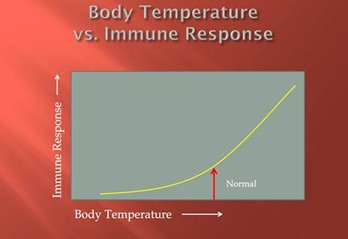
There is a lot of disagreement about climate: whether it really is getting warmer or whether we are about to enter a period of global cooling. But there is no disagreement about body temperature, its mathematical connection to immune strength, or the fact that compromised immunity invites cancer and other diseases.
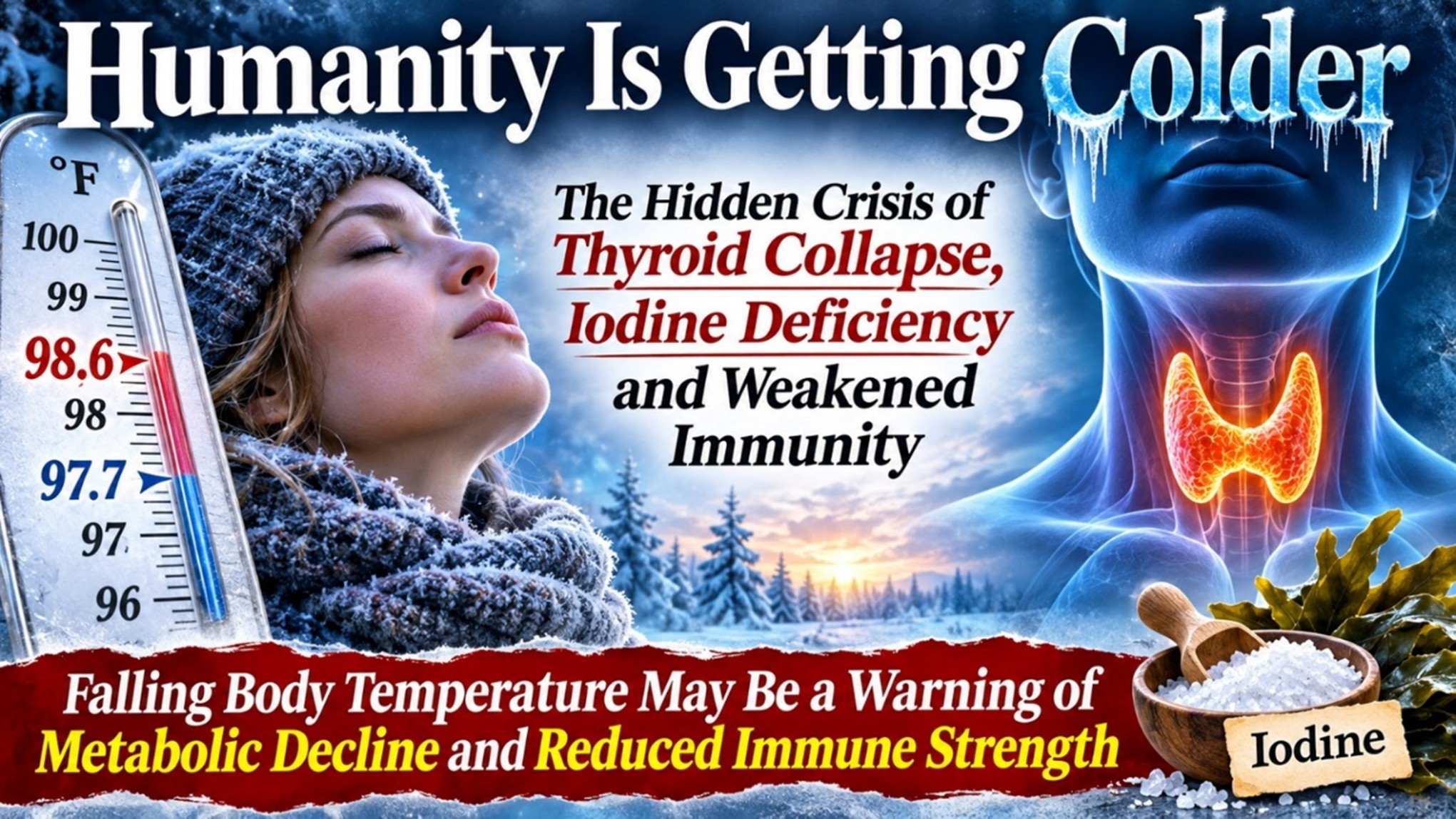
Something extraordinary is happening to human physiology, and medicine has barely begun to comprehend its implications. Human beings are getting colder, and it is not just because people cannot afford to keep their houses warm. The average body temperature that generations of physicians learned to recognize as normal—98.6°F, or 37°C—has been declining.
What was once considered the natural operating temperature of the human body is no longer the average recorded in modern populations. New research suggests that this cooling may have profound implications for metabolic health, immune function, and our vulnerability to chronic disease. Yet physicians continue measuring temperature primarily to detect fever while paying remarkably little attention to what persistently low body temperature might be telling them. It is just one more fundamental aspect of physiology that doctors ignore like magnesium deficiencies.
In October 2026, the Independent Medical Alliance published an important discussion of research by Matthew Cormier, titled The Global Decline of Human Body Temperature: Evidence for a Metabolic and Immunological Crisis. Reviewing 48 published studies, Cormier raises a question that I have been asking for more than a decade: What if declining body temperature is not simply a harmless consequence of modern living but a sign that something fundamental is changing in the human body’s ability to produce energy and defend itself against disease? It is an important question, one would think, with both chronic and acute diseases going off the charts.
This is not speculation about whether the temperature decline exists. A major Stanford University investigation published in eLife in 2020 analyzed more than 677,000 temperature measurements extending from the nineteenth century into the modern era. The investigators found a persistent decline averaging approximately 0.03°C per birth decade. The familiar historical benchmark of 98.6°F has gradually given way to population averages closer to 97.7°F, or 36.5°C. The difference may appear small on a thermometer, but biology operates through finely regulated chemical reactions, enzyme systems, and temperature-sensitive cellular processes. A small sustained change in the conditions under which these processes operate deserves attention.
Even more remarkable were findings from the Indigenous Tsimane population of Bolivia. Researchers examining nearly 18,000 temperature measurements recorded a decline of approximately 0.5°C between 2002 and 2018. A change comparable in magnitude to that observed over more than a century in the United States occurred within just sixteen years. That finding challenges the assumption that falling temperature is merely a relic of nineteenth-century industrialization. Something about changing environments, lifestyles, infections, metabolism, or other physiological influences may be altering human thermoregulation within a single generation.
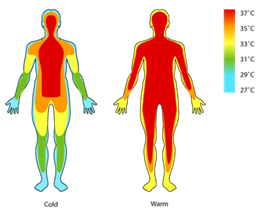
Body temperature is not merely a number. It reflects the body’s ability to produce, distribute, and regulate heat while sustaining the chemical reactions necessary for life. Every moment, our cells consume energy. Mitochondria transform nutrients into usable chemical energy, while metabolic reactions release heat. Muscle activity, organ metabolism, circulation, and thermoregulatory mechanisms help maintain a stable internal environment. Our ability to stay warm is therefore inseparable from the machinery of cellular metabolism.
Thyroid and Metabolism
This brings us to one of the most important neglected questions in medicine: What happens to body temperature when the thyroid gland can no longer adequately support the body’s metabolic demands? The thyroid is central to human thermoregulation. Thyroid hormones influence resting energy expenditure, mitochondrial activity, oxygen consumption, cardiovascular function, and heat production.
When thyroid hormone production becomes insufficient, metabolism can slow. Patients may experience fatigue, cold intolerance, constipation, dry skin, cognitive slowing, depression, and reduced physical vitality. In severe hypothyroidism, the disturbance becomes much more than discomfort. Profound thyroid failure can produce dangerous hypothermia, cardiovascular deterioration, altered consciousness, and life-threatening metabolic collapse.
And here is where iodine enters the picture, but don’t tell doctors that they do not want to know. Without sufficient iodine, the thyroid cannot manufacture adequate quantities of its essential hormones. Iodine is a structural component of thyroxine (T4) and triiodothyronine (T3). The thyroid must obtain iodine to synthesize these hormones, which help regulate the rate at which the body produces and uses energy. When iodine intake becomes chronically inadequate, the gland initially compensates by increasing iodine uptake and altering its hormonal activity. But compensation has limits. Persistent or severe deficiency can eventually impair hormone production and produce hypothyroidism.
This is what I mean when I warn about the possibility of thyroid collapse. The term describes the progressive failure of the thyroid-metabolic system when the biological requirements for normal hormone production cannot be met. Iodine deprivation can unquestionably compromise thyroid function, with consequences for metabolism, body temperature, neurological performance, and general health.
Magnesium, Mitochondrial Decline, and the Disappearing Heat of Life
Another fundamental connection cannot be ignored when investigating humanity’s declining body temperature: magnesium deficiency and mitochondrial deterioration. The mitochondria are central to cellular energy production and the generation of metabolic heat. Every heartbeat, every nerve impulse, every muscular contraction, and every immune response depends upon the energy metabolism they support.
We know mitochondria cannot operate normally without magnesium. ATP, the universal energy currency of life, functions predominantly in association with magnesium, and magnesium-dependent processes regulate critical aspects of mitochondrial metabolism. When magnesium becomes insufficient, the body’s ability to produce and utilize energy can become compromised. And when the machinery of energy metabolism begins to fail, the consequences extend far beyond fatigue. But modern medicine is not very interested in magnesium or iodine deficiencies.
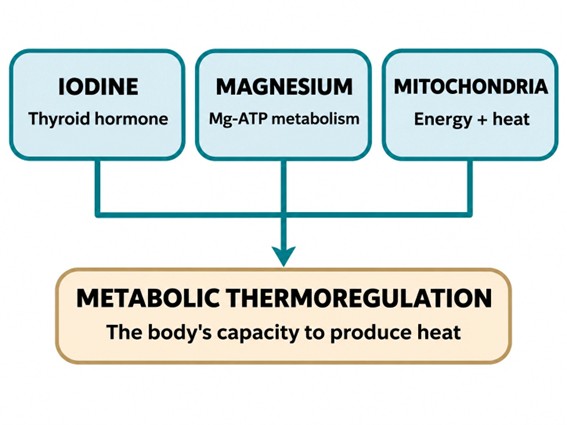
The connection with thyroid function is particularly important. Iodine is essential for manufacturing thyroid hormones, which help regulate metabolic rate and heat production. Magnesium supports the cellular energy machinery through which metabolism operates. Mitochondria carry out much of the energy conversion, and specialized mitochondrial mechanisms directly generate heat. These are not isolated systems. They are interdependent components of the body’s thermoregulatory machinery.
Iodine deficiency can impair the hormonal regulation of metabolism, magnesium deficiency can undermine energy metabolism, and mitochondrial deterioration can compromise the body’s capacity to generate and regulate heat. The combined effect may be especially important in aging individuals already experiencing nutritional insufficiency, chronic inflammation, insulin resistance, or metabolic disease. Add in cold hands or feet!
A growing body of research connects inadequate magnesium with mitochondrial dysfunction, oxidative stress, declining ATP production, and metabolic deterioration. A 2026 scientific review even describes magnesium as a bioenergetic checkpoint, emphasizing that cellular magnesium availability helps determine whether the energy generated by metabolism can be effectively utilized.
This has profound implications for understanding chronic illness. Consider the implications for body temperature and immune function. The immune system is enormously energy-dependent. Activated immune cells must proliferate, migrate, manufacture signaling molecules, and perform complex defensive functions. These activities require functioning mitochondria and adequate cellular energy metabolism.
The human body cannot manufacture heat independently of the machinery that produces and uses energy. If that machinery deteriorates, we should not be surprised when thermoregulation becomes disturbed.
Chemical and Heavy Metal Toxicity
Environmental toxicity is another deliberately overlooked contributor to declining body temperatures and metabolic deterioration. Heavy metals such as mercury, lead, cadmium, and arsenic can interfere with mitochondrial energy production, disrupt essential enzymes, increase oxidative stress, and disturb endocrine function. Industrial chemicals, pesticides, and endocrine disruptors can also interfere with thyroid hormone synthesis, transport, and signaling—the very hormonal machinery responsible for regulating metabolic activity and heat production. Some toxic substances can even impair thermogenesis directly.
Conclusion
This issue is becoming critical for the millions of people who can no longer afford to keep their homes comfortably warm during winter. Cold is not merely an inconvenience; it places additional demands on the body’s metabolism, cardiovascular system, and ability to maintain its core temperature. Now consider the consequences for people already struggling with iodine deficiency, impaired thyroid function, magnesium depletion, mitochondrial dysfunction, and chronic disease. Their bodies may be less able to generate sufficient metabolic heat precisely when environmental conditions demand more of it.
The elderly, the chronically ill, and those suffering from poor nutrition are particularly vulnerable. When the body’s internal heat-generating machinery is compromised, and adequate external heating becomes unaffordable, the consequences can be devastating. Cold homes can aggravate cardiovascular and respiratory illness, increase physiological stress, and contribute to premature death.
We are therefore facing a potentially dangerous convergence of biological and economic vulnerabilities. A population experiencing widespread metabolic disorders, inadequate essential mineral intake, and declining average body temperatures is confronting an energy crisis that leaves millions struggling to stay warm.
Special Note: In January 2015, I published Low Body Temperature Symptoms and Causes—And How to Treat It, arguing that body temperature deserved a central place in evaluating cellular metabolism and chronic illness. In March of that year, I published 98.6°F Ideal Body Temperature, emphasizing the relationship between heat, vitality, and immune defenses. In August 2017, I explored the connection between iodine, thyroid activity, and low body temperature. And in July 2019, I examined the possible contribution of altered temperature regulation to cancer vulnerability.
The body’s warmth is not simply a byproduct of life. Under certain conditions, it contributes directly to the defense of life. This relationship is not merely metaphorical. Chemical reactions are temperature-dependent just as they are pH-dependent.
Keeping warm with infrared therapy is not only smart but essential for many, and especially important if your temperature is below normal and/or you cannot afford to keep the house at a comfortable temperature, especially at night. A Biomat is an FDA-approved medical device you’ll love; it is that good.

Far infrared treatments reduce stress on cells by nourishing them with light and heat and by increasing oxygen availability and cellular respiration, so more toxins and waste leave the cells.
Dr.Sircus is a reader-supported publication. To receive new posts and support my work, consider becoming a free or paid subscriber.
Subscribe now

comments