

In an essay about chlorine dioxide curing diabetes, written by a friend, we read the following:
In diabetes, mitochondria often stop working properly. This is especially damaging in the pancreas, where insulin-producing beta cells rely heavily on healthy mitochondria to sense sugar and release insulin correctly. Muscle cells in diabetic patients also show weaker mitochondrial activity, which makes it harder for the body to burn sugar and fat for fuel. When the natural process of clearing out and rebuilding worn-out mitochondria breaks down, energy problems pile up throughout the body.
In diabetes, mitochondrial function is frequently impaired. This is especially important in the pancreas, where insulin-producing beta cells depend heavily on healthy mitochondria to sense glucose changes and release insulin appropriately. When mitochondrial energy production and quality-control systems begin to fail, beta-cell function can deteriorate. Skeletal muscle is also affected: people with diabetes often show impaired mitochondrial oxidative metabolism, making it harder to use glucose and fatty acids efficiently for energy. When mitophagy—the process that removes damaged mitochondria—and mitochondrial renewal become disrupted, dysfunctional mitochondria accumulate, oxidative stress increases, and metabolic problems can spread throughout the body.
I wrote back to the author of the chlorine dioxide article:
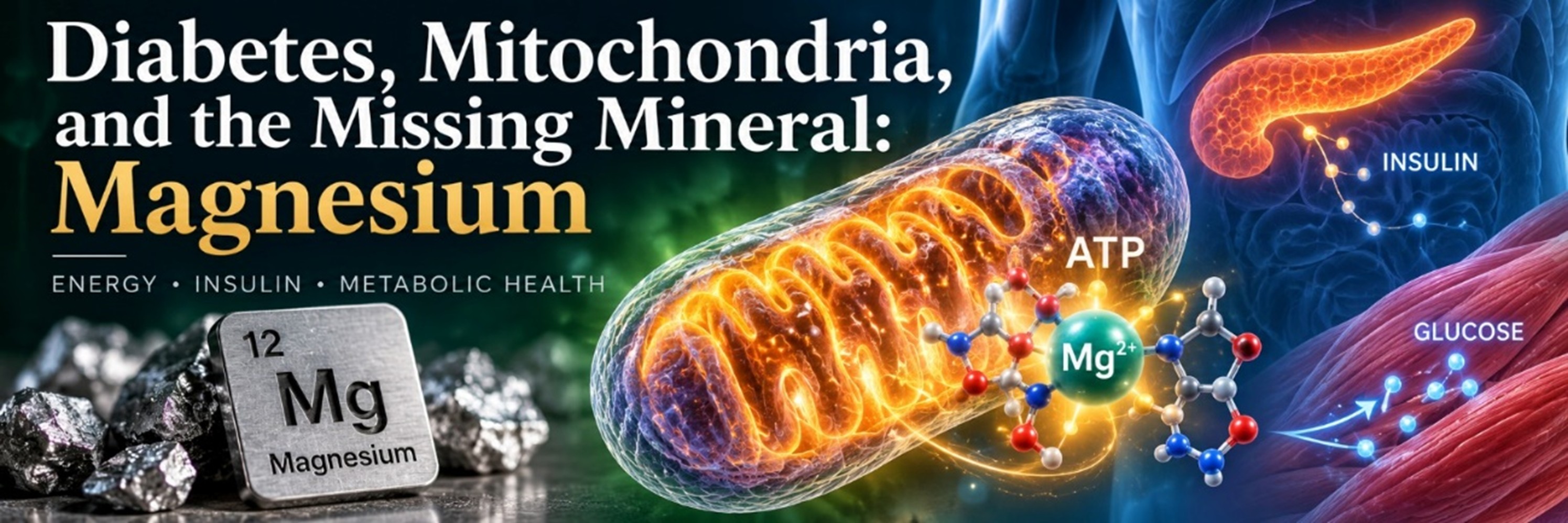
Excellent exploration, but I think one very large piece is missing: magnesium. Once you make mitochondrial dysfunction, ATP production, beta-cell function, and insulin resistance central to the diabetes story, magnesium becomes impossible to ignore. ATP functions biologically largely as Mg-ATP; magnesium is required for insulin-receptor signaling, glucose metabolism, mitochondrial energy production, and normal beta-cell insulin secretion. Magnesium deficiency itself can worsen insulin resistance, while diabetes promotes further magnesium loss, creating a vicious cycle. I’m also very interested in chlorine dioxide and use a little every day. Still, before looking for an oxidative signal to repair diabetic metabolism, we should make sure the cell has the basic mineral machinery required to produce energy in the first place. Leaving magnesium out of a mitochondrial discussion of diabetes is, for me, a serious omission.
My criticism about magnesium is justified, especially because the article makes mitochondrial dysfunction, beta-cell energetics, insulin resistance, oxidative stress, and cellular repair central to its explanation of diabetes. Magnesium isn’t a side issue in that biology; it sits at the center. The article doesn’t mention magnesium at all.

The strongest magnesium point isn’t simply that “diabetics are often magnesium deficient.” It is deeper than that. ATP is biologically used largely as Mg-ATP. Magnesium is required for insulin-receptor phosphorylation, downstream insulin signaling, glucose utilization, beta-cell electrical activity, and insulin secretion. Low intracellular magnesium can impair insulin-receptor tyrosine kinase activity, glucose transport, and beta-cell responsiveness. Type 2 diabetes also creates a vicious circle: insulin resistance and hyperglycemia can promote magnesium loss, while magnesium deficiency can worsen insulin resistance and inflammation.
A recent review describes magnesium as a kind of bioenergetic checkpoint: magnesium availability determines the usable MgATP pool and influences mitochondrial performance, oxidative stress, and metabolic flexibility. So if you want impaired mitochondrial energy production to be a major part of the diabetes story, omitting magnesium leaves out a fundamental cofactor that makes cellular energy metabolism possible. This is critical information, as magnesium deficiencies in most people worsen year after year.
Reversing Insulin Resistance – The Insulin Magnesium Story

Magnesium is strongly linked to insulin action. Magnesium
is important for insulin effectiveness. Reduced
magnesium in cells strengthens insulin resistance.
Low serum and intracellular magnesium concentrations are associated with insulin resistance, impaired glucose tolerance, and decreased insulin secretion. Magnesium improves insulin sensitivity, thus lowering insulin resistance. Magnesium and insulin need each other. Without magnesium, our pancreas won’t secrete enough insulin–or the insulin it secretes won’t be efficient enough–to control our blood sugar.
Magnesium in our cells helps muscles relax, but if we can’t store magnesium because the cells are resistant, we lose magnesium, which makes blood vessels constrict, affects our energy levels, and increases blood pressure. We begin to understand the intimate connection between diabetes and heart disease when we look at the closed loop between declining magnesium levels and declining insulin efficiency.
Though it would be a long stretch of the longest giraffe’s neck to compare insulin with chlorophyll, we are walking a trail at the very nuclear core of life. It’s the magnesium trail, and to our surprise, it takes us into intimate contact with the very structure and foundation of life. This article is dedicated to the beauty of magnesium, and to its meaning in life, health, and medicine.
We were talking about chlorophyll and now insulin, and putting magnesium in between. Next are the DHEA magnesium story and the DNA magnesium story. And then there is the cholesterol magnesium story. Every part of life is in love with magnesium except allopathic medicine, which cannot accept it in all its light, flame, and beauty. Thousands of years ago, the Chinese called it the beautiful metal, and they saw something pharmaceutical medicine does not want to see, for there is little money to be made from something so common.
In a study from Taiwan, the risk of dying from diabetes was inversely
proportional to the level of magnesium in the drinking water.
Dr. Jerry L. Nadler
Dr. Jerry Nadler of the Gonda Diabetes Center at the City of Hope Medical Center in Duarte, California, and his colleagues put 16 healthy people on magnesium-deficient diets; their insulin became less effective at moving sugar from their blood into their cells, where it’s burned or stored as fuel. In other words, they became less insulin sensitive.
Insulin regulates cholesterol levels. There is a direct connection
between the level of cholesterol and the level of insulin.
Magnesium is necessary for both insulin action and insulin production. Magnesium is a basic building block of life and is present in ionic form throughout the full landscape of human physiology. Without insulin, though, magnesium doesn’t get transported from our blood into our cells where it is most needed.
Insulin resistance and magnesium depletion create a vicious cycle of worsening insulin resistance and decreased intracellular Mg(2+), which limits magnesium’s role in vital cellular processes. Magnesium is an important cofactor for enzymes involved in carbohydrate metabolism, so anything that threatens magnesium levels threatens overall metabolism. Large epidemiologic studies in adults indicate that lower dietary magnesium and lower serum magnesium are associated with increased risk for type 2 diabetes.
Magnesium and Cancer
I will not go deeply into this now, but magnesium and cancer is a deep story, an important story I need to tell again soon. A study from Taiwan showed high levels of Mg in drinking water were linked to reduced risk of several cancers, including ovarian cancer (43% risk reduction of ovarian cancer mortality). Of course, oncologists and mainstream doctors would never think to prescribe magnesium or bicarbonate to their patients. They are too busy selling vaccines and all their pharmaceutical mitochondrial poisons. People tend to forget the serious dangers of the drugs doctors prescribe and how many people die from properly prescribed medicines.
So why would magnesium affect cancer incidence? Magnesium supports genomic stability through several interconnected roles: it participates directly in DNA replication and protein synthesis, functions as a cofactor for DNA repair proteins, sustains cellular antioxidant status, and influences cell cycle regulation and apoptosis. When magnesium is deficient, or when toxic divalent metal ions displace it at the same binding sites, genomic instability increases, as shown by reduced DNA repair efficiency, increased oxidative DNA damage, accelerated aging markers, and elevated cancer risk.
Dr.Sircus is a reader-supported publication. To receive new posts and support my work, consider becoming a free or paid subscriber.
Subscribe now

comments