

We tend to think of water as if purity were its only virtue. Remove the chlorine, fluoride, pesticides, metals, industrial chemicals, microorganisms, and everything else we do not want, and supposedly we are left with perfect water. But the equation has another side. Water in nature was rarely chemically empty. As it traveled through soil, rock, mountains, and underground aquifers, it picked up minerals. Among the most useful were magnesium and bicarbonate.
Magnesium bicarbonate is a complex hydrated salt that exists only in water under specific conditions. Chemically, it’s the magnesium ion. bound to two bicarbonate ions. What we are talking about is turning your water into magic medicine, miracle water, into a divine cocktail that will excite every cell and reach every extremity. This simple protocol will water you down to your roots, putting out the fires of inflammation and oxidative stress.
Magnesium bicarbonate cannot exist as a dry pill or powder. It only forms when magnesium hydroxide reacts with carbonic acid (dissolved in water). That’s why it was once plentiful in natural spring water bubbling up from magnesium-rich rock, and why it’s now absent from the modern water supply. In centuries past, we got most magnesium from water—not pills, not supplements, not even food.
Magnesium bicarbonate contributes to your daily magnesium needs and supports a healthy pH level by increasing bicarbonate intake. Magnesium bicarbonate is the ultimate form of magnesium and the best form of bicarbonate. Super absorbable is the only way to describe magnesium bicarbonate water.
Ethan Evers, author of The Eden Prescription, puts it plainly: magnesium in drinking water has a higher impact than magnesium in food, because it exists as hydrated ions absorbed efficiently—only about half of magnesium from food is ever absorbed, while the hydrated ions in water pass directly into the bloodstream through the small intestine.
The perfect glass of water should do more than prevent dehydration. It should participate in physiology. Clean water gives us hydration. Magnesium gives the cell its energetic mineral. Bicarbonate supports one of life’s fundamental buffering systems, meaning it’s important for detoxification and eliminating acid waste. Together, they make water more than water. It becomes magnesium bicarbonate water—the kind of water the human body recognizes not merely as fluid, but as mineral nutrition in super-absorbable form.
A study from Taiwan showed high levels of Mg in drinking water were linked to reduced risk of several cancers, including ovarian cancer (43% risk reduction of ovarian cancer mortality. Of course, oncologists and mainstream doctors would never think to prescribe magnesium or bicarbonate to their patients. They are too busy selling vaccines and all their pharmaceutical mitochondrial poisons. People tend to forget the serious dangers of the drugs doctors prescribe and how many people die from properly prescribed medicines.
The latest has researchers warning about a rare but potentially life-threatening brain condition that may be linked to popular GLP-1 weight-loss medications. A new study, published in Clinical Nutrition, identified 15 reported cases of Wernicke encephalopathy, a neurological disorder caused by severe vitamin B1 deficiency, in people taking GLP-1 receptor agonists.

For much of human history, drinking water provided magnesium. The Magnesium Online Library documents decades of research linking mineral-rich “hard” water—particularly water containing magnesium and calcium—with cardiovascular health. It cites the long-standing observation that populations consuming water deficient in these minerals have often experienced higher rates of cardiovascular mortality.
A WHO publication on calcium and magnesium in drinking water similarly examined the public-health significance of these minerals, and magnesium researchers have argued that drinking water containing meaningful amounts of magnesium deserves far more attention than it receives. The point is not that water can replace a nutritious diet, but that it can contribute minerals every day, glass after glass.
This is what makes magnesium in water different from magnesium only as a pill. In mineral water, magnesium is already present as a hydrated ion. It arrives dissolved, dispersed through a substance the body must absorb anyway. The magnesium literature gathered at MgWater emphasizes this distinction and argues that magnesium supplied in drinking water may have particular health importance. Instead of swallowing one concentrated dose and forgetting about magnesium for the rest of the day, mineralized water can provide small amounts repeatedly. Physiology itself tends to work this way: continuous availability rather than occasional nutritional bombardment.

This is why the discussion of “alkaline water” revolves around pH alone. A machine can produce water with a high measured pH, but that does not make it nutritionally valuable. It does not mean the water has much, if any, alkalinity. Mineral content and bicarbonate chemistry matter more than a number flashing on a pH meter. The body regulates blood pH within an extremely narrow range, and drinking high pH water does not simply make the blood progressively alkaline. My earlier writing on magnesium bicarbonate emphasized that distinction: the point is not to force blood pH upward but to support the body’s bicarbonate buffering capacity and mineral status.
This also changes how we should think about reverse osmosis and distilled water. These purification methods can be extremely useful when the starting water contains contaminants. But they also remove most naturally occurring minerals, if any are present. Purification solves one problem while creating an opportunity to solve another: purify first, then intelligently remineralize.
The Ultimate Mitochondrial Cocktail
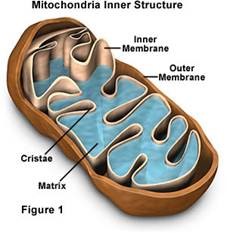
Magnesium bicarbonate is the Holy Grail of magnesium administration, offering a straight line into the cells. Specifically, it helps fire up your mitochondrial energy factories.
Magnesium participates in hundreds of biochemical reactions and is indispensable to cellular energy metabolism. ATP does not function in biology simply as naked ATP; much of cellular ATP chemistry involves magnesium-ATP complexes. Magnesium therefore lies near the center of muscle function, nerve transmission, cardiovascular physiology, membrane transport, enzyme activity, and mitochondrial energy production. The bicarbonate system, meanwhile, is one of the body’s principal acid-base buffering systems and is intimately linked to carbon dioxide physiology.
ATP—the central energy molecule of your body—is non-functional unless it’s bound to magnesium. Dr. Boyd Haley, a biochemist, is blunt: ATP without Mg2 cannot create the energy used to make protein, DNA, and RNA, or to move sodium, potassium, and calcium in and out of cells. ATP without enough magnesium leads to cell death.
Bicarbonate acts as a transporter of magnesium into the mitochondria. According to the Institute of Medicine, magnesium influx is linked with bicarbonate transport. Magnesium transport into or out of cells requires carrier-mediated transport systems (Gunther, 1003; Romani et al., 1993).
The ATPase reaction has a broad pH optimum centered on neutral pH, with little significant activity above pH 9.0 or below pH 5.5.[i] Thus, moving from overall acidic conditions toward alkaline recovery into the neutral zone will enhance cell metabolism by optimizing mitochondrial function. Also, alkalosis enhances magnesium reabsorption in the juxtamedullary proximal nephron.
Bicarbonate ions create alkaline conditions for maintaining the enzyme activity of pancreatic secretions in the intestines. In addition, bicarbonate neutralizes acid conditions required for inflammatory reactions. Hence, bicarbonate would benefit the treatment of a range of chronic inflammatory and autoimmune diseases.
Bicarbonate acts to stimulate the
ATPase by acting directly on it.[ii]
Magnesium stabilizes ATP[iii], allowing DNA
and RNA transcription and repair.[iv]
Bicarbonate isn’t just a pH buffer—it’s a transporter that carries magnesium into the mitochondria, the energy factories of your cells. Magnesium influx is linked with bicarbonate transport; the two work as a co-transport system. Bicarbonate ions create the alkaline conditions that let magnesium leave the blood serum and move into cells and mitochondria.
Dr. Seeger and Dr. Budwig in Germany have shown that cancer is mainly the result of faulty energy metabolism in the powerhouses of the cells – the mitochondria. A healthy cell has high magnesium and low calcium levels. Low magnesium (Mg) levels cause calcium to build up inside cells while energy production decreases as mitochondria gradually calcify.

So magnesium bicarbonate water isn’t just hydrating you. It’s buffering your mitochondria from excess acid so more ATP can be hydrolyzed and produced. More energy in. More energy out. It’s the difference between running on a full battery and limping along on a dying one.
The Acid Problem and Why You’re Aging Faster Than You Should
Your body produces acid constantly—through metabolism, stress, pollution, and modern diet. To neutralize and dump that acid, you need bicarbonate. And here’s the uncomfortable finding: we lose bicarbonate as we age.
Dr. Lynda Frassetto of UCSF says low blood bicarbonate reduces our ability to manage the acid the body produces, and this causes aging. A 10-year study of industrial workers in Bulgaria, published in the American Industrial Hygiene Association Journal, found that people working in polluted environments had measurably less bicarbonate in their blood than those in clean environments. If you’re a city dweller breathing air pollution daily, you are burning through your bicarbonate buffer faster than you realize.
Research from the Clinical Journal of the American Society of Nephrology, examining over 2,200 participants, found that low bicarbonate levels were linked to a 24% increased risk of premature death. Dr. Kalani Raphael at the University of Utah put it: generally healthy older people with low bicarbonate had a higher risk of death.
Why “Alkaline Water Machines” Are a Distraction
The alkaline water machine industry has sold people a half-truth. The issue isn’t pH in your glass—it’s bicarbonate in your blood.


Genuine sources include Unique Water from Australia and Donat Mg from Europe. But the most practical route is to make it yourself or purchase a concentrated form:
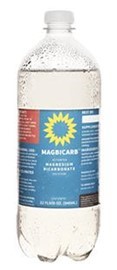
This 1 liter of concentrated magnesium bicarbonate water contains about 1500 mg of magnesium and 7500 mg of bicarbonate. Take 1 to 2 oz of the concentrate and add it to half a gallon of water. Start by drinking 4oz of the diluted magnesium bicarbonate water on an empty stomach as many times a day as desirable. Increase your intake to 1L per day in divided doses. Remember, this is your drinking water, so the concentration should be comfortable for your taste.
What you will need to make your Magnesium Bicarbonate
- 1-liter bottle of chilled carbonated water. I recommend buying a SodaStream or something similar and using distilled or reverse osmosis water. You can use plain seltzer water if you want to buy carbonated water.
- Magnesium Hydroxide Powder https://www.amazon.com/dp/B00GUOWEL8
- Small funnel
To prepare the water, follow these steps:
- Chill a 1-liter bottle of carbonated water. You want the water cold, as it will mix and dissolve better. Or, if using a soda machine, add 1 flat tsp of magnesium hydroxide powder to your purified water in a 1-liter bottle filled to 80%, then run it through the soda machine twice.
- Remove the bottle of carbonated water from the refrigerator if you buy it in a plastic bottle (not recommended). Open it slowly and carefully to minimize CO2 loss. Once the initial fizzing settles, use a small funnel to pour the magnesium powder into the bottle. Immediately replace the cap and shake vigorously for about 30 seconds, until the liquid is cloudy.
- After 20-30 minutes, the liquid will clear, and any undissolved magnesium hydroxide will settle to the bottom of the bottle. Again, shake the bottle vigorously for 30 seconds to make the liquid cloudy. When the liquid is clear after shaking, all magnesium hydroxide should have reacted with the CO2 to form dissolved (ionized) magnesium and bicarbonate.
You may note that the sides of the bottle “cave in” when the liquid clears. This indicates the reaction is complete. If a small amount of undissolved magnesium hydroxide remains in the bottom of the bottle as sediment, it may be ignored. Keep your magnesium bicarbonate in the refrigerator, and mix it with more water to dilute to taste.
Conclusion
If you want water that merely keeps you from being thirsty, filtered tap water works. If you want water that does something—that recharges your mitochondria, buffers the acid your own body produces, delivers magnesium straight into your cells, and slows the metabolic decline we’ve been told is just “aging”—then the answer is clear.
Magnesium bicarbonate water is the best form of water. It’s cheap, it’s simple to make, and it targets the exact deficits—magnesium depletion and bicarbonate loss—that modern life creates and modern medicine ignores. Hydrogen water is another healthy form of water, but it can’t compare to hydrogen inhalation therapy.
[i] Biochem J. 1977 August 1; 165(2): 355–365. http://www.pubmedcentral.nih.gov/articlerender.fcgi?artid=1164908
[ii] Origin of the Bicarbonate Stimulation of Torpedo Electric Organ Synaptic Vesicle ATPase. Joan E. Rothlein 1 Stanley M. Parsons. Department of Chemistry and the Marine Science Institute, University of California, Santa Barbara, Santa Barbara, California, U.S.A.
[iii] Mg2+ is critical for all of the energetics of the cells because it is absolutely required that Mg2+ be bound (chelated) by ATP (adenosine triphosphate), the central high energy compound of the body. ATP without Mg2+ bound cannot create the energy normally used by specific enzymes of the body to make protein, DNA, RNA, transport sodium or potassium or calcium in and out of cells, nor to phosphorylate proteins in response to hormone signals, etc. In fact, ATP without enough Mg2+ is non-functional and leads to cell death. Bound Mg2+ holds the triphosphate in the correct stereochemical position so that it can interact with ATP using enzymes and the Mg2+ also polarizes the phosphate backbone so that the ‘backside of the phosphorous’ is more positive and susceptible to attack by nucleophilic agents such as hydroxide ion or other negatively charged compounds. Bottom line, Mg2+ at critical concentrations is essential to life,” says Dr. Boyd Haley who asserts strongly that, “All detoxification mechanisms have as the bases of the energy required to remove a toxicant the need for Mg-ATP to drive the process. There is nothing done in the body that does not use energy and without Mg2+ this energy can neither be made nor used.” Detoxification of carcinogenic chemical poisons is essential for people want to avoid the ravages of cancer. The importance of magnesium in cancer prevention should not be underestimated.
[iv] Magnesium has a central regulatory role in the cell cycle including that of affecting transphorylation and DNA synthesis, has been proposed as the controller of cell growth, rather than calcium. It is postulated that Mg++ controls the timing of spindle and chromosome cycles by changes in intracellular concentration during the cell cycle. Magnesium levels fall as cells enlarge until they reach a level that allows for spindle formation. Mg influx then causes spindle breakdown and cell division.
Dr.Sircus is a reader-supported publication. To receive new posts and support my work, consider becoming a free or paid subscriber.
Subscribe now

comments